Strategic Shifts in German Manufacturing
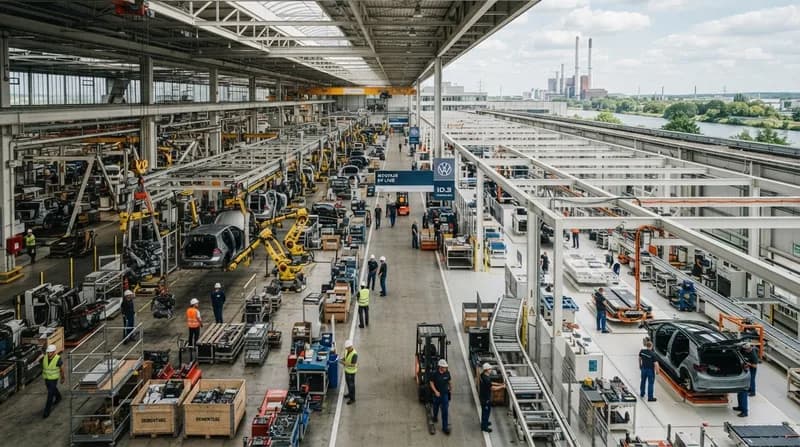
Volkswagen is signaling a definitive shift in its automotive roadmap, responding to a notable uptick in consumer interest for battery-electric vehicles across Europe. According to Martin Sander, the company’s Board Member for Sales, the automotive giant is adjusting its 2026 production planning to better align with changing market dynamics. This pivot involves a reduction in the manufacturing output of combustion engine vehicles at the flagship Wolfsburg plant, while simultaneously expanding capacity at specialized EV facilities in Emden and Zwickau.
Previously, Volkswagen had anticipated a slower adoption rate for electric mobility, basing its annual production goals on more conservative estimates. However, the market has defied these projections, driven by fluctuating fuel costs and a renewed appetite for electrified transport. As a result, the planned extra shifts at Wolfsburg—a plant long synonymous with traditional combustion engines—are being canceled. The facility is now expected to hit approximately 580,000 units this year, failing to reach the ambitious 600,000-vehicle threshold originally forecasted.
Expanding the Electric Footprint in Emden and Zwickau
In contrast to the scaling back at Wolfsburg, the Emden and Zwickau plants are entering a period of renewed productivity. At the Emden site, management has officially added at least two extra shifts to manage the production of the ID.7. This facility is poised for further evolution, as it prepares to integrate the forthcoming ID. Tiguan, which will replace the current ID.4 assembly line. Industry analysts suggest that this strategic shuffling is designed to streamline the manufacturing process and optimize resource allocation for high-demand models.
The Zwickau site, which faced significant uncertainty regarding its long-term future as recently as 2024, is seeing a turnaround thanks to strong order volumes for the ID.3 Neo. This facility currently serves as the production hub for the Audi Q4 e-tron, the Cupra Born, and the ID.3 Neo. With the ID.4 moving production to Emden, Zwickau is refining its focus on these core models, signaling a more stable operational outlook for the workforce and the surrounding supply chain.
The Road Ahead: Market Implications
This operational pivot highlights a critical "turning point" in the European automotive landscape. While the shift confirms the growing popularity of EVs, it also underscores the economic challenges facing manufacturers. Volkswagen has noted that, despite higher order intake for electric models compared to their fossil-fuel counterparts, the profit margins per unit currently remain thinner for EVs.
- Increased Demand: Over 100,000 pre-orders have been registered for the new Urban Electric Car family, which includes the ID. Polo, Cupra Raval, Škoda Epiq, and ID. Cross.
- Model Refresh Cycles: The introduction of the ID.3 Neo and the ID. Tiguan is playing a pivotal role in maintaining momentum against competitors.
- Economic Balancing Act: Volkswagen continues to manage a delicate balance between aggressive EV expansion and stringent cost-cutting measures, with the future of several secondary factories still under review as the decade progresses.
As Volkswagen navigates these production adjustments, the industry will be watching closely to see if the company can sustain its current order momentum while improving the underlying profitability of its electric portfolio. The success of its latest "Urban Electric" lineup, now rolling off lines in Spain, will be a critical indicator of whether the manufacturer can successfully transition its core customer base into a fully electric future.