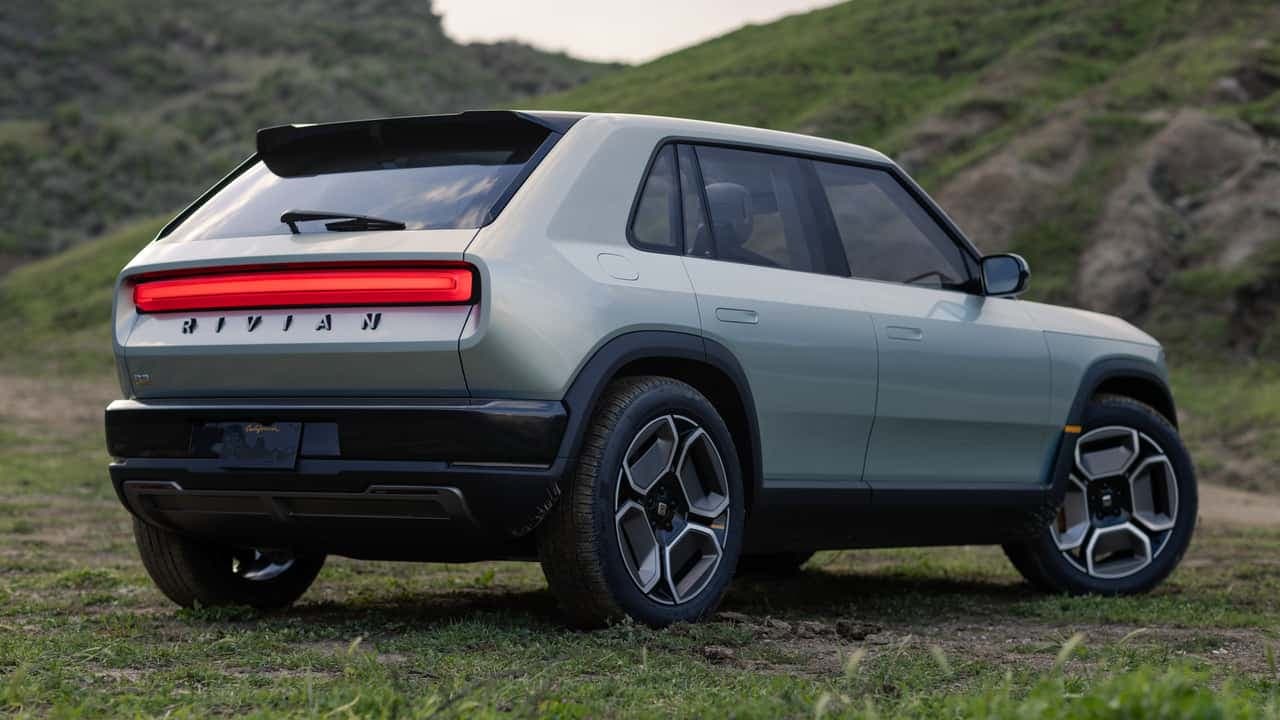
The Path to Affordability: Beyond the R2
Rivian is officially signaling a pivot toward more accessible price brackets. While the R2 model, which recently launched to significant critical acclaim, anchors the company’s current expansion strategy with a starting price target of approximately $45,000 for its standard edition, the brand is already looking toward the next phase of its product roadmap. According to CEO RJ Scaringe, the upcoming R3 hatchback is set to be priced "materially lower" than its predecessor, potentially opening the door for a wider demographic of electric vehicle buyers.
This strategic shift is essential for the brand’s long-term scale. By leveraging the manufacturing capabilities of their future Georgia-based facility, Rivian intends to move away from the luxury-only segment that defined the R1T and R1S, instead targeting the competitive mid-market and sub-compact categories. The R3, which first appeared as a surprise "one more thing" reveal alongside the R2, is already generating anticipation for its unique hatchback form factor and the promise of a high-performance R3X variant.
The R4 and the Future of Platform Sharing
While the R3 is expected to drive volume, the company has also confirmed the existence of an even more affordable model: the R4. Scaringe has been deliberate in keeping details sparse, but he has hinted that the R4 and a potential R5 are being developed as a "sibling set." This implies a sophisticated platform-sharing strategy where two distinct vehicle silhouettes will be built upon the same technical foundation, drastically reducing production overhead and development costs.
This modular approach to development is the cornerstone of Rivian’s ambition to compete with legacy automakers who have dominated the budget EV space for years. By sharing battery architecture, software stacks, and chassis components across the R4 and R5, the company hopes to maintain its signature brand identity—characterized by adventure-ready design and robust engineering—while achieving the economies of scale necessary to hit sub-$40,000 price points.
Why It Matters
- Mass Market Appeal: Moving below the $40,000 threshold allows Rivian to tap into the largest segment of the automotive market, moving beyond the niche off-road enthusiast crowd.
- Manufacturing Efficiency: The utilization of the Georgia plant and shared platforms for the R4 and R5 models is crucial to achieving the margins needed to sustain a high-growth EV business.
- Strategic Roadmap: By clearly outlining a "ladder" of products (R2, R3, R4), Rivian provides investors and consumers with a transparent view of the company’s evolution from a luxury boutique to a full-line manufacturer.
The Production Outlook
The road ahead is not without its hurdles. Success for the R3 and R4 depends entirely on the operational stability of the current R2 rollout. As Rivian works to scale production to hit a target of 70,000 units this year, the company is under pressure to prove that its high-volume manufacturing processes can maintain the quality standards established by its earlier, more expensive flagship models. With the R3 production slated to begin in 2028, the company has a narrow window to refine its logistics and supply chain to ensure that these promised price points remain economically viable when the vehicles finally reach showrooms.