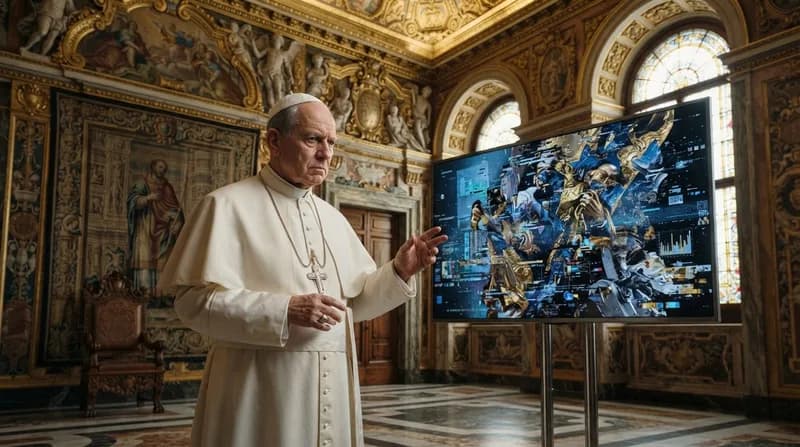
A Spiritual Stand Against Algorithmic Art
In a move that highlights the growing philosophical divide between traditional human expression and modern technology, Pope Leo XIV has publicly criticized the rise of AI-generated art. The Supreme Pontiff took to social media to articulate his stance, emphasizing that there is a fundamental, ontological distinction between creations born of human spirit and those assembled by machines.
The Pope’s argument centers on the nature of creativity itself. He contends that while AI models can aggregate and synthesize data from millions of existing images through statistical calculation, they are inherently incapable of producing true art. By his estimation, these algorithms lack the vital essence of the human experience, which he believes is a necessary component for the creation of meaningful, authentic artistic works.
The Broader Debate on Human Dignity
This recent commentary serves as an extension of a deeper theological inquiry initiated by the Vatican earlier this year. In an encyclical letter released this past May, Pope Leo XIV explored the broader implications of automation and artificial intelligence, focusing on the preservation of human dignity in an increasingly mechanized world. The document warned against the potential erosion of human purpose as society becomes more reliant on non-human systems to perform tasks previously reserved for the human mind.
Despite this firm stance, the Vatican remains a focal point for AI developers and lobbyists. According to recent reports, firms like Anthropic have engaged in efforts to sway the Holy See’s perspective, particularly regarding the concept of non-human consciousness. These lobbying efforts suggest that tech giants are keenly aware that the Vatican’s influence holds significant weight in shaping global ethical debates surrounding the development and deployment of advanced AI systems.
Why It Matters
- Philosophical Divergence: The Vatican’s critique frames AI art as a statistical exercise rather than a creative one, challenging the industry narrative that machine output is equivalent to human expression.
- Ethical Lobbying: The acknowledgment of direct lobbying by AI companies to the Vatican signals that the industry is actively seeking cultural and ethical legitimacy for its technologies.
- Policy Implications: By labeling the difference as 'ontological,' the Pope is signaling that the debate is not merely about copyright or jobs, but about the inherent value of human-made cultural artifacts in the digital age.
As the conversation around AI safety and regulation intensifies, the voice of the Church adds a layer of moral complexity to the technical discourse. While Silicon Valley pushes for the rapid integration of generative tools, religious and ethical leaders are increasingly framing these advancements as a challenge to what defines humanity, setting the stage for a prolonged confrontation between tech innovation and traditional philosophy.