The Evolution of Go
Superhuman is significantly expanding the scope of its 'Go' AI assistant, moving beyond a simple email tool to become a comprehensive productivity engine. Following its rebranding last year, the company is now integrating Go directly into its document editing environment and email platform, aiming to provide a more cohesive, context-aware experience. By learning from user interactions across various integrated tools, the assistant is designed to provide highly personalized prompt suggestions and workflow management that understands the nuances of an individual’s professional and personal life.
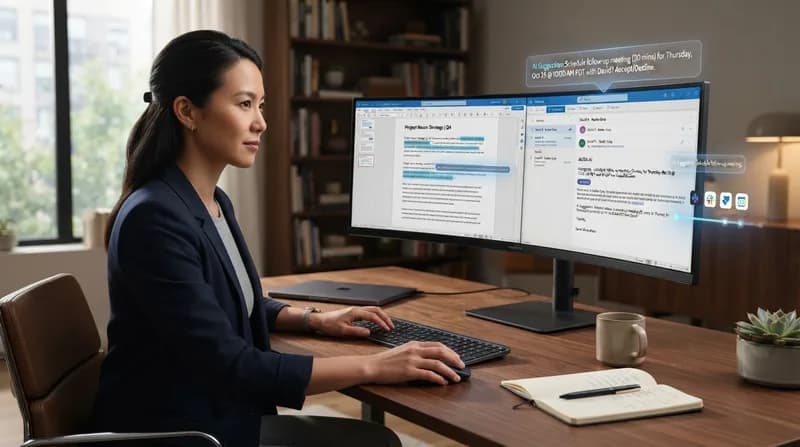
The updated Go platform introduces a proactive approach to task management. Rather than waiting for user input, the assistant now monitors calendars, synthesizes email communications, and drafts responses autonomously. This evolution turns Go from a reactive tool into an active collaborator that understands context, tone, and user-specific writing styles to ensure that generated text feels authentic and aligned with the user's established voice.
Seamless Integration and Expanded Capabilities
A core feature of the new rollout is the revamped onboarding flow, which allows users to connect their existing digital toolset upfront. By aggregating context from a company's knowledge base and external platforms, Go can perform complex enterprise searches and manage inboxes across both Google and Outlook accounts. This capability is enhanced by the introduction of 20 new third-party agent integrations—including DeepL, Amplitude, and Databricks—accessible via the new Go SDK. These integrations allow Go to act as a central hub, orchestrating tasks between disparate software platforms.
The platform's utility is further bolstered by the integration of Fathom, a notetaking tool acquired by Superhuman earlier this year. With live collaborative notetaking now a part of the suite, Go can process meeting transcripts in real-time. Post-meeting, the assistant is capable of independent decision-making, such as drafting initial project proposals based on the collaborative notes and action items identified during the session.
Why It Matters
- Contextual Continuity: By shifting focus from individual app AI to a universal assistant that works across Mail and Docs, Superhuman is positioning itself as a central productivity layer.
- Proactive Workflow: The transition toward autonomous drafting and meeting follow-ups reduces the friction of manual administrative tasks.
- Ecosystem Connectivity: The addition of 20 third-party agents via the Go SDK significantly expands the assistant's reach, allowing it to interface with niche professional tools.
Outlook and Strategic Positioning
While the market for AI assistants is becoming increasingly crowded, Superhuman is positioning Go to bridge the gap between pure consumer convenience and professional efficiency. CEO Shishir Mehrotra has emphasized that the goal is to treat the user as a "whole person," ensuring that the assistant is capable of handling heavy-duty work tasks while remaining useful for personal scheduling and correspondence. By positioning itself against major market incumbents, Superhuman aims to establish Go as the primary interface for daily digital interaction, moving far beyond its origins as a specialized email client.