ScienceTechnical Deep Dive

Unlocking Time: 'Mini-Universe' Reveals How Time Emerges From Within

Published
EElectricBuzz Editorial Team
Unlocking Time: 'Mini-Universe' Reveals How Time Emerges From Within
2 min read261 wordsElectricBuzz Editorial Team

The Gist

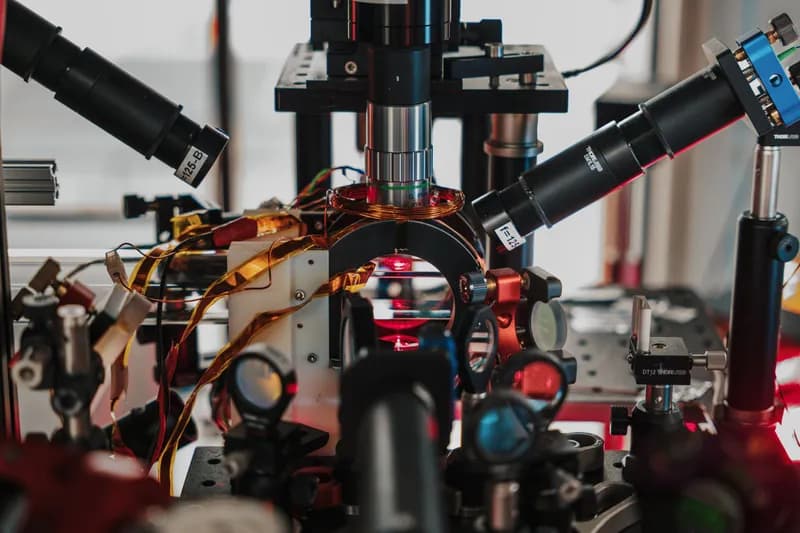
A groundbreaking experiment by University of Birmingham scientists has crafted a 'mini-universe' to demonstrate how time might not be a universal ticking clock, but an emergent property born from the changes within a system.

Rewriting the Rules of Time

What if time wasn't a universal constant, but something that simply… emerges? A revolutionary experiment at the University of Birmingham, led by Professor Giovanni Barontini, is challenging our fundamental understanding of time, offering the first experimental evidence that time can arise from within a system itself, rather than being an external, independent clock.

Published in Physical Review Research, the study details the creation of a 'mini-universe' – a hermetically sealed quantum system comprising 24,000 ultracold rubidium atoms, just a few billionths of a degree above absolute zero. This miniature cosmos, divided into 'bright' and 'dark' regions, undergoes cycles akin to a Big Bang and Big Crunch. Crucially, the sequence of events is reconstructed from within the system, without any reference to an outside clock.

The Birth of 'Entropic Time'

The key insight comes from what Professor Barontini terms 'entropic time.' The team observed that as atoms shifted between regions, causing the spread or disorder (entropy) within the 'bright' sector to change, the system effectively 'moved forward in time.' When the atomic distribution remained static, time essentially stopped. This 'entropic time' consistently flows in one direction, orders events, and even accelerates or decelerates based on entropy changes.

This remarkable finding offers a powerful new lens through which to view complex theories like quantum gravity, where time often doesn't appear as a built-in feature. The 'mini-universe' provides a unique test bed for probing the very nature of time, allowing scientists to experimentally investigate questions about the universe's origins and black holes that were once confined to theoretical discussions.


The 5 Best Over-Ear ANC Headphones of 2026, Tested & Ranked
Editor's Pick Guide
92/100
Tech & Gadgets12 min read

The 5 Best Over-Ear ANC Headphones of 2026, Tested & Ranked

We locked five over-ear ANC picks for 2026 — Sony WH-1000XM6, Bose QuietComfort Ultra 2, Soundcore Space One, Sennheiser Momentum 5, and Apple AirPods Max 2 — then stress-tested them on lab metrics, long-term owner truth, and live street prices.

Related Stories

Semantically matched articles, ranked by topic overlap and freshness.

Cosmic Consistency: Black Holes Across the Universe Obey a Single Rule
Science

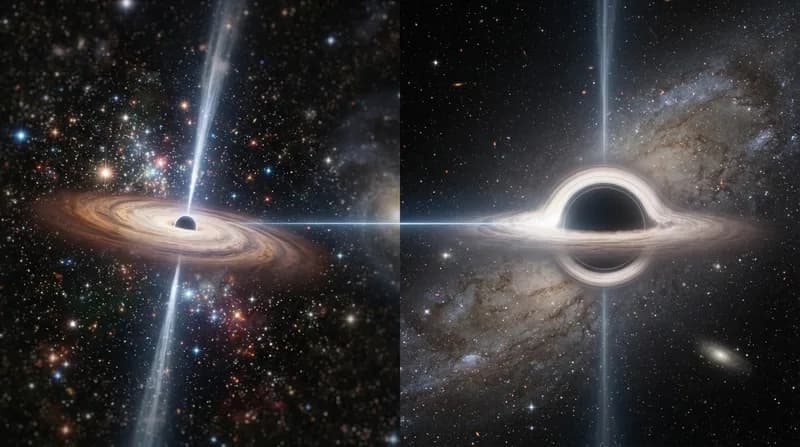
Cosmic Consistency: Black Holes Across the Universe Obey a Single Rule

Astronomers have discovered a universal threshold that triggers jet formation in black holes, bridging the massive gap between stellar-scale and supermassive objects.

Cornell Researchers Unveil Breakthrough Portable Test to Differentiate Ebola and Lassa
Science

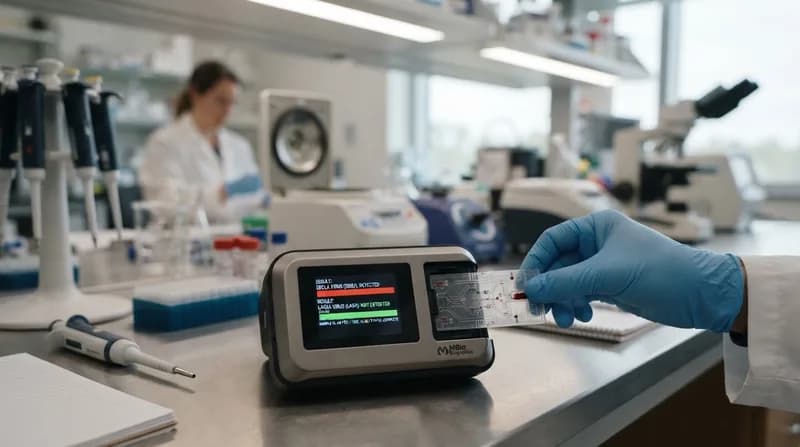
Cornell Researchers Unveil Breakthrough Portable Test to Differentiate Ebola and Lassa

A new diagnostic platform brings laboratory-grade precision to the field, allowing health workers to distinguish between two deadly viruses in seconds.

The Hidden Danger of Culturally 'Sensitive' AI Mental Health Chatbots
Science

The Hidden Danger of Culturally 'Sensitive' AI Mental Health Chatbots

While AI chatbots are filling a gap in mental health access, new research suggests that training them for cultural nuance could inadvertently make them more dangerous.

Closing the Loop: Researchers Transform Plastic Waste into Liquid Fuel
Science

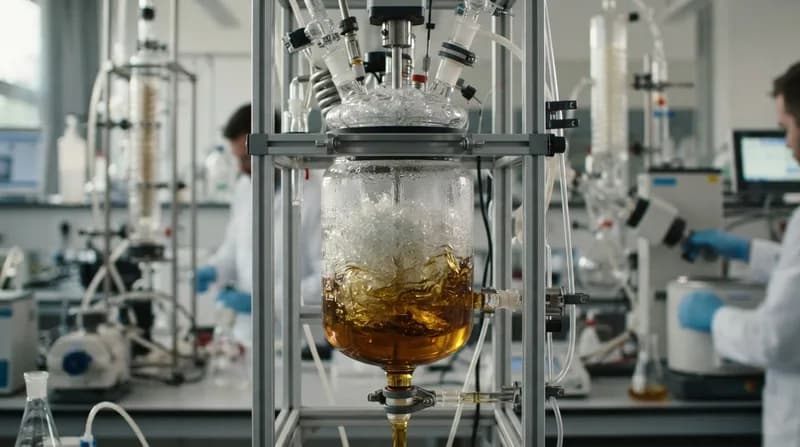
Closing the Loop: Researchers Transform Plastic Waste into Liquid Fuel

Scientists at Oak Ridge National Laboratory have pioneered a low-temperature chemical process that converts common polyethylene waste into gasoline and diesel-like fuels.

NASA Activates Roman Space Telescope's 300-Megapixel Cosmic Eye
Science

NASA Activates Roman Space Telescope's 300-Megapixel Cosmic Eye

NASA has successfully brought the Wide Field Instrument and Coronagraph online, marking a critical milestone for the Roman Space Telescope's upcoming survey of the cosmos.

The mAxialtrode: A Multifunctional Leap in Neural Interface Technology
Science

The mAxialtrode: A Multifunctional Leap in Neural Interface Technology

Researchers have developed a flexible, needle-thin brain implant capable of simultaneously recording neural signals, delivering medication, and stimulating multiple brain regions.

Jurassic Migration: First Diplodocus Fossil Unearthed Outside North America
Science

Jurassic Migration: First Diplodocus Fossil Unearthed Outside North America

A monumental discovery in Spain reveals that the legendary Diplodocus once roamed across continents, challenging our understanding of Jurassic-era migration.

Deep-Sea Microbial Enzyme Defies Physics to Revolutionize Nitrogen Fixation
Science

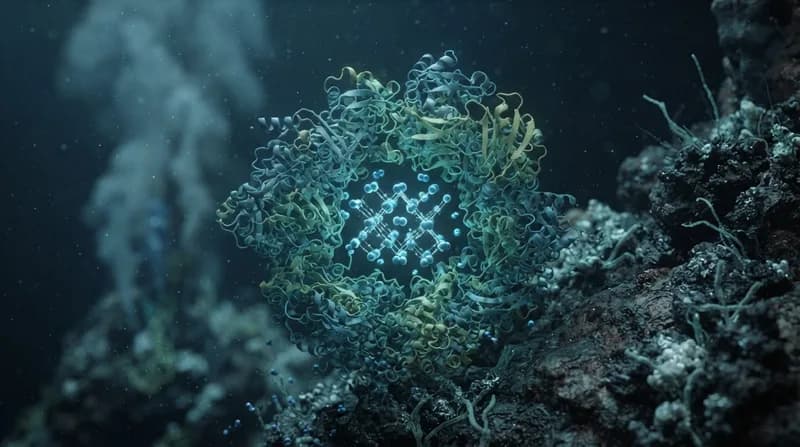
Deep-Sea Microbial Enzyme Defies Physics to Revolutionize Nitrogen Fixation

Researchers have discovered a heat-resistant enzyme in a deep-sea archaeon that operates at extreme temperatures, potentially paving the way for cleaner, sustainable fertilizer production.