Challenging the Traditional Narrative
For decades, the leading hypothesis regarding how mammals develop their hair patterns has been the 'expansion-induction' model. This theory posited that as an embryonic skin surface expands, hair placodes—the precursor structures to follicles—secrete a chemical inhibitor that prevents neighbors from developing too close by. As the skin stretches, certain areas eventually move beyond the reach of these inhibitors, allowing new follicles to sprout in the empty space. While this model has been widely accepted, it has struggled to explain the vast diversity of patterns found across different mammalian species.
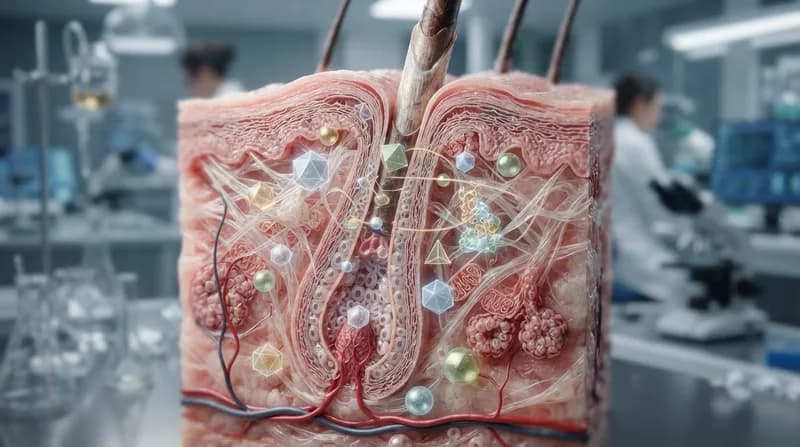
A breakthrough study from the University of Geneva (UNIGE), published in the journal PNAS, suggests that the truth may be far more elegant. Instead of a complex, pre-programmed blueprint dictating exact follicle placement, the researchers posit that these intricate arrangements arise from spontaneous self-organization governed by chemotaxis—the process by which cells navigate in response to chemical gradients.
The Role of Chemotaxis
The research team, led by Athanasia Tzika and Michel Milinkovitch, developed a sophisticated mathematical model to simulate how mobile cells in the dermis interact with attracting chemical signals released by the outer layer of the epidermis. By treating the skin as a dynamic system, the team was able to replicate the exact hair follicle patterns seen in laboratory mice without needing an elaborate set of genetic instructions for every single follicle position.
Essentially, the study demonstrates that placodes emerge naturally from local interactions between neighboring cells and chemical signals. This discovery bridges the gap between simple biological inputs and complex structural outputs, suggesting that nature does not require a granular map for every piece of the puzzle. Instead, it relies on a shared, robust set of rules that allow tissues to organize themselves based on the environment they occupy.
Why It Matters
- Paradigm Shift: The research moves the scientific understanding of developmental biology from 'instruction-based' to 'self-organization' models.
- Universal Mechanisms: By proving the same mechanism applies to the spiny mouse, the team showed that diverse animal coats aren't the result of entirely different biological blueprints, but rather small variations in how cells respond to the same underlying chemical rules.
- Broad Implications: This foundational discovery offers insights into how other biological structures, such as feathers and scales, may have evolved through similar minimalist mechanisms.
From Common Mice to the Spiny Mouse
The researchers put their theory to the test by applying it to the spiny mouse (Acomys dimidiatus), a rodent known for its highly organized and strictly aligned hair patterns. The traditional expansion-induction theory fails to account for this species' unique directional growth. However, by adjusting their simulation to reflect the specific biochemical characteristics and skin-growth dynamics of the spiny mouse, the researchers were able to successfully replicate its distinctive coat pattern.
This outcome is a significant milestone in evolutionary biology. It suggests that nature is incredibly efficient, utilizing a core toolkit of chemical behaviors to generate a wide spectrum of physical traits. Rather than evolving new blueprints for every species, evolution appears to have fine-tuned existing cellular communication systems to produce the remarkable structural diversity we observe in the animal kingdom today.
Outlook and Implications
Moving forward, these findings offer a new lens through which to examine developmental biology. If complex tissue architectures can be derived from simple cellular interactions, scientists may find it easier to model and potentially influence tissue growth in other contexts. This research not only solves a long-standing mystery regarding mammalian hair but also deepens our understanding of how self-organizing systems drive the complexity of life itself.