ScienceTechnical Deep Dive

Atmospheric Anomaly: Why the Antarctic Ozone Hole Expanded to a Decade-High

Published
EElectricBuzz Editorial Team
Atmospheric Anomaly: Why the Antarctic Ozone Hole Expanded to a Decade-High
3 min read490 wordsElectricBuzz Editorial Team

The Gist

“Despite a significant seasonal expansion in 2026, climate experts at NASA and NOAA emphasize that the long-term recovery of Earth's ozone layer remains firmly on track.”

A Temporary Setback in Atmospheric Recovery

The Antarctic ozone hole reached one of its largest sizes in nearly half a century during the 2026 season, marking a significant, albeit temporary, expansion that scientists have not observed in over a decade. Spanning an average area of approximately 9.6 million square miles between early September and mid-October, the hole represents a stark reminder of the delicate balance within our stratosphere. While the physical size of the depletion zone—roughly double the landmass of the United States—is alarming at first glance, researchers from NASA and the National Oceanic and Atmospheric Administration (NOAA) are quick to clarify that this event does not signify a reversal of the ozone layer's long-term healing trend.

The primary culprit behind this expansion was an exceptionally robust and stable polar vortex. This massive circulation of stratospheric winds effectively trapped frigid air over the Antarctic, creating the ideal conditions for ozone-depleting chemical reactions to proliferate. In a typical year, planetary-scale weather systems would push against this vortex, breaking it up and moderating its temperature. In 2026, however, these atmospheric waves were unusually weak, allowing the vortex to maintain its strength and extent throughout the peak of the season.

The Role of International Policy

Despite the size of the 2026 hole, the damage could have been significantly worse without the global commitment to the Montreal Protocol. The international agreement, which began phasing out ozone-depleting substances like chlorofluorocarbons (CFCs) in the late 1980s, has successfully reduced the atmospheric concentration of these harmful compounds by about one-third compared to their peak levels in the 1980s. Scientists estimate that without these critical environmental protections, the 2026 ozone hole would have been between 1 and 2 million square miles larger.

Why it Matters

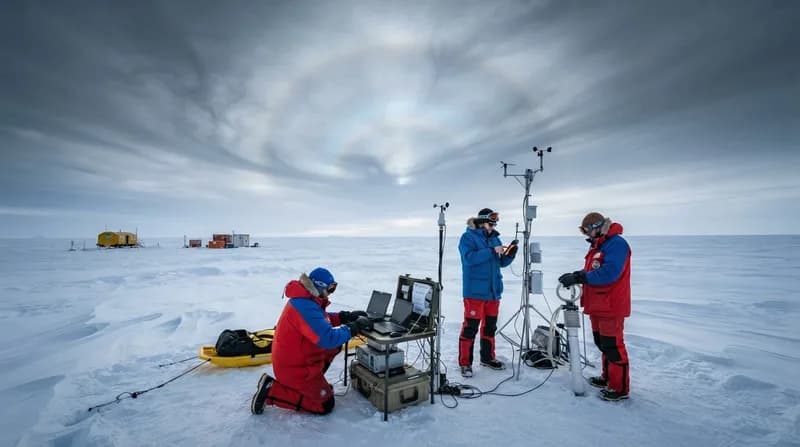
  • Strategic Monitoring: NASA and NOAA utilize a combination of satellite imagery and direct ground-level measurements from the South Pole to track ozone density.
  • Chemical Legacy: While production has ceased for many damaging chemicals, their long atmospheric residence time means they will continue to influence stratospheric chemistry for decades.
  • Projected Healing: Despite seasonal volatility caused by weather patterns, current models remain consistent, predicting a full recovery of the Antarctic ozone layer by the 2070s.
  • The "Sunscreen" Effect: Stratospheric ozone acts as a vital barrier against harmful solar radiation, making the continued monitoring of its health essential for global ecosystems.

Scientific Outlook and Implications

The 2026 findings underscore the complexity of our atmosphere, where short-term weather anomalies can mask long-term progress. While researchers noted a minimum ozone concentration of 105 Dobson units—a measure of the ozone column's thickness—this remains well above the record-low levels observed in 2006. The use of advanced instrumentation, including the Aura satellite and various NOAA-series sensors, continues to provide a granular view of these atmospheric fluctuations. As the global community moves toward the 2070s target for full recovery, the 2026 event serves as a valuable data point that highlights the resilience of the atmosphere when supported by effective, evidence-based environmental policy.

SPONSORED
The 5 Best Over-Ear ANC Headphones of 2026, Tested & Ranked
Editor's Pick Guide
92/100
Tech & Gadgets•12 min read

The 5 Best Over-Ear ANC Headphones of 2026, Tested & Ranked

We locked five over-ear ANC picks for 2026 — Sony WH-1000XM6, Bose QuietComfort Ultra 2, Soundcore Space One, Sennheiser Momentum 5, and Apple AirPods Max 2 — then stress-tested them on lab metrics, long-term owner truth, and live street prices.

Related Stories

Semantically matched articles, ranked by topic overlap and freshness.

Prehistoric Giant: Fossil Discovery Reveals 66-Pound Rodent from 34 Million Years Ago
Science

Prehistoric Giant: Fossil Discovery Reveals 66-Pound Rodent from 34 Million Years Ago

Paleontologists have unearthed evidence of a massive ancient rodent in Thailand, challenging existing theories on the timeline and geography of rodent gigantism.

New Surgical Protocol: Skipping Morning Blood Pressure Medication Reduces Intraoperative Risks
Science

New Surgical Protocol: Skipping Morning Blood Pressure Medication Reduces Intraoperative Risks

A major clinical trial reveals that withholding ACE inhibitors and ARBs on the day of noncardiac surgery significantly lowers the risk of dangerous intraoperative hypotension in older patients.

Infrared Imaging Unlocks the Secret to Sustained Prosthetic Sensation
Science

Infrared Imaging Unlocks the Secret to Sustained Prosthetic Sensation

Researchers are using non-invasive infrared light technology to decode why artificial touch fades over time, paving the way for more reliable prosthetic limbs.

Living Medicine: Repurposed Bacteria Combat Deadly Hospital Biofilms
Science

Living Medicine: Repurposed Bacteria Combat Deadly Hospital Biofilms

Researchers have successfully utilized a genetically modified 'living medicine' to clear antibiotic-resistant bacterial films from ventilation tubes in a landmark animal study.

Unlocking the Secrets of the Rising Star: Ancient Proteins Reveal a Gender Mystery
Science

Unlocking the Secrets of the Rising Star: Ancient Proteins Reveal a Gender Mystery

New proteomic analysis of Homo naledi remains suggests an exclusively female burial site, challenging our understanding of ancient hominin social structures.

Jurassic 'Chunk': Scientists Uncover Bizarre New Squid Relative
Science

Jurassic 'Chunk': Scientists Uncover Bizarre New Squid Relative

Paleontologists have identified Wyoteuthis linsterorum, a uniquely robust Jurassic predator that has rewritten our understanding of ancient marine cephalopod evolution.

The Hidden Health Crisis: How Hurricanes Impact Medically Vulnerable Seniors
Science

The Hidden Health Crisis: How Hurricanes Impact Medically Vulnerable Seniors

New research highlights the long-term health consequences for elderly patients relying on electric medical devices in the wake of severe flooding and storm events.

The Predictive Brain: How Modern Neuroscience Validates Freudian Theory
Science

The Predictive Brain: How Modern Neuroscience Validates Freudian Theory

A groundbreaking analysis suggests that the human brain operates as a 'prediction machine,' echoing psychoanalytic concepts proposed by Sigmund Freud over a century ago.