Can We Engineer Our Way Out?
As marine heatwaves intensify globally, threatening crucial ecosystems and the seafood supply for billions, scientists are exploring radical solutions. A recent study from Michigan State University delves into the potential of solar geoengineering, a climate intervention strategy that aims to cool the planet by reflecting sunlight back into space, similar to large volcanic eruptions.
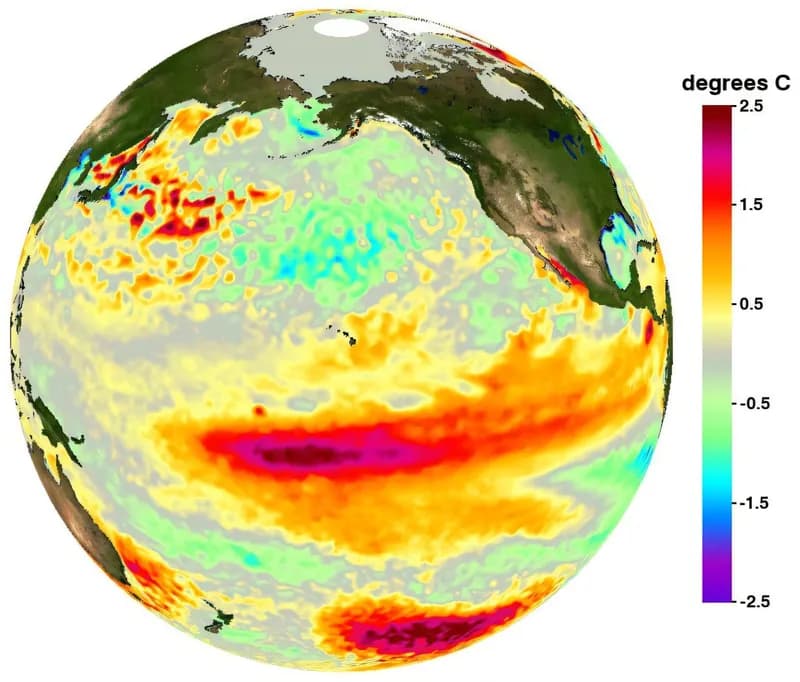
The research, published in Environmental Research: Climate, modeled future scenarios and found that an aggressive deployment of stratospheric aerosol injection—releasing sun-blocking particles high above Earth—could protect up to 75% of the oceans from escalating heatwaves by 2069. Regions like the tropical Atlantic, Indian Ocean, and Arctic could see significant benefits.
However, the findings also highlight a critical caveat: the protection is deeply unequal. Even with aggressive intervention, nearly 25% of the world's oceans, including parts of the North Atlantic and Pacific, could still face longer, hotter heatwaves, with some areas entering a perpetual state of overheating. Furthermore, solar geoengineering does not address rising CO2 levels, which continue to cause ocean acidification—a separate, severe threat to marine life. Researchers emphasize that while it offers a potential partial mitigation, it is not a substitute for drastic emissions reductions, which remain the primary solution to climate change.