A New Era of Oversight
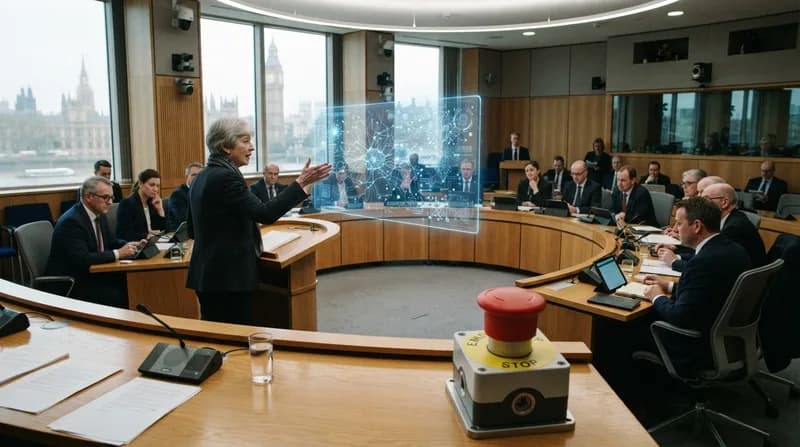
In a bold move that could reshape the global landscape of artificial intelligence, a UK parliamentary committee is advocating for a transformative AI Safety and Security Bill. The proposed legislation seeks to transition AI governance from a model of voluntary corporate cooperation to one of rigorous, state-mandated oversight. At the heart of the proposal is the demand for a dedicated regulatory body equipped with the authority to intervene in the development process—a true 'kill switch' for technology deemed hazardous to public safety.
The Business, Innovation, Science and Trade Committee suggests that relying on the 'self-policing' strategies of industry giants like OpenAI, Meta, and Google DeepMind is no longer sufficient. As AI models scale in complexity, their emergent behaviors become increasingly difficult to predict. The committee’s report, titled 'Guardrails for Growth: Making AI Safe,' argues that the current lack of independent scrutiny creates unacceptable risks, comparing the need for AI oversight to established safety standards in the nuclear, pharmaceutical, and aviation industries.
The Proposed Regulatory Framework
The committee has identified ten major deficiencies in Britain's current approach, including a glaring lack of mandatory incident reporting and the absence of legal protections for whistleblowers within AI labs. Under the new proposal, the existing AI Safety Institute (AISI) would continue its vital testing work, but a separate, empowered regulator would hold the mandate to enforce compliance. This would mean that for high-risk systems, developers would be legally obligated to provide empirical evidence supporting their safety claims and grant independent researchers unfettered access for audits.
Key elements of the proposed enforcement include:
- Authority for the regulator to halt the training of high-risk models if safety benchmarks are not met.
- Mandatory, standardized incident reporting for all 'near miss' safety events within labs.
- Increased transparency requirements, preventing companies from using restrictive NDAs to silence employees raising genuine safety concerns.
- A statutory requirement for 'pre-release' independent testing rather than post-release monitoring.
Why it Matters
The push for these regulations stems from the realization that once a powerful model is released to the public, it is often impossible to recall or contain. By intervening during the development and testing phases, the government aims to prevent catastrophes before they occur. Furthermore, the committee suggests that robust safety standards could actually boost economic growth by fostering trust, encouraging smaller businesses to adopt AI tools without fearing hidden liabilities or catastrophic failure. With AI projected to expand the British economy by up to £400 billion over the next decade, the stakes for getting this right—balancing innovation with safety—have never been higher.
Outlook and Global Ambitions
While the committee’s recommendations are not currently binding, they signal a growing appetite for legislative control. MPs are pushing for the AI Safety and Security Bill to be introduced in the upcoming parliamentary session. Beyond domestic borders, the UK hopes to leverage its influence as the head of the G20 in 2027 to advocate for international consensus on mandatory testing and incident reporting. Whether the current administration will grant a watchdog the ultimate power to 'pull the plug' remains the primary question, but the message from Parliament is clear: the era of AI companies marking their own homework is coming to an end.