The Scope of the Recall
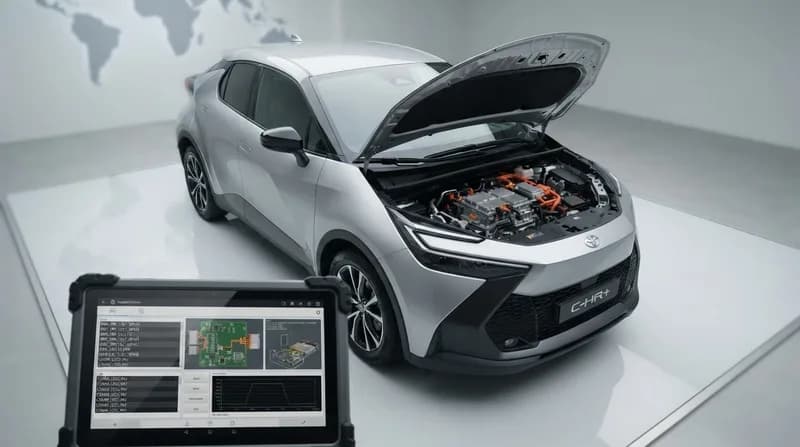
Toyota has launched a significant global recall effort affecting approximately 19,000 units of its C-HR+ electric SUV. This preemptive safety action addresses a specific software vulnerability found in the vehicle's Electric Vehicle Electronic Control Unit (EV-ECU). While the issue has not resulted in any reported accidents, injuries, or property damage to date, the manufacturer is acting quickly to resolve the technical discrepancy before it manifests in real-world scenarios.
The recall primarily impacts vehicles manufactured between June 17, 2025, and July 9, 2026. Data from the German Federal Motor Transport Authority (KBA) indicates that 1,096 of these vehicles are located in Germany, while a separate but related campaign in North America covers approximately 10,000 units, including 1,310 vehicles in Canada. Owners of the affected 2026 model-year SUVs are being advised to schedule a visit to their local authorized service center for a mandatory software update.
Understanding the Technical Fault
At the heart of the issue is the interaction between the battery management system and the vehicle's regenerative braking software. Under specific circumstances, particularly when the battery is at a high state of charge, the software may fail to properly manage energy flow during regeneration. This can lead to an overcharge condition, triggering a series of onboard warning messages. In the most severe cases, the EV-ECU may automatically shut down the powertrain to prevent permanent damage to the battery pack, potentially leaving the driver without propulsion while in motion.
To rectify this, technicians will reprogram the EV-ECU to ensure more precise energy monitoring and coordination between the mechanical and electrical components. The EV-ECU is the central nervous system of the vehicle, responsible for monitoring battery health and governing motor output; updating its firmware will restore the intended safety buffers, ensuring that regenerative energy is handled correctly even at maximum battery capacity.
Context and Vehicle Specifications
The C-HR+ is a key component of Toyota’s all-electric lineup, built upon the flexible e-TNGA platform—the same architecture that underpins the bZ4X. Measuring 4.52 meters in length, the SUV coupé is designed to offer a balance between style and utility. Despite the current recall, the C-HR+ remains a sophisticated piece of engineering, available in several configurations to suit different driver needs.
Technical Highlights:
- Platform: e-TNGA dedicated electric platform.
- Battery Options: A 57.7 kWh gross (54 kWh net) entry-level pack or a 77 kWh gross (72 kWh net) long-range pack.
- Range: Up to 458 kilometers on the smaller battery and up to 607 kilometers on the larger unit (WLTP).
- Power Output: Single-motor configurations offer either 123 kW or 165 kW, while the performance-oriented AWD variant pushes 252 kW.
- Charging: Supports DC fast charging at speeds up to 150 kW.
By addressing this software glitch now, Toyota aims to maintain the long-term reliability for which its brand is known, even as it pivots toward more complex, software-defined electric powertrains.