Scaling Sustainable Logistics
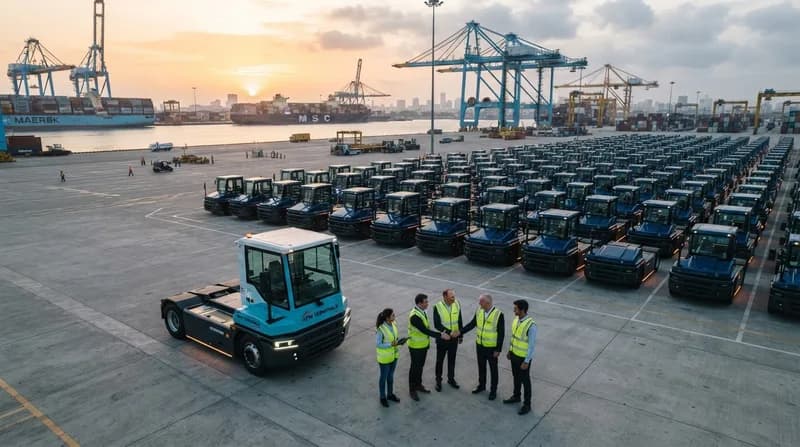
The transition to green freight in India hit a significant milestone this week as Energy In Motion (EIM)—an associate company of Ravindra Energy—announced a deal to supply 500 heavy-duty electric trucks to Sorigin Green Mobility. The two companies have finalized a memorandum of understanding to roll out these vehicles over the next two years, marking a substantial step forward for the decarbonization of India’s busiest freight corridors.
Under the terms of the agreement, Sorigin Green Mobility will be responsible for financing, operating, and maintaining the fleet. The deployment is specifically targeted at high-traffic logistics routes, most notably those surrounding the Jawaharlal Nehru Port Authority (JNPA) in Navi Mumbai. This strategic location is already familiar territory for EIM, which had successfully integrated 150 of its electric tractors into port operations as of September 2026.
The Ashwa Electric Tractor
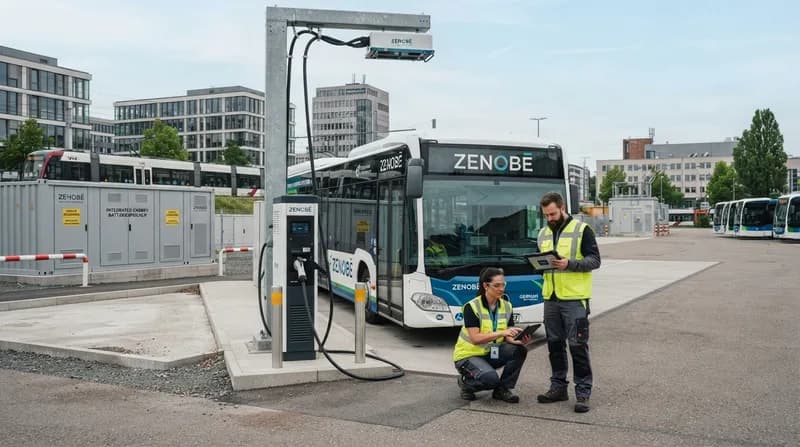
The backbone of this new fleet is the EIM Ashwa, a 55-tonne battery-swappable electric tractor. Based on the proven eAuman platform from Chinese manufacturer Foton, the Ashwa is engineered to handle the rigorous demands of heavy-duty hauling while minimizing downtime through its swappable battery architecture. Beyond the hardware, EIM will provide the essential ecosystem to support these trucks, including dedicated battery-swapping stations, fast-charging infrastructure, and sophisticated energy management software.
To meet the growing demand, EIM has shifted its manufacturing strategy. While the company initially imported the trucks as completely built-up units, it has transitioned to a completely knocked-down (CKD) assembly model. This shift is centered at the company’s new manufacturing facility in Talegaon, Maharashtra, which boasts an annual capacity of 5,000 units. Production is expected to hit a steady rhythm of 200 units per month starting in January 2027.
Why it Matters
The deployment of 500 electric heavy-duty vehicles represents a critical shift in how India approaches industrial emissions. By focusing on battery-swapping technology, EIM is directly tackling the primary bottlenecks in electric trucking: vehicle turnaround time and energy costs. Traditional charging can leave a truck idle for hours, but swappable technology allows for near-immediate return to service, effectively matching the operational efficiency of diesel counterparts. With the company aiming to grow its network from eight to 40 swapping-cum-charging stations by March 2027, EIM is building the backbone for a scalable, high-speed freight network that could serve as a template for other emerging markets.