The Rise and Fall of the N Vision 74
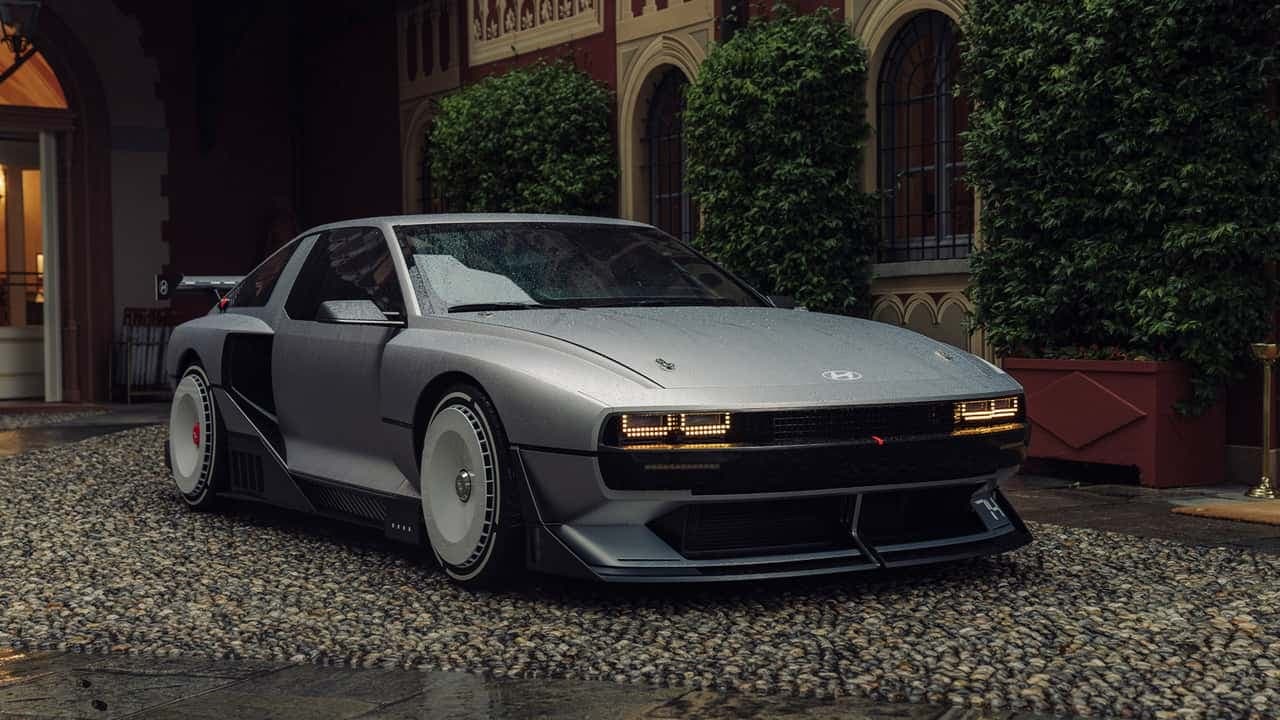
For a brief moment, the automotive world believed that a hydrogen-powered, retro-styled sports coupe might actually make it to dealer showrooms. The Hyundai N Vision 74, with its chiseled lines reminiscent of 1970s wedge-era design and its aggressive, muscle-car-inspired stance, captured the imagination of designers and drivers alike. It was more than just a concept; it was a bold statement about how sustainable mobility could coexist with high-performance driving. Unfortunately, Hyundai has officially confirmed that plans for a production version are on ice.
The decision, while disappointing to many, boils down to the cold, hard numbers of automotive manufacturing. Simon Loasby, head of Hyundai's Design Center, recently clarified that while the company possessed fully realized clay models and interior designs, the math simply did not work. For a project of this scale, the projected production volume failed to provide the financial stability required to move from the conceptual stage to mass-market manufacturing.
Understanding the Business Case Dilemma
The core challenge for the N Vision 74 was its unique powertrain configuration. Rather than following the path of standard battery-electric vehicles, the concept utilized hydrogen fuel cell technology paired with two electric motors. While this setup promised a high-performance experience, integrating such advanced and niche hardware into a consumer-facing vehicle creates significant cost hurdles. In the automotive industry, "business case" is the ultimate arbiter; a car must be able to prove it can either turn a profit on its own or provide significant "brand-raising" value to justify the R&D expenditure.
Despite the high regard for the N Vision 74 within the enthusiast community, Hyundai determined that the return on investment did not reach the threshold necessary to greenlight the project. The automotive landscape is currently shifting toward mass-electrification, and pouring significant capital into a low-volume, specialized hydrogen sports car proved to be too great a risk for the company's current strategic roadmap.
The Legacy Lives On in Modern Design
While the N Vision 74 as a standalone product may be shelved, its design DNA is far from lost. Recognizing the immense success of the concept’s aesthetic, Hyundai’s leadership decided that the visual language created for the N74 was too valuable to discard. Specifically, the sharp roof lines, the unique side profile, and the distinctive pillar styling have been carefully integrated into newer, high-volume models, such as the 2027 Hyundai Elantra.
This "trickle-down" design philosophy allows the spirit of the N Vision 74 to persist on the road. By incorporating these elements into production vehicles, Hyundai is effectively keeping the brand's performance-focused design language alive without the burden of the niche powertrain. Furthermore, there is a hint that this design language could eventually pave the way for a high-performance "N" variant of the Elantra, suggesting that the N74’s influence will be felt in Hyundai’s lineup for years to come.
Outlook and Implications
The shelfing of the N Vision 74 is a sobering reminder of the gap between design aspiration and industrial reality. While enthusiasts often clamor for bold, niche vehicles, the cost of scaling new technologies remains a primary obstacle for global manufacturers. However, the fact that the project was taken so seriously that a production-ready clay model was developed suggests that Hyundai remains open to high-performance, design-forward concepts. As battery and hydrogen technology continue to evolve, the door remains slightly cracked for a future two-door sports car that could embody the spirit of the N Vision 74 in a more economically viable form.