The Collateral Conundrum
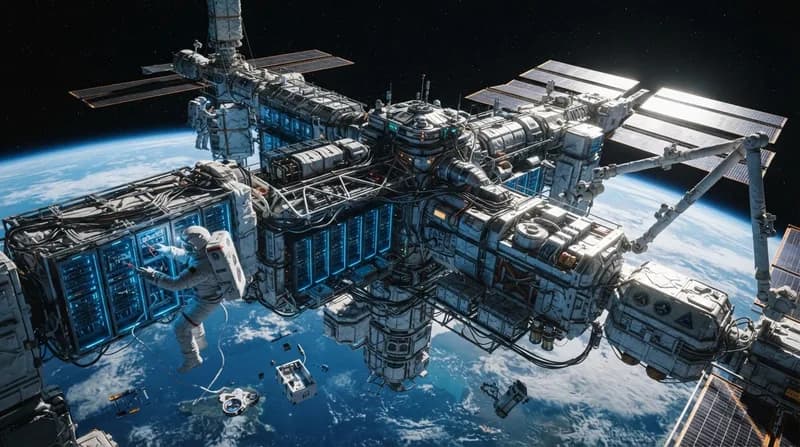
The vision of establishing high-performance data centers in orbit is moving from science fiction toward engineering feasibility, but a significant financial barrier has emerged. The modern data center industry relies heavily on debt financing, where cloud providers secure loans to build out infrastructure, using the chips themselves as physical collateral. In terrestrial settings, this model works because lenders have a clear path to repossess and resell expensive hardware like Nvidia H100 or H200 GPUs should a default occur. However, this recovery mechanism is fundamentally impossible when the hardware is mounted on a satellite speeding through the vacuum of space.
This fundamental disconnect in asset recovery is causing friction between financiers and aerospace giants. Reports suggest that lenders involved in SpaceX’s massive $40 billion financing round have specifically requested that funds not be allocated toward chips destined for orbital data centers. This pushback highlights a growing skepticism among financial institutions regarding the security of investments that cannot be easily retrieved or liquidated in the event of a commercial failure.
The Terrestrial vs. Orbital Divide
For now, the strategy for many companies—SpaceX included—is to maintain a heavy focus on terrestrial compute. By building massive ground-based data centers, companies can satisfy traditional financing requirements while simultaneously scaling their AI capabilities. CEO Elon Musk has been aggressively pivoting company resources, including shifting rocket engineering talent to manufacturing tasks, such as casting turbine blades for generators, to speed up this ground-based deployment.
Despite this, the long-term ambition remains tethered to orbit. Musk has openly posited that space could become the most cost-effective location for data operations within a few years. Yet, achieving this requires more than just launching hardware; it requires a fully reusable rocket architecture, specifically Starship. While recent flight tests have shown progress in recovery capabilities, the operational costs of refurbishment remain an unknown variable that complicates the long-term financial outlook for space-based computing.
The Future of Space Infrastructure
The financing challenge is not unique to SpaceX. A host of emerging startups, including StarCloud, Cowboy Space Corporation, Sophia Space, and Orbital, are all staring down a similar capital-intensive future. Because space hardware is inherently more expensive and impossible to repossess, these companies face higher interest rates and more stringent lending terms than their earthbound counterparts.
Ultimately, the industry may see a divergence in strategy. Companies like Google, which is leveraging its proprietary TPU (Tensor Processing Unit) architecture through Project Suncatcher, may find a distinct advantage in vertical integration. By owning both the chip design and the deployment strategy, these firms reduce their reliance on traditional bank-led financing models. Meanwhile, others are looking toward domestic foundries like the proposed Terafab project, a joint initiative between SpaceX and Tesla, to secure hardware supply chains. However, with that project still in the early stages of development, the path to cost-effective, space-hardened compute remains as complex as the physics required to get it there.