Nvidia’s Strategic Pivot in a Post-Huang World
Nvidia is currently navigating one of the most volatile chapters in its history. In the wake of the board's decision to remove longtime CEO Jensen Huang, the chipmaker has delivered a resilient earnings report, signaling that its underlying financial engine remains robust. Despite internal leadership upheaval, the company is doubling down on its growth strategy, maintaining optimistic revenue forecasts and reassuring investors that its technological dominance in the AI hardware market is far from diminished.
However, the transition has not been seamless. The company is actively suppressing calls from both shareholders and high-profile industry figures—including Elon Musk—to reinstate Huang. Concurrently, Nvidia has announced a significant shift in its international operations, confirming that it will discontinue sales of its high-performance H200 AI chips in China. This move highlights the precarious balance Nvidia must strike between satisfying global market demand and adhering to increasingly restrictive export controls that complicate its long-term expansion plans in the East.
The Broader AI Ecosystem and Funding Realities
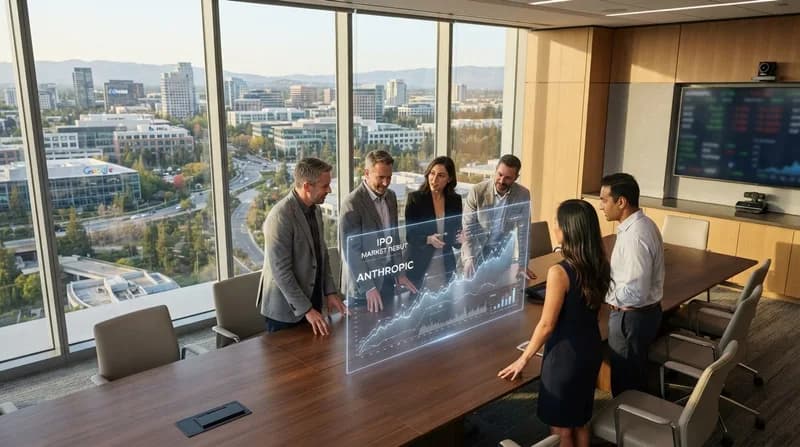
The uncertainty surrounding Nvidia is emblematic of a larger, systemic shift within the AI sector. Industry analysts are closely monitoring the upcoming Anthropic IPO, which represents a critical stress test for the current model of circular funding that has characterized the AI boom. As major tech conglomerates pour capital into startups, only to have that capital recirculate into their own hardware and cloud services divisions, the market is beginning to question the sustainability of these growth patterns.
Why It Matters: Industry Context
- Supply Chain Volatility: The cessation of H200 chip sales in China marks a pivotal decoupling point, potentially reshaping regional AI development.
- Leadership Instability: The refusal to bring back Jensen Huang leaves a power vacuum at the helm of a company that is essentially the backbone of the global generative AI infrastructure.
- Circular Funding Concerns: As Anthropic heads toward a public offering, investors are looking for evidence of genuine profitability rather than reliance on massive inter-company investments.
Shifts in Mobility and Emerging Tech
Beyond the semiconductor boardroom battles, the wider tech landscape is seeing significant movement. Autonomous transport remains a primary focus, with Waymo recently announcing a suspension of its freeway ride-sharing operations to reassess safety protocols. Meanwhile, Tesla has opened personal orders for the highly anticipated Cybercab, though the announcement is heavily caveated with fine print that highlights the complexity of bringing fully autonomous, steering-wheel-free vehicles to the mass market.
On the startup front, the battery sector is showing signs of recovery and maturation. 'Our Next Energy,' a company that faced significant financial headwinds, has announced plans to go public following a successful restructuring phase. This trend, coupled with new venture capital funds like Plural’s recent initiative to back European 'moonshot' technologies, suggests that the appetite for high-stakes hardware innovation remains strong despite a cautious macroeconomic climate.