ScienceTechnical Deep Dive

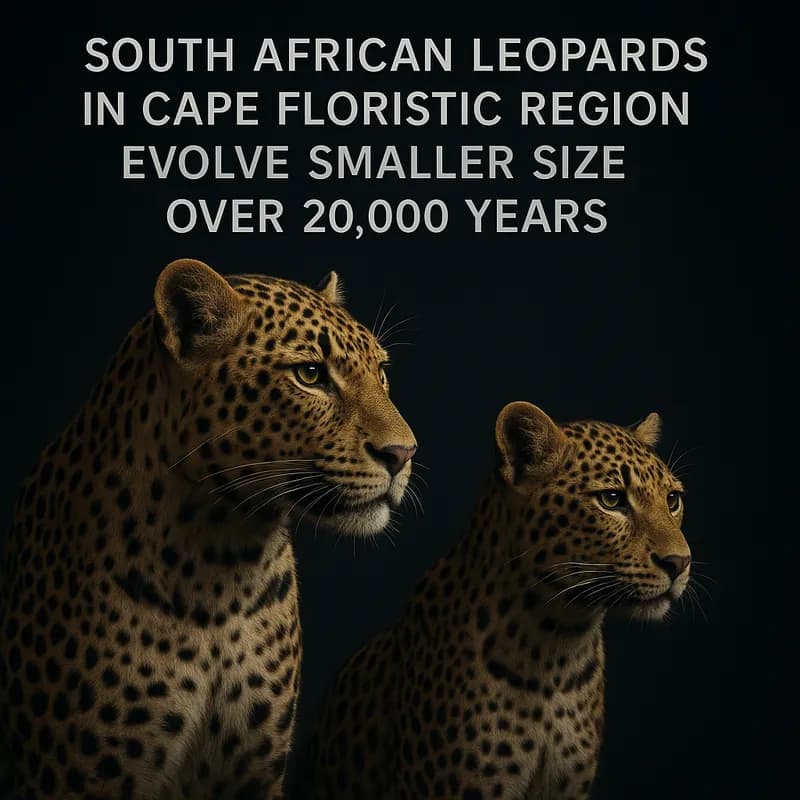
South African Leopards in Cape Floristic Region Evolve Smaller Size Over 20,000 Years

Published
EElectricBuzz Editorial Team
South African Leopards in Cape Floristic Region Evolve Smaller Size Over 20,000 Years
1 min read58 wordsElectricBuzz Editorial Team

The Gist

“Leopards in South Africa's Cape Floristic Region have evolved to about half the size of typical African leopards while maintaining genetic diversity despite long isolation.”

Researchers analyzing the whole genomes of leopards in South Africa's Cape Floristic Region discovered that these animals are genetically distinct from other African leopards and have evolved to be roughly half their usual size.

Despite being isolated for approximately 20,000 years and living in small populations, they retain significant genetic diversity, highlighting unique evolutionary adaptations to their environment.


SPONSORED
The 5 Best Over-Ear ANC Headphones of 2026, Tested & Ranked
Editor's Pick Guide
92/100
Tech & Gadgets•12 min read

The 5 Best Over-Ear ANC Headphones of 2026, Tested & Ranked

We locked five over-ear ANC picks for 2026 — Sony WH-1000XM6, Bose QuietComfort Ultra 2, Soundcore Space One, Sennheiser Momentum 5, and Apple AirPods Max 2 — then stress-tested them on lab metrics, long-term owner truth, and live street prices.

Related Stories

Semantically matched articles, ranked by topic overlap and freshness.

Breathwork Triggers Psychedelic-Like Brain States, New Study Finds
Science

Breathwork Triggers Psychedelic-Like Brain States, New Study Finds

A groundbreaking MRI study reveals how intensive breathing exercises significantly alter cerebral blood flow and neurological connectivity, mirroring the effects of psychedelic compounds.

Sticky Medicine: Did Neanderthals Wield Birch Tar as a Prehistoric Antibiotic?
Science

Sticky Medicine: Did Neanderthals Wield Birch Tar as a Prehistoric Antibiotic?

New research suggests that the adhesive Neanderthals used for toolmaking may have served a dual purpose as a potent natural antibiotic for treating wounds.

Could a Simple Gait Adjustment Replace Painkillers for Arthritis?
Science

Could a Simple Gait Adjustment Replace Painkillers for Arthritis?

A groundbreaking clinical trial reveals that personalized walking adjustments can mitigate knee osteoarthritis pain and preserve joint health without medication or surgery.

The Invisible Threat: How Common Polyethylene Plastics May Be Harming Your Liver
Science

The Invisible Threat: How Common Polyethylene Plastics May Be Harming Your Liver

New research from Texas A&M University reveals that polyethylene, long considered an inert plastic, may actively contribute to the development and progression of fatty liver disease.

A Simple Safety Prompt Could Keep AI Clinical Decisions From Being Dangerous
Science

A Simple Safety Prompt Could Keep AI Clinical Decisions From Being Dangerous

Researchers at Mount Sinai have discovered that adding brief safety reminders can significantly lower the rate of harmful clinical decisions made by large language models.

Beyond the Atom: Scientists Unveil First Self-Stabilizing Nuclear Clock
Science

Beyond the Atom: Scientists Unveil First Self-Stabilizing Nuclear Clock

Researchers in Vienna have achieved a monumental breakthrough by developing a self-stabilizing nuclear clock, a device that promises to redefine the boundaries of timekeeping precision.

A Cosmic Rebirth: Did Hubble Just Find a Planet Born From a Dead Star?
Science

A Cosmic Rebirth: Did Hubble Just Find a Planet Born From a Dead Star?

Astronomers have uncovered evidence of a 'second-generation' planet orbiting a white dwarf, challenging our understanding of how planetary systems evolve.

Closing the Gap: Why Aspirin Remains Underutilized for Lynch Syndrome Prevention
Science

Closing the Gap: Why Aspirin Remains Underutilized for Lynch Syndrome Prevention

New research reveals a significant disconnect between clinical evidence and patient usage of aspirin for colorectal cancer prevention in those with Lynch syndrome.