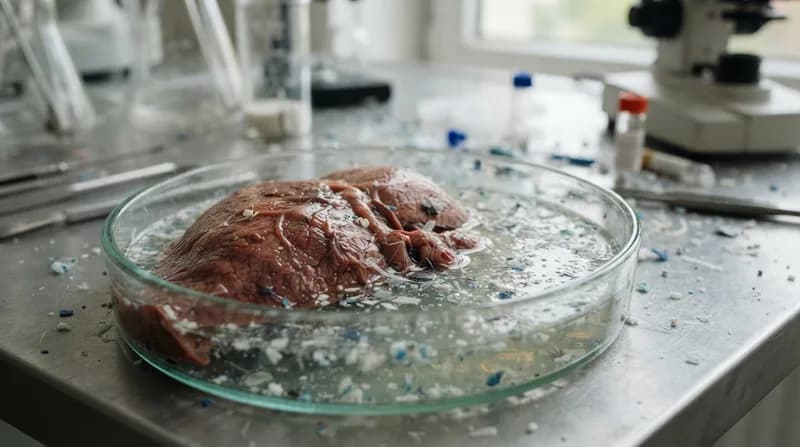
A New Concern for Global Liver Health
For decades, polyethylene has been the bedrock of modern convenience. As one of the world's most ubiquitous plastics, it is woven into the fabric of daily life, found in everything from food packaging and beverage cup linings to storage containers and plastic wraps. Traditionally, the scientific community viewed this material as biologically inert—a substance that passed through the body without triggering significant physiological reactions. However, groundbreaking research from the Texas A&M College of Veterinary Medicine and Biomedical Sciences is challenging this long-held assumption, suggesting that our reliance on this plastic may come at a hidden cost to our internal organs.
Scientists have identified a concerning link between polyethylene microplastics and the development of fatty liver disease, a condition characterized by the abnormal accumulation of fat within liver cells. With approximately 25% of the global population already affected by some form of fatty liver disease, these findings indicate that environmental pollutants may play a more significant, and previously overlooked, role in this ongoing public health crisis.
Synergistic Effects of Diet and Plastic Exposure
The study highlights a particularly worrying interaction between environmental exposure and lifestyle choices. While the research team discovered that polyethylene exposure alone was sufficient to trigger indicators of liver distress, these effects were notably amplified when subjects maintained a diet rich in fats, fructose, and cholesterol. This suggests that the prevalence of 'Western-style' diets—heavy on processed foods and sodas—may create a perfect storm when combined with the constant ingestion of microplastics from food containers.
Dr. Adi Joshi, the lead researcher on the project, noted that the study challenges the notion of biological inertia. By investigating how these particles interfere with the liver's natural defense and repair mechanisms, the team has begun to map how chronic low-level exposure alters metabolic function. This synergy between diet and synthetic pollutants implies that medical interventions for metabolic conditions may need to account for environmental factors that were previously dismissed as benign.
Mapping Damage with Advanced Spatial Transcriptomics
To uncover exactly how polyethylene impacts biological pathways, the researchers utilized a cutting-edge technique known as spatial transcriptomics. Unlike conventional methods that analyze tissue as a whole, this approach allows scientists to pinpoint gene activity at the exact location of cellular damage. By creating a high-resolution map of the liver tissue, the team was able to isolate specific molecular pathways activated by plastic exposure.
The investigation revealed two critical molecular players: the PPAR-alpha protein and the ANXA2 gene. PPAR-alpha acts as a key regulator of fat metabolism in the liver; its activation by polyethylene particles suggests that the liver is attempting to process these microplastics, leading to metabolic exhaustion. Simultaneously, the disruption of the ANXA2 gene—which is vital for tissue repair—further compounds the damage, leaving the organ unable to effectively heal from the strain of filtering these foreign contaminants.
Why it Matters
- Widespread Exposure: Polyethylene accounts for roughly one-third of all global plastic production, making it nearly impossible to avoid in a modern lifestyle.
- Metabolic Risk: The discovery provides a new physiological explanation for why lifestyle-based liver disease may be on the rise even among those not exhibiting traditional high-risk behaviors.
- Future Therapeutics: By identifying the PPAR-alpha and ANXA2 pathways, researchers have created a roadmap for potential future treatments that could mitigate the damage caused by microplastic accumulation.
The Road Ahead: Investigating Long-term Consequences
While this study marks a significant step forward in understanding the toxicity of common polymers, the research team is already looking toward the next phase of investigation. A primary goal is to determine whether prolonged polyethylene exposure is linked to advanced liver conditions such as fibrosis, where repetitive damage causes the buildup of harmful scar tissue. As the team expands its scope to study other types of plastics, the findings underscore a critical shift in how we must evaluate the relationship between our environment, our diet, and our internal metabolic health.