The Mechanics of Movement as Medicine
For millions living with osteoarthritis, the standard path for pain management often involves a cocktail of anti-inflammatory drugs, invasive injections, or the eventual prospect of total joint replacement surgery. However, a compelling shift in orthopedic research suggests that the solution to chronic knee pain may not be found in a pharmacy, but beneath our feet. A collaborative study led by researchers at the University of Utah, Stanford University, and New York University has identified that specific, personalized adjustments to walking gait can significantly reduce pain and even slow the degradation of knee cartilage.
The study, which spanned a full year, moved beyond generic advice about exercise or weight management. Instead, it utilized advanced biomechanical analysis to identify precisely how an individual’s foot angle influences the load distribution within the knee. By tailoring a walking style to the individual—rather than applying a one-size-fits-all approach—researchers successfully offloaded pressure from the most vulnerable compartments of the knee joint.
The Science of Personalized Gait Retraining
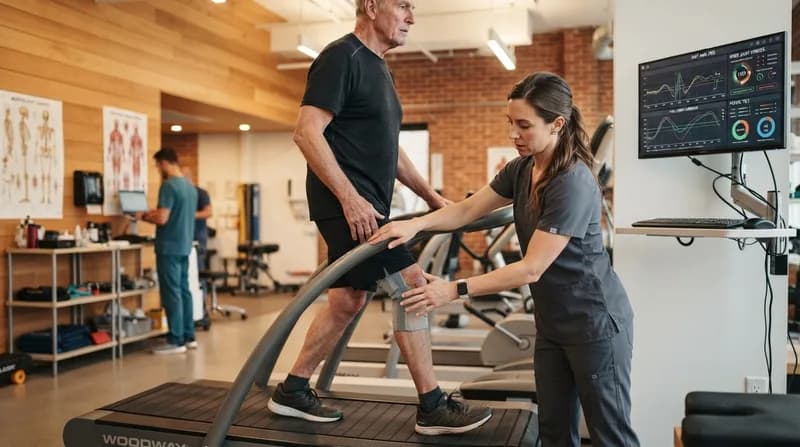
The human knee is divided into the medial (inner) and lateral (outer) compartments, with the inner section typically bearing the brunt of our body weight during each stride. Osteoarthritis often flourishes here precisely because of this repetitive, excessive loading. The clinical trial team utilized motion-capture cameras and specialized treadmills to measure the exact forces applied to these compartments. For each participant, they tested various foot angles—turning the toes inward or outward by 5 or 10 degrees—to determine which specific adjustment provided the greatest pressure relief.
This personalized screening process is critical. The research highlights that prescribing the same modification to every patient is often ineffective or potentially harmful, as an incorrect adjustment can actually increase joint stress. By isolating the ideal foot angle for each participant, the researchers created a roadmap for natural, sustainable joint protection.
Training the Walk of Life
Transitioning to a new walking pattern requires more than conscious effort; it requires muscle memory. To achieve this, the participants underwent a six-week program utilizing wearable biofeedback technology. A small device attached to the shin provided gentle vibrations whenever a participant’s foot drifted outside their prescribed, biomechanically optimal angle. This immediate signal allowed the participants to retrain their movement patterns in real-time until the new gait became a natural, subconscious habit.
The long-term results were striking. After one year, those who adhered to their personalized gait reported a 2.5-point reduction on a 10-point pain scale, significantly outperforming those in the control group. Even more notably, MRI imaging revealed that participants in the retraining group showed slower deterioration in markers of cartilage health, suggesting that altering the mechanics of movement could serve as a disease-modifying strategy rather than just a temporary analgesic.
The Future of Mobility
The implications of this research are profound for the field of orthopedics. While the study does not claim that gait modification can regrow cartilage, it does provide a non-invasive, drug-free intervention that can delay or perhaps even prevent the need for more extreme surgical measures. With recent follow-up studies, such as the 2026 research from the University of Bath, further validating that specific mechanical adjustments can consistently lower knee loading, the medical community is moving toward a future where physical movement is carefully engineered to protect the body's structural integrity.