The Rise of Analog Navigation in a Digital World
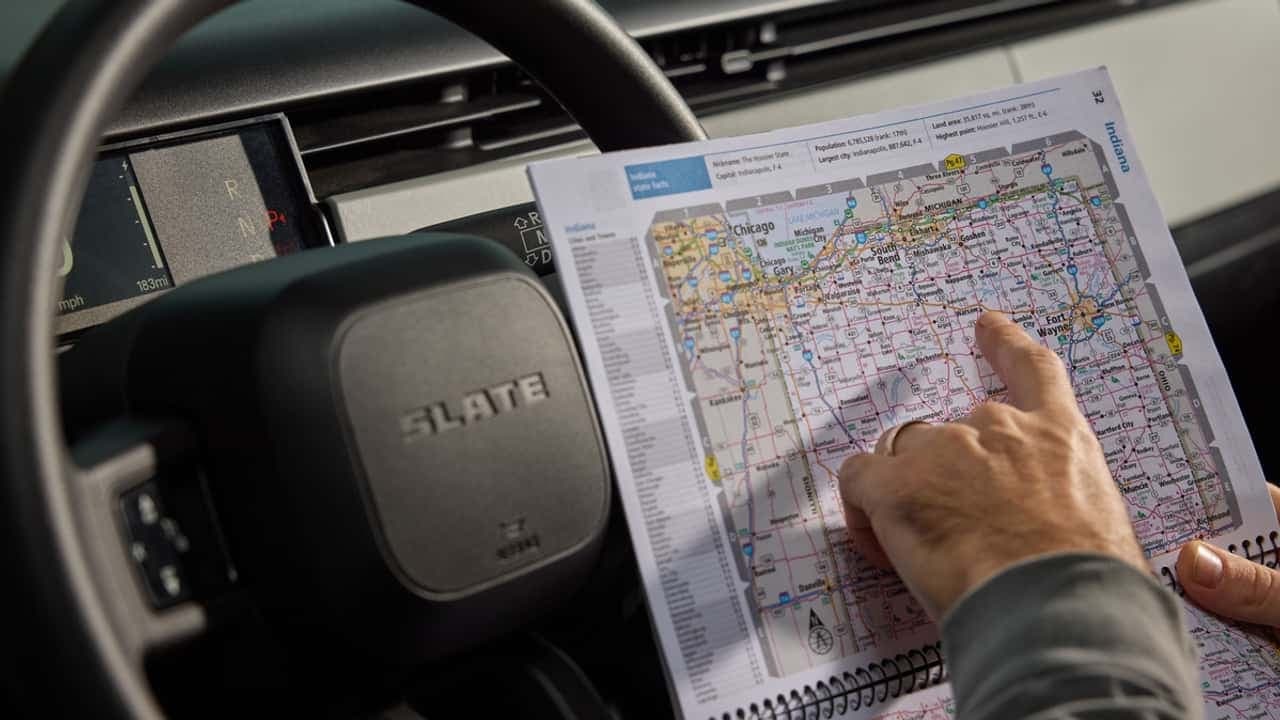
In an automotive market saturated with massive, glowing infotainment screens and increasingly complex software ecosystems, startup Slate Auto is taking a sharp turn in the opposite direction. The company, which is preparing to ship its sub-$25,000 electric truck later this year, has officially added a new accessory to its online store: the "Screenless GPS." While the name suggests a cutting-edge hardware innovation, the reality is a refreshing, tongue-in-cheek nod to traditional travel: the Rand McNally 2027 Road Atlas.
Priced at $30, this physical map serves as a bold manifesto for the Slate brand. By positioning a paper atlas as the ultimate "navigation system," the company is emphasizing its core mission to strip away unnecessary digital bloat. The Slate truck is designed to be "unburdensome," featuring unpainted composite body panels, manual windows, and a complete absence of the proprietary software interfaces that define modern EV cabins. For drivers who feel overwhelmed by subscription fees, long boot times, and software glitches, Slate’s approach offers a return to the basics of vehicle ownership.
Why it Matters: The Anti-Complexity Movement
The decision to market a paper map as a tech accessory highlights a growing segment of the automotive consumer base that is pushing back against the "smartification" of vehicles. Modern cars often force users into expensive, proprietary ecosystems that can become obsolete long before the vehicle itself reaches the end of its lifespan. Slate’s gamble is that by removing these "features," they can keep costs significantly lower—bringing a functional electric pickup to market for under $25,000—while granting the driver total control over their environment.
- Zero Boot Time: Unlike digital head units, a physical map is ready the moment you open it.
- Subscription-Free: There are no monthly data costs, software update requirements, or connectivity issues to worry about.
- Infinite Reliability: With no battery to drain and no software to crash, the "Screenless GPS" works regardless of the vehicle's charge state.
- User Choice: For those who still need real-time traffic updates, the vehicle includes a dedicated phone mount, allowing users to leverage the mapping apps they already trust.
Philosophy Over Features
Slate is not anti-tech; rather, it is anti-dependency. By providing a phone mount as standard equipment, the company recognizes that owners will use the personal devices they already own and master. The "Screenless GPS" acts as a physical backup and a brand-building statement, suggesting that the vehicle is meant to be a tool for transportation rather than a rolling social network or digital interface. This focus on an LFP-powered, utilitarian platform is a direct challenge to competitors that prioritize software-defined cockpits.
As the first deliveries of the Slate truck approach, the industry is watching closely to see if this "less is more" philosophy resonates with buyers. If the company succeeds, it could signal a shift in EV design, where manufacturers start prioritizing modularity and longevity over the current trend of cramming every vehicle with expensive, high-maintenance screens. For the driver who just wants an electric truck that works—and occasionally needs to navigate the old-fashioned way—the $30 atlas is not just a joke; it is a promise of freedom from the digital grind.