The Next Evolution of Power Conversion
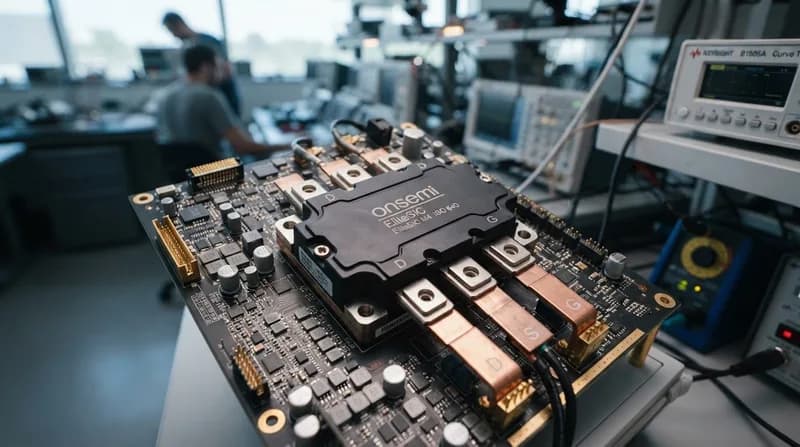
In a significant move for the electric vehicle industry, semiconductor giant Onsemi has officially launched its fourth-generation silicon carbide (SiC) technology, branded as the EliteSiC M4 platform. As EV manufacturers race to squeeze every mile of range from existing battery packs, Onsemi’s latest innovation addresses the heart of the drivetrain: the traction inverter. By leveraging a refined trench architecture, this new platform offers a substantial performance boost over its predecessors, positioning itself as a cornerstone for future high-efficiency power electronics.
The headline metrics for the EliteSiC M4 are impressive. The company reports a potential increase in power density of up to 30 percent, alongside a reduction in power losses of up to 35 percent. For engineers and vehicle architects, these figures represent more than just incremental improvements. They translate into the ability to design smaller, lighter inverters that handle the same power loads as bulkier, older units, ultimately contributing to a lighter vehicle weight and a smaller footprint for the power electronics suite.
Technical Precision and Performance Gains
The core of the EliteSiC M4’s superiority lies in its overhauled semiconductor structure. Onsemi has managed to reduce specific on-resistance by between 20 and 50 percent compared to earlier generations. Furthermore, the platform demonstrates a 67 percent improvement in switching characteristics for hard-switching applications and a 50 percent boost in soft-switching scenarios. These technical enhancements are critical for traction inverters, which are tasked with the demanding job of converting DC power from the vehicle battery into the AC signal required to drive the electric motor.
Why it Matters
- Enhanced Range: Higher conversion efficiency directly reduces energy waste, potentially increasing the range of electric vehicles without needing a larger battery.
- Compact Design: A 30 percent increase in power density allows for smaller inverters, freeing up valuable space and simplifying packaging within the chassis.
- Reduced Cooling Requirements: With lower power losses, the thermal load on the vehicle's cooling system is lessened, allowing for more streamlined thermal management components.
- Broad Applicability: While primarily targeted at the automotive sector, the technology is also intended for data centers and renewable energy infrastructure, such as photovoltaic systems and large-scale battery storage.
Strategic Rollout and Future Outlook
The company is taking a phased approach to the rollout of this technology. A 750-volt version of the EliteSiC M4, available as a bare chip, is currently hitting the market for traction inverter applications. Looking ahead to 2027, Onsemi expects to expand the lineup to include versions supporting up to 1,200 volts. To ensure the durability required for rigorous automotive use, the company is actively working to qualify the platform for extreme operating environments, specifically temperatures reaching 185°C and higher.
While this launch focuses on the silicon carbide materials themselves, it follows Onsemi’s recent introduction of the Embedded Power Platform (EPP), which focuses on the integration and physical packaging of semiconductor components. The combination of improved material science found in the M4 and the advanced integration strategies of the EPP architecture could eventually provide a comprehensive solution for the next generation of electrified drivetrains, helping manufacturers move toward truly compact and high-performance electric propulsion systems.