A New Frontier in Ophthalmology
For individuals suffering from retinitis pigmentosa—a severe, inherited condition that systematically destroys the eye's photoreceptors—vision loss has long been considered permanent. However, a landmark study recently published in the New England Journal of Medicine suggests that the tide may be turning. An international team of researchers, led by José-Alain Sahel of the University of Pittsburgh and Botond Roska of the Institute of Molecular and Clinical Ophthalmology Basel (IOB), has successfully demonstrated a novel optogenetic approach to partially restoring sight in patients previously considered legally blind.
Optogenetics, a field recently recognized with a Nobel Prize, involves using light-sensitive proteins to manipulate cellular activity. In the context of this therapy, the researchers are not trying to repair dead photoreceptors. Instead, they are reprogramming surviving retinal ganglion cells—neurons that remain functional long after the rods and cones have deteriorated—to act as the eyes' new light sensors. By injecting a gene therapy vector directly into the eye, the team introduces a light-sensitive protein known as ChrimsonR, which allows these secondary cells to translate light energy into electrical signals that the brain can process as visual information.
The Safety and Efficacy of ChrimsonR
The clinical trial focused on 10 participants afflicted with late-stage retinitis pigmentosa, evaluating the procedure's safety across three distinct dosage levels. The results were highly encouraging: while the researchers noted some minor adverse ocular events, such as transient inflammation or pressure increases, the therapy was deemed safe for human use. This milestone is particularly significant because retinitis pigmentosa can arise from a vast array of genetic mutations; by targeting the retinal ganglion cells downstream of the genetic defect, this therapy offers a universal solution that remains effective regardless of the specific underlying genetic cause.
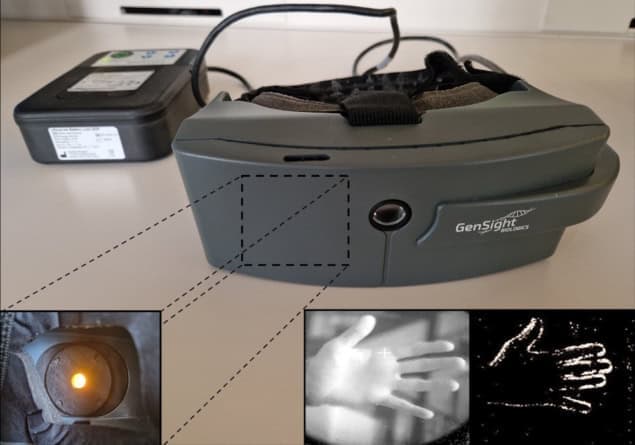
To complement the genetic treatment, participants utilized specialized light-stimulating goggles. These devices feature an integrated camera that captures environmental light, processing the data pixel-by-pixel. This information is then converted into pulses of amber light—the peak activation wavelength for the ChrimsonR protein—which is projected back onto the retina to trigger the modified cells. This hybrid approach essentially creates a bio-electronic bridge between the physical world and the patient's optic nerve.
Why It Matters
- Universal Application: Unlike gene therapies that target specific DNA mutations, this approach focuses on existing retinal infrastructure, making it applicable to the broader population of retinitis pigmentosa patients.
- Objective Validation: Beyond self-reported improvement, researchers utilized EEG recordings to confirm that the patients' brains were indeed responding to visual stimuli, ruling out placebo effects.
- Functional Gains: In testing, participants showed meaningful improvements in their ability to locate, touch, and identify objects, transitioning from total blindness to a functional capacity for environmental navigation.
The Path Toward Enhanced Restoration
While the study demonstrates clear success in object detection and discrimination, the researchers are careful to note that the restoration is partial rather than full-spectrum visual recovery. The therapy enhances light sensitivity by up to 62-fold in some patients, allowing for significantly improved performance in standardized tasks like identifying the orientation of a bar or reaching for specific objects on a table. Perhaps most importantly, the data suggests that consistent training with the goggles is a critical factor in performance, indicating that the brain requires time to adapt to these new visual signals.
Looking toward the future, the research team is already refining the hardware. Future iterations of the vision system will include digital holographic goggles equipped with advanced eye-tracking technology. These next-generation systems aim to project 20-micrometer-wide images, enabling the stimulation of individual retinal cells with much higher precision. As the technology moves from this successful proof-of-concept into more advanced developmental stages, it represents a transformative leap in our ability to address previously incurable degenerative eye diseases.