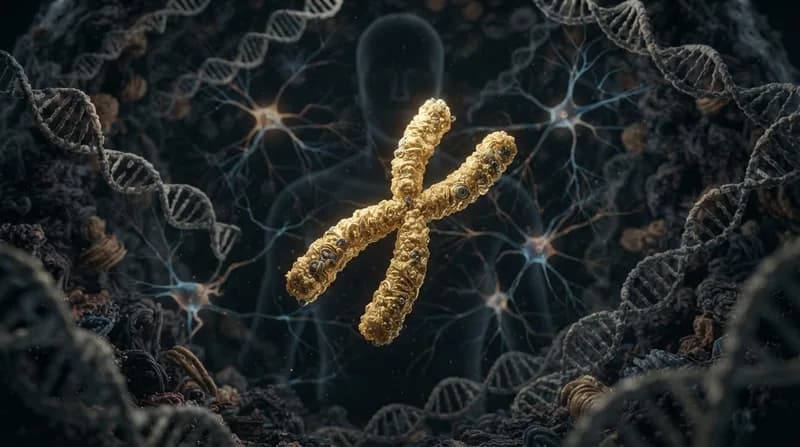
Unlocking the X-Linked Mystery
For decades, the medical community has grappled with a persistent observation in developmental biology: autism spectrum disorder (ASD) is diagnosed approximately four times more frequently in males than in females. A new study conducted by researchers at Baylor College of Medicine and the Duncan Neurological Research Institute offers a compelling explanation, pointing toward subtle genetic variations on the X chromosome that may disproportionately affect biological males.
The research, published in the American Journal of Human Genetics, focuses on the MECP2 gene, a critical component of neurodevelopment known for its role in maintaining brain health. By analyzing the regulatory regions of this gene—which act as "dials" to control gene expression levels—scientists have uncovered a mechanism that may help explain the gender disparity in autism prevalence.
The Goldilocks Protein Principle
The MECP2 gene is famously known as a "Goldilocks" gene. Its expression must be kept at a strictly defined level for the brain to function properly. If levels of the protein produced by MECP2 are too low, the result is often Rett syndrome; if they are too high, it leads to MECP2 duplication syndrome. However, this new research highlights that even more subtle shifts—neither the severe deficiency nor the drastic excess—can lead to autism-like behaviors.
Dr. Huda Zoghbi and her team discovered that a reduction in MECP2 expression by approximately 30% does not trigger the severe motor impairments characteristic of classic MECP2-linked disorders. Instead, it manifests in social deficits, anxiety, and hyperactivity. Because females possess two X chromosomes, they may have a biological safeguard: if one X chromosome carries a slightly suboptimal regulatory variant, the second healthy X chromosome can often compensate. Males, however, possess only one X chromosome, leaving them inherently more vulnerable to these "mild" mutations that tip the MECP2 balance.
Methodology and Future Implications
To identify these elusive variants, the researchers utilized a powerful technique known as the Massively Parallel Reporter Assay (MPRA). This allowed the team to screen various regulatory regions and observe the functional impact of specific genetic changes in real-time. By testing variants inherited from unaffected mothers, they successfully mapped how these small tweaks to gene expression lead to clinical autism diagnoses in boys.
This study provides more than just a specific answer for MECP2; it establishes a new framework for investigating other neurodevelopmental genes located on the X chromosome. By looking beyond simple mutations and focusing on the regulatory "dials," researchers hope to uncover the "missing heritability" that has long frustrated geneticists studying the spectrum. This work marks a pivotal step in moving from descriptive diagnosis to understanding the specific genetic mechanics that drive the male-biased nature of autism.
Why It Matters
- Sex-Specific Vulnerability: The research provides a biological basis for why males are more susceptible to certain neurodevelopmental conditions, emphasizing the protective role of a second X chromosome in females.
- Beyond Binary Mutations: It shifts the focus from "broken" genes to "mis-tuned" gene expression, showing that minor changes in regulatory activity can have significant behavioral outcomes.
- Diagnostic Potential: Understanding these regulatory variants may eventually lead to better genetic screening and earlier intervention strategies for families, particularly for boys who do not exhibit the more severe, classic signs of MECP2 disorders.