The Science of Cellular Recall
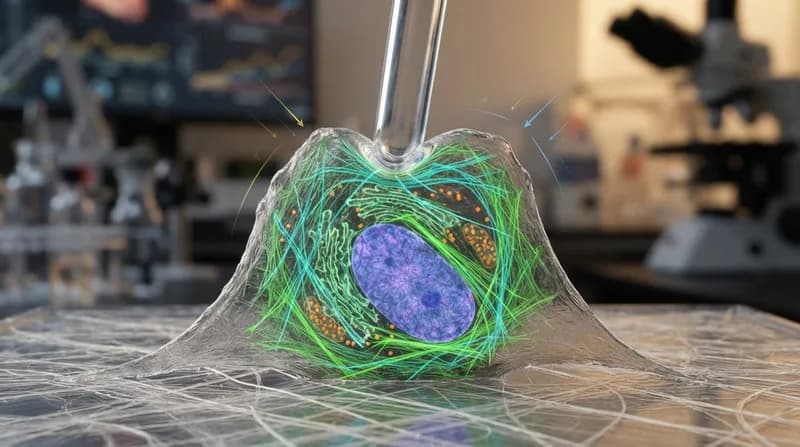
For decades, medical science has understood that specific cells, like T-lymphocytes, possess a form of biological memory that allows the immune system to recognize and combat recurring pathogens. However, groundbreaking research led by Professor Ning Wang at Northeastern University's Institute for Mechanobiology is expanding this concept into the physical realm. The team has discovered that a vast array of cells—far beyond those typically associated with immunity—exhibit 'mechanical memory.' This is the ability of a cell to register a physical force, such as tension or compression, and continue to operate under the influence of that force even after it has been removed.
By utilizing microscopic magnets to agitate hamster cells in a controlled lab setting, researchers observed that brief, intermittent stimuli—doses of force lasting only two to ten minutes—could yield cellular results identical to an hour of continuous stimulation. This finding suggests that our biological systems are designed to process physical inputs cumulatively rather than just in real-time, effectively storing these 'mechanical instructions' within their internal structures.
Transforming Healthy Aging and Aesthetics
One of the most promising applications of this research lies in the field of regenerative aesthetics. As the human body ages, fibroblast cells—the workhorses responsible for wound repair and structural integrity—become less efficient at producing vital proteins. Professor Wang’s research suggests that by applying targeted mechanical stimulation to these fibroblasts, clinicians could potentially induce them to synthesize collagen more effectively. This could lead to non-invasive therapies designed to restore elasticity to facial tissues, effectively 'resetting' the skin to a more youthful state by leveraging the cells' innate memory of structural stability.
Optimizing Physical Fitness and Rehabilitation
Beyond aesthetics, mechanical memory offers a transformative approach to physical therapy and fitness, particularly for the elderly or those with limited mobility. The research explains that when we exercise, the physical stress placed on muscles triggers the production of filamentous actin and the activation of YAP proteins. These molecules act as a set of cellular instructions, directing the body to reinforce its internal cytoskeleton and build muscle tissue.
Because cells 'remember' this push-pull force, the benefits of exercise persist long after the physical activity has ceased. This implies that short, frequent sessions of low-impact movement—such as repeatedly standing and sitting—can have the same long-term physiological impact as a single, sustained workout. This could revolutionize rehabilitation protocols, allowing individuals to achieve significant fitness gains through manageable, cumulative movements rather than exhausting, high-intensity exercise.
Why It Matters
- Efficiency: Shorter, intermittent physical interventions could achieve the same results as longer, continuous ones.
- Regenerative Potential: Harnessing mechanical memory could trigger the body to repair tissues, such as skin, without invasive procedures.
- Clinical Applications: The discovery opens doors for new medical approaches to treat drug-resistant conditions by teaching the immune system to respond more effectively through mechanical priming.
As the Institute for Mechanobiology continues to map the pathways involved in this mechanical signaling, the horizon for medicine looks increasingly proactive. By understanding how cells 'think' and remember, the future of healthcare may rely less on synthetic drugs and more on precise, physical triggers that guide the body to heal itself.