The Return of an Icon
For decades, the minivan reigned supreme as the ultimate practical vehicle for families across Europe. However, the modern automotive landscape has shifted aggressively toward SUVs and crossovers, leaving the humble minivan struggling for relevance. Renault is now looking to disrupt that narrative with the announcement of the E-Space Concept, a bold, fully electric reinterpretation of the legendary 1984 Espace. Set to make its grand debut at the upcoming Paris Motor Show, the E-Space serves as a bridge between the automaker’s rich heritage and its high-tech, electrified future.
The E-Space is more than just a nostalgic nod; it is a "future-focused vision" that Renault hopes will capture the imagination of modern drivers. While the company has confirmed that the vehicle remains a concept for now, it is explicitly framed as an exploration of potential production models under its 'Futuready' corporate strategy. By leveraging the packaging advantages of a dedicated electric platform, Renault aims to prove that the minivan remains the most versatile form factor for urban and suburban families alike.
Design and Architectural Features
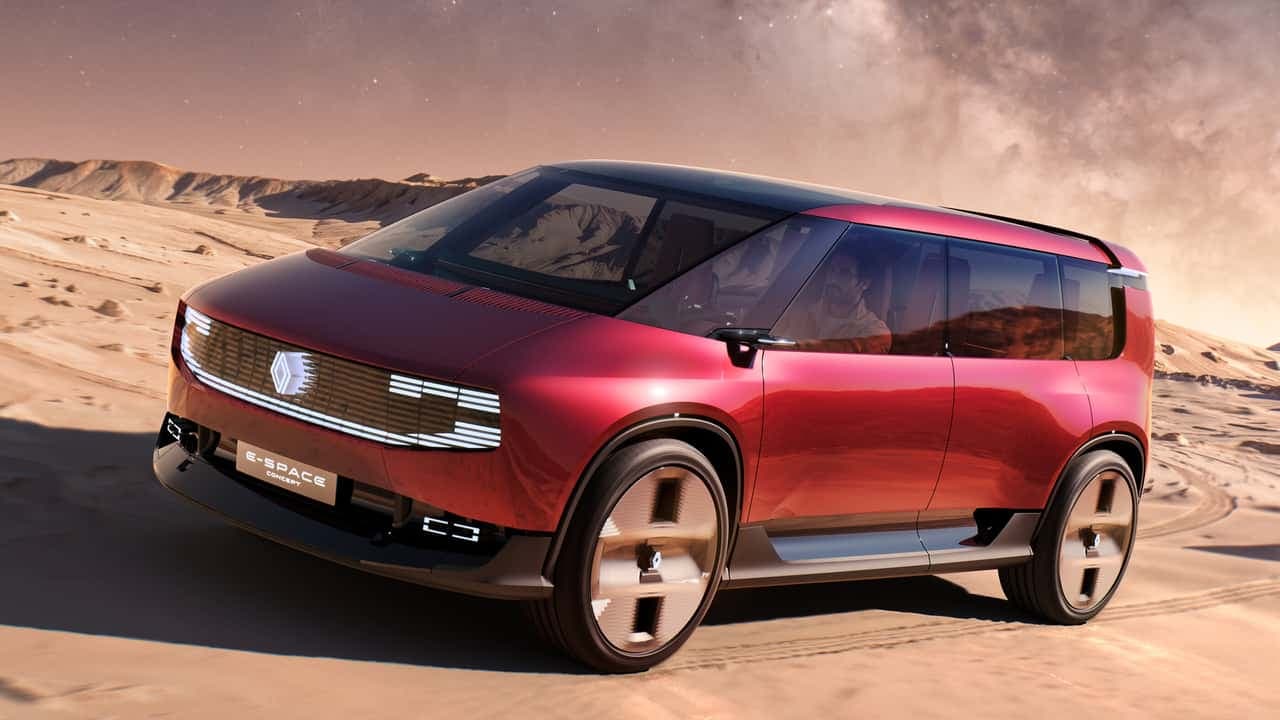
Visually, the E-Space Concept maintains a striking connection to its predecessor while embracing a sleek, modern aesthetic. Spanning 185 inches (4,700 millimeters) in length, the vehicle mimics the original Espace’s silhouette with a near 360-degree glasshouse and a distinctively raked A-pillar quarter window. The front fascia is dominated by a digitized light signature, featuring a wide, U-shaped LED strip that echoes the squared-off face of the 1980s original, updated for the era of high-definition lighting.
Renault has employed several modern design flourishes to enhance the vehicle's aerodynamic profile and aesthetic appeal. The car dispenses with traditional side-view mirrors, opting for streamlined digital cameras instead. Furthermore, the exterior is devoid of visible door handles, and the rear D-pillar is designed to appear as if it is floating away from the roofline, lending the vehicle an airy, futuristic presence. These design choices are complemented by large-diameter wheels and low-profile tires, which suggest a driving experience far more dynamic than the boxy haulers of the past.
Why it Matters
- Platform Efficiency: Moving the minivan to a dedicated electric platform allows for a completely flat floor, maximizing internal cabin space without increasing the exterior footprint.
- Market Strategy: Renault is betting that consumers are reaching 'SUV fatigue' and are ready for a return to the superior utility and interior flexibility that only a van architecture can provide.
- Heritage Marketing: Following the success of their R17 restomod and the 8 Gordini revival, the E-Space demonstrates Renault’s commitment to using its deep design history to sell modern electric technology.
- Versatility Reimagined: The original Espace was famous for its removable seats and swiveling front chairs; applying this modularity to a modern, digitized EV interior could redefine the concept of mobile living spaces.
Outlook and Implications
While tech specifications remain under wraps until the official reveal in Paris, the industry is closely watching how Renault navigates the potential move to production. The marriage of a flat electric skateboard chassis with a modular, high-ceiling minivan body is widely considered the "holy grail" of packaging for family vehicles. If Renault can successfully blend the historical charm of the 1984 model with the latest in battery range and smart-cabin connectivity, they may just succeed in making the minivan the most coveted vehicle on the road once again.