E-BUZZ ME Logo
ScienceTechnical Deep Dive

Questioning the Foundation: Why Cosmology's Central Law May Be Broken

Published
Questioning the Foundation: Why Cosmology's Central Law May Be Broken
1 min read158 words

The Gist

The cosmological principle has long been the bedrock of our understanding of the universe, but new observations suggest this fundamental assumption might be flawed.

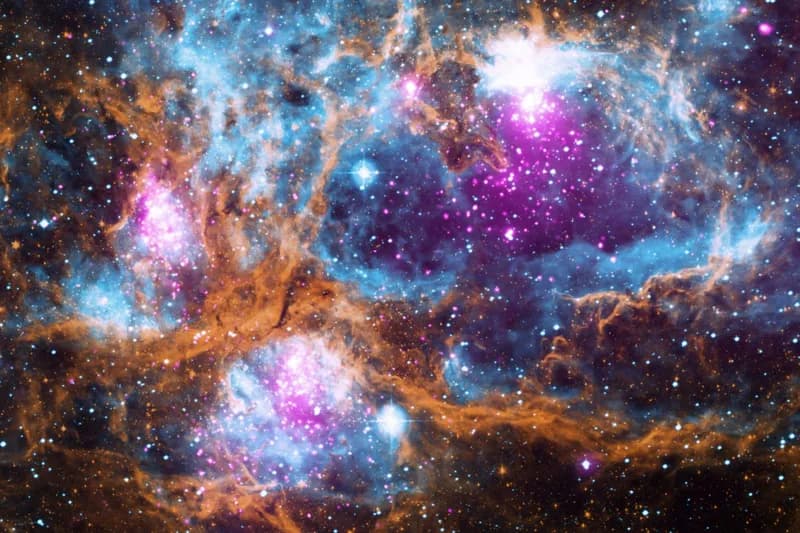
For decades, the cosmological principle has served as the essential foundation of modern cosmology. This principle asserts that, on a sufficiently large scale, the universe is both homogeneous and isotropic—meaning it looks the same in every direction and from every location.

A Useful but Fragile Assumption

As columnist Leah Crane points out, the usefulness of this principle in constructing mathematical models of the universe does not automatically guarantee its absolute truth. By assuming the universe is uniform, scientists have been able to simplify complex equations and develop the standard model of cosmology that we use today.

Emerging Discrepancies

However, as observational technology improves, researchers are encountering data that challenges this long-held symmetry. Large-scale structures, such as massive galaxy clusters and unexpected voids, suggest that the universe may not be as uniform as previously believed. If the cosmological principle is indeed broken, it would require a fundamental shift in how we perceive the evolution and expansion of the cosmos.

Related Stories

Semantically matched articles, ranked by topic overlap and freshness.

Optical Science Preserves the Legacy of the Bayeux Tapestry
Science

Optical Science Preserves the Legacy of the Bayeux Tapestry

Advanced optical techniques are playing a critical role in the digitization, restoration, and long-term protection of the historic Bayeux Tapestry.

Iron Age Skeletons Reveal Early Instances of Flat Head Syndrome
Science

Iron Age Skeletons Reveal Early Instances of Flat Head Syndrome

New analysis of 9th-century BC skulls from Italy suggests that 'flat head syndrome' is not merely a modern phenomenon, but one that affected ancient infants as well.

NASA Astronaut Chris Williams Returns to Earth After 241-Day Mission
Science

NASA Astronaut Chris Williams Returns to Earth After 241-Day Mission

Following a marathon stay aboard the International Space Station, NASA astronaut Chris Williams and two Roscosmos colleagues have successfully landed.

Molecular 'Basket' Breakthrough Unlocks Rare-Earth Chemical Potential
Science

Molecular 'Basket' Breakthrough Unlocks Rare-Earth Chemical Potential

Rice University chemists have successfully engineered a molecular structure that enables rare-earth metals to interact with oxygen in previously unlikely ways.

Grocery Store Audit Reveals 80% of Toddler Foods are Ultra-Processed
Science

Grocery Store Audit Reveals 80% of Toddler Foods are Ultra-Processed

A new study of nearly 2,800 products marketed for toddlers found that the vast majority are ultra-processed and many fail to meet international nutritional standards.

Breakthrough Targeted Therapy for Guillain-Barré Syndrome Shows Promise
Science

Breakthrough Targeted Therapy for Guillain-Barré Syndrome Shows Promise

A first-of-its-kind drug that selectively deactivates the overactive portion of the immune system could become the first approved targeted therapy for Guillain-Barré syndrome.

Japan’s Kikai Supervolcano Shows Signs of Magma Recharge
Science

Japan’s Kikai Supervolcano Shows Signs of Magma Recharge

Seismic surveys beneath the submerged Kikai caldera reveal a growing magma reservoir, indicating the site of Earth's largest Holocene eruption is active once more.

The Long Goodbye: How the Moon’s Gradual Recession Will Change Earth
Science

The Long Goodbye: How the Moon’s Gradual Recession Will Change Earth

As the Moon slowly drifts away from our planet, the long-term consequences range from altered tidal patterns to the eventual disappearance of total solar eclipses.