The Great Quantum Expectation Gap
At the recent SC26 supercomputing showcase in Chicago, the prevailing sentiment regarding quantum computing remained remarkably grounded. While the event floor was buzzing with discussions about integrating quantum processors into classical high-performance computing (HPC) workflows and leveraging Slurm for hybrid scheduling, a critical question lingered: when will these systems actually surpass the capabilities of today's most powerful supercomputers? Industry veterans and researchers are increasingly coalescing around a sobering realization—the transition from experimental noise to useful computation is a multi-year slog, with a minimum five-year horizon for achieving meaningful, fault-tolerant results.
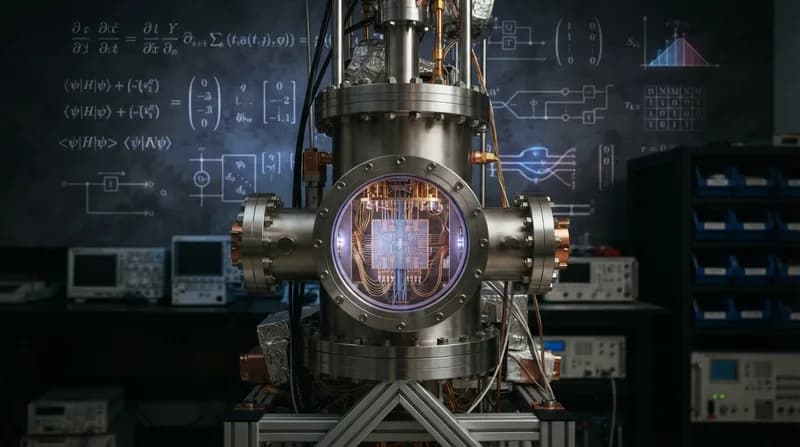
The fundamental challenge remains the ratio between physical and logical qubits. Physical qubits—the raw hardware such as superconducting circuits or trapped ions—are notoriously prone to errors. To perform a single, reliable calculation, these physical qubits must be bundled together into a 'logical' qubit capable of self-correction. Currently, using traditional surface-code approaches, a single logical qubit requires anywhere from 500 to 2,000 physical qubits. For even basic scientific modeling, researchers estimate a need for 100 to 500 logical qubits, pushing the total physical hardware requirement into the hundreds of thousands or even millions.
The Promise and Pressure of QLDPC
To bridge this massive scale gap, the industry is looking toward more efficient error-correction architectures, specifically Quantum Low-Density Parity-Check (QLDPC) codes. These new protocols aim to drastically reduce the overhead of logical qubits by a factor of 10 or more, potentially bringing the physical-to-logical ratio down from the hundreds to a more manageable 10-to-1 or 50-to-1 range. IBM, for instance, has centered its 'Starling' system development, slated for 2029, around these advanced codes to maximize efficiency.
However, implementing QLDPC is not a simple firmware update. It requires a complete redesign of hardware connectivity, the development of long-range couplers, and significantly more complex control and decoding logic. While initial hardware demonstrations are beginning to emerge, the industry has yet to prove these systems at the scale required for commercial utility. The transition requires not just software innovation, but a fundamental leap in engineering that moves beyond laboratory prototypes to robust, rack-scale machines.
Why it matters: The integration shift
- Hybrid Workflows: Developers are successfully moving toward 'classical-quantum' integration, where GPUs handle error correction and Slurm schedulers manage job distribution across both types of processors.
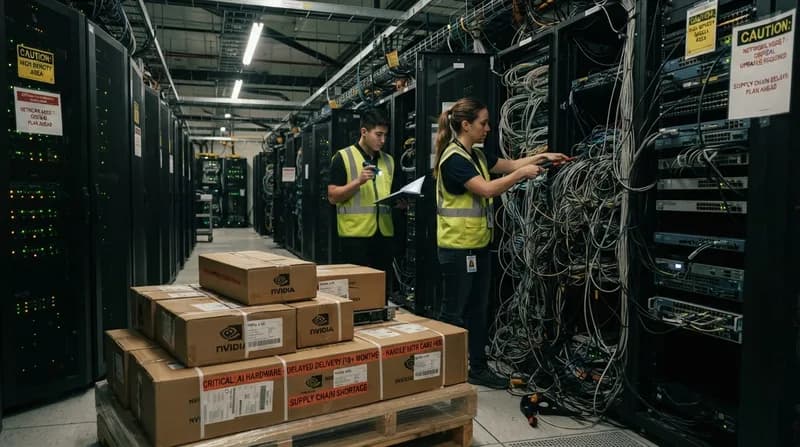
- Infrastructure Demands: Scaling up to hundreds of thousands of physical qubits will require massive, purpose-built data centers with specialized cryogenic cooling and power systems measured in megawatts.
- The Utility Threshold: Until we reach a reliable baseline of several hundred logical qubits, the most complex materials simulations and pharmaceutical modeling will continue to be processed by traditional, proven supercomputing architectures.
The Path to Fault Tolerance
Despite the persistent 'five-year' warning, the engineering progress cannot be ignored. We are seeing tangible improvements in error rates, with systems like Quantinuum’s Helios trapped-ion processor achieving record-low logical memory error rates. Furthermore, we are shifting from simple memory tests to running actual short-form algorithms on a handful of logical qubits. These are essential, granular milestones that confirm the viability of the underlying physics.
For those managing HPC budgets and data center power footprints, the current takeaway is one of cautious integration. The hardware of the late 2020s will likely be defined by its ability to function as an accessory to classical clusters rather than a standalone replacement. The dream of quantum advantage remains a compelling objective, but it is one that currently resides on a road map that favors iterative engineering over overnight breakthroughs. For the next five years, the focus will remain squarely on tightening error rates and proving that these systems can handle non-trivial, real-world workloads.