Revolutionizing the Mobile Testing Workflow
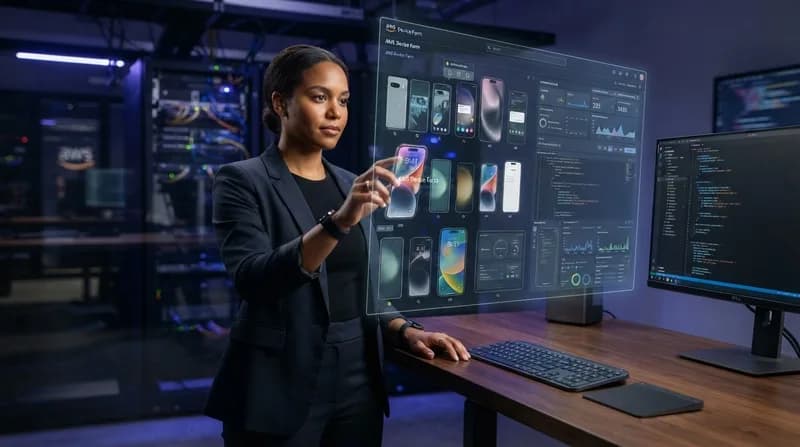
Amazon Web Services (AWS) has announced a significant expansion to its Device Farm service, moving beyond physical hardware by introducing virtualized mobile environments. This new capability allows software developers to run automated tests on simulated iPhones and Android devices directly within the AWS cloud. By enabling virtualization, Amazon aims to provide a faster, more scalable alternative for early-stage development tasks such as code merges, pull requests, and iterative smoke testing.
The shift to virtualized testing addresses a common bottleneck in mobile development: the limited availability of physical test labs. While physical devices remain essential for final regression and release-level fidelity, virtual instances provide the high-velocity feedback loops necessary for modern DevOps pipelines. According to the announcement, these virtual units offer rapid deployment, typically launching in a matter of seconds, which significantly reduces wait times for developers conducting frequent testing cycles.
The Current Virtual Hardware Lineup
As of the initial rollout, AWS has populated its virtualized fleet with a specific, albeit limited, selection of devices. The Android catalog currently includes the Google Pixel 10, which can be configured to run Android versions 15, 16, or 17. Additionally, developers can access a virtualized Pixel tablet running Android 17. These virtualized Android instances provide a standardized environment for testing Google-centric interfaces and OS behaviors without the overhead of physical hardware management.
On the iOS front, AWS has introduced support for the iPhone 16. The service allows for multiple iterations of iOS, including versions 18.6, 23.61, and 27.0. While this provides a convenient sandbox for testing application behavior, the current selection is notably restrictive. Developers seeking to test against the latest market-leading hardware, such as the iPhone 17 series or popular foldable devices, will still need to rely on the existing physical hardware pool available in the AWS Device Farm or secure their own test units. The service maintains parity with existing Device Farm APIs, ensuring that developers can transition between physical and virtual devices without needing to rewrite their underlying test frameworks.
Why It Matters
- Efficiency: Virtual devices eliminate the hardware queueing delays associated with shared physical test rigs.
- Integration: Existing AWS Device Farm APIs and established automation frameworks remain fully compatible with the new virtual instances.
- Lifecycle Management: The dual-tier strategy allows teams to utilize virtual devices for continuous integration/continuous deployment (CI/CD) and physical devices for high-stakes final compliance testing.
Outlook and Strategic Implications
While the introduction of virtualized devices is a boon for developers looking to optimize their CI/CD pipelines, the current library leaves room for growth. Industry analysts point out that the current selection of hardware does not fully reflect the most popular devices in the global smartphone market. As AWS continues to scale this service, the expansion of the device catalog to include high-volume handsets—such as mid-range Samsung Galaxy models and the latest flagship releases—will be crucial for maintaining broad industry appeal. Moving forward, the industry is watching to see how quickly Amazon can diversify its virtual ecosystem to include a wider range of form factors, including the increasingly complex landscape of foldable hardware.