Modernizing Maritime Defense
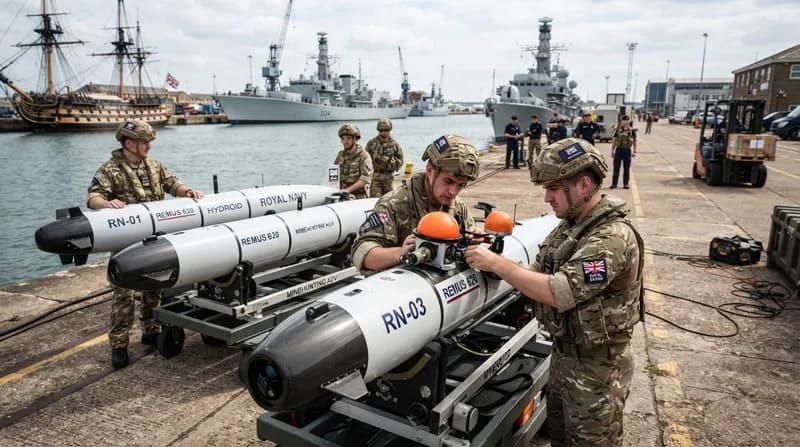
The British Royal Navy is officially shifting its mine-countermeasure strategy toward a hybrid fleet, backed by a significant £142 million ($185 million) investment in advanced uncrewed underwater vehicles (UUVs). This procurement, awarded to the American defense giant Huntington Ingalls Industries (HII), represents the largest international order for the company’s uncrewed systems in its 25-year history. The move underscores the UK's commitment to protecting vital sea routes by utilizing autonomous technology to mitigate risks to human sailors.
By integrating these high-tech drones, the Royal Navy aims to phase out aging, specialized mine-sweeping vessels like the Hunt and Sandown class ships. The new systems allow the military to perform clearance operations remotely, keeping personnel safely distanced from explosive hazards. While the contract has sparked some debate regarding domestic manufacturing pledges, the Ministry of Defence highlighted that the procurement will support local infrastructure, including maintenance and support services based in Portchester, England.
The REMUS 620 Platform
The heart of this investment is the REMUS 620, a sophisticated, torpedo-shaped drone designed for high-endurance, deep-sea operations. Capable of operating at depths of up to 600 meters, the REMUS 620 boasts an impressive endurance of 110 hours per mission. This extended range enables the Navy to conduct thorough and persistent surveillance of critical maritime corridors without the logistical constraints of crewed surface ships.
Beyond its physical durability, the drone is built for seamless integration into existing digital ecosystems. It operates alongside the UK-developed SeeTrack and Neptune software, ensuring that the Royal Navy can utilize familiar command and control interfaces to manage these assets. Furthermore, the inclusion of HII’s Sea Launcher technology automates the launch and recovery process, which has been rigorously tested to mimic deployment from submarine torpedo tubes, hinting at future capabilities for underwater drone launch from submerged platforms.
Why It Matters
- Risk Mitigation: Moving from crewed mine-clearance vessels to autonomous UUVs removes sailors from immediate harm's way.
- Hybrid Naval Evolution: This acquisition is a cornerstone of the Royal Navy’s transition into a modern "Hybrid Navy" that blends traditional assets with uncrewed and autonomous systems.
- Strategic Flexibility: With 110 hours of mission endurance and sophisticated software integration, these drones provide rapid, flexible, and scalable responses to underwater threats across varied operational theaters.
As the Royal Navy continues to modernize, the REMUS 620 will serve as a critical tool in ensuring that international waters remain navigable. This investment not only upgrades the technical capabilities of the British fleet but also signals a broader global trend of integrating autonomous underwater drones into the core tactical operations of world-class naval forces.