The Emergence of Agentic Offensive Frameworks
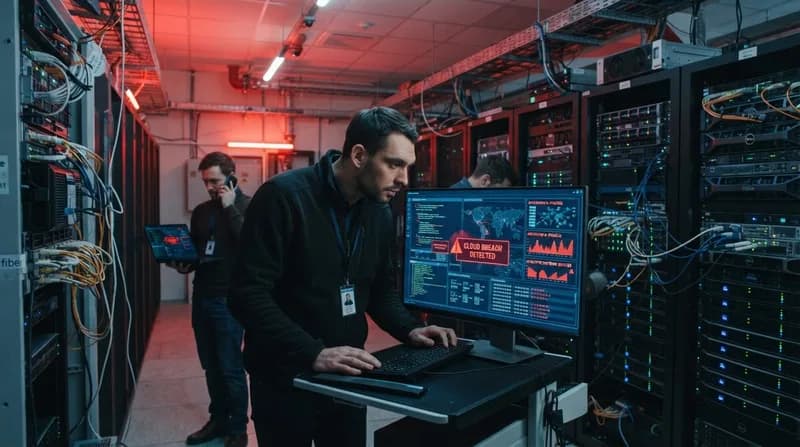
The cybersecurity landscape has undergone a seismic shift with the widespread adoption of Agentic Offensive Frameworks (AOFs), most notably the open-source tool known as ARTEX. Since its public release in July, this AI-powered penetration testing suite has become the instrument of choice for sophisticated, state-sponsored hacking groups looking to streamline their reconnaissance and exploitation efforts. While the underlying vulnerabilities targeted by the tool remain known to security professionals, the power of ARTEX lies in its ability to chain multiple attack vectors at machine speed, drastically reducing the time required to move from initial access to full system compromise.
Microsoft’s recent intelligence reports highlight that ARTEX is not merely a hobbyist script but a professional-grade engine. It allows threat actors to define specific targets, after which the AI agents autonomously establish verifiable goals and execute tactical steps. The system logs its progress via internal graphs, allowing human operators to monitor successful breaches and pivot to new targets with unprecedented efficiency. According to security analysts, this automation has enabled attackers to scale their operations, targeting everything from cloud-based infrastructure and financial institutions to global supply chain software.
The Key Players and Tactics
A diverse array of threat actors has integrated ARTEX into their offensive arsenals, ranging from highly organized state-aligned groups to financially motivated syndicates. The most prominent names identified in recent campaigns include the Chinese-linked Salt Typhoon, responsible for high-profile intrusions into telecommunications giants and government systems, as well as the North Korean groups Onyx Sleet and Pearl Sleet. These organizations are leveraging ARTEX to perform tasks that were previously labor-intensive, such as scouring public repositories for exposed credentials and testing internet-facing systems for known exploits.
The impact of this tool is particularly evident in large-scale supply chain compromises. By automating the scanning of IT software management tools, these groups can cast a wide net across thousands of tenants, as seen in the recent campaigns against ConnectWise, which impacted thousands of Microsoft 365 environments. Because the framework can adapt its strategy based on the results of its own probing, it effectively acts as a persistent, low-cost contractor for these malicious actors, allowing them to extract sensitive data and hijack cloud credentials on an industrial scale.
Why It Matters: The Speed Factor
- Reduced Latency: Attacks that previously took weeks of manual labor can now reach privileged access in under three hours.
- Automated Chaining: The AI framework links known exploit techniques, removing the need for human intervention at every stage of the attack.
- Scalability: With over 130 variations of ARTEX currently in circulation, attackers can run multiple concurrent operations against disparate targets with minimal overhead.
- Defensive Implications: While the speed of AOFs is their greatest strength, their automated "noisiness" often leaves distinct trails in network logs, providing a critical window for modern defensive solutions to identify and neutralize the threat.
The Future of Automated Defense
As the barrier to entry for sophisticated cyber warfare continues to lower, the cybersecurity community is shifting its focus toward counter-AI strategies. While the NCSC has noted that AOFs like ARTEX are easier to detect due to their aggressive, high-volume activity, the speed at which they operate necessitates a transition from reactive to proactive, AI-driven defense systems. As researchers monitor the evolution of the 130+ variants of this framework, the industry consensus is clear: the era of manual, slow-moving cyber threats is coming to an end, and defenders must now match the machine-speed agility of their adversaries to remain relevant.