The Perfect Storm for Network Operators
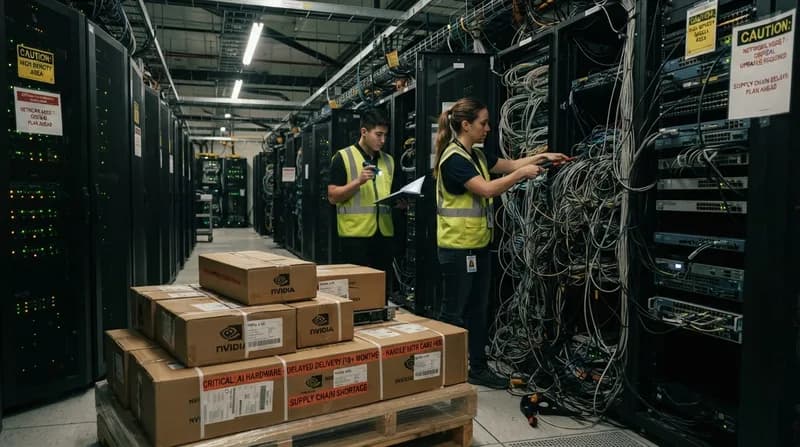
The relentless expansion of artificial intelligence infrastructure is creating an unexpected bottleneck for the global telecommunications sector. According to a recent report by network operator RETN, the massive demand for hardware to power AI datacenters has led to a critical supply shortage, with lead times for optical networking equipment stretching to an unprecedented 18 months. This shift represents a significant escalation from the three-month delivery windows that were once standard, complicating infrastructure projects for carriers worldwide.
The root of the problem lies in direct competition for components. Telcos and network providers are finding themselves in a bidding war against hyperscale datacenter operators. As AI training facilities expand, the demand for specialized chips and optical networking hardware has skyrocketed, leading to a 50 percent increase in equipment pricing since the start of 2026. This environment mirrors the supply chain crises seen during the pandemic, though the current strain is driven more by extreme demand than by initial production shutdowns.
Why It Matters
- Competitive Squeeze: Hyperscalers are consuming massive amounts of optical kit, pushing traditional telcos to the back of the queue.
- Planning Horizons: Developers are now advised to initiate network carrier engagement two to five years before a datacenter's projected opening date.
- Redundancy Costs: Customers are increasingly demanding high-availability, multi-route redundancy, which carries a significant price premium—often tripling the cost of standard connectivity circuits.
- Geographic Dislocation: As AI campuses move to remote areas like the Nordics for energy and land, the lack of pre-existing fiber infrastructure creates complex, long-haul logistical challenges.
Infrastructure Planning in the AI Era
The report highlights that the industry is facing a "connectivity gap." Many developers are opting for remote locations where renewable power and cooling are abundant but physical network infrastructure is non-existent. While hyperscalers are sometimes willing to fund their own fiber expansion, this becomes economically difficult over longer distances. Consequently, the onus of infrastructure planning has shifted; connectivity can no longer be an afterthought added shortly before a facility opens. It must be integrated into the initial construction and power-sourcing phase to avoid operational delays.
Furthermore, the industry is grappling with a "debt" of postponed maintenance. Many carriers previously delayed network upgrades to keep capital expenditures low, but that strategy has now collided with the current supply chain crisis. Faced with the requirement for greater network diversity—to avoid the catastrophic failure of critical AI services—operators are scrambling to secure equipment at exactly the moment when scarcity and costs are at their peak. This shift toward requiring four or more redundant routes serves as both a necessary safeguard against physical failure and an additional stressor on the already strained supply of hardware components.