The Growing Digital Divide
Europe’s aspirations for technological sovereignty are running headlong into the harsh realities of the global market. Despite a surge in local spending, new projections from Gartner indicate that the region is lagging behind the global average in IT growth. While global IT spending is slated to reach a massive $7.35 trillion in 2027—a 15 percent increase—Europe’s forecast growth sits at just 9.9 percent, totaling roughly $1.57 trillion. This trajectory contrasts sharply with the rapid acceleration seen in North America and China, where growth rates are hitting double-digit figures well above the European pace.
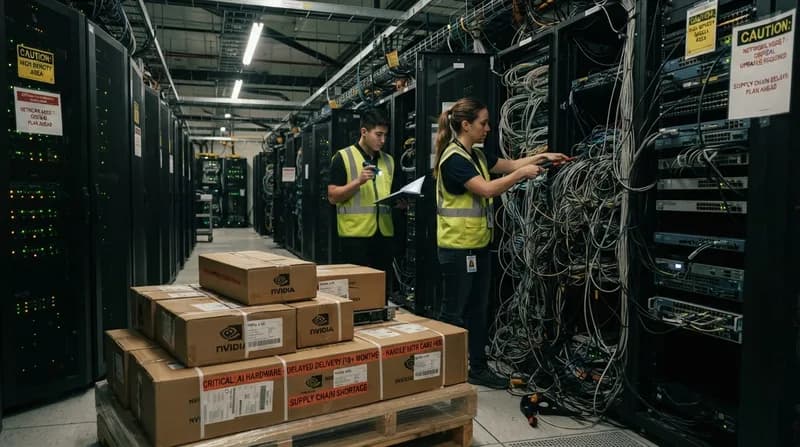
The fundamental issue lies in the geography of innovation. The foundational models, high-performance compute chips, and the massive cloud platforms that power modern artificial intelligence are almost exclusively centered in the United States and the Asia-Pacific region. According to Gartner analysts, this creates a structural disadvantage that Europe cannot easily overcome through policy alone, as the critical intellectual property and physical hardware remain firmly rooted abroad.
The Sovereignty Dilemma
European authorities have been vocal about their desire to curb dependence on foreign tech suppliers through regulatory frameworks and calls for "sovereign" technology. However, analysts point out that there is a significant disconnect between geopolitical desires and the practical realities of the boardroom. Chief Information Officers are ultimately tasked with optimizing business performance, and they are unlikely to favor a solution that is either technologically inferior or significantly more expensive simply because it carries a 'sovereign' label.
While data center systems and infrastructure-as-a-service are set to be the fastest-growing sectors in Europe, hitting 29.7 percent and 26.7 percent growth respectively in 2027, this represents a reactive play. Europe is building the floor upon which global models will run, rather than developing the models themselves. As Gartner analyst John-David Lovelock suggests, while Europe may struggle to be a provider of core AI infrastructure, its future success will depend on how effectively its enterprises can integrate and utilize existing global AI tools, rather than trying to replicate the entire stack from scratch.
Why It Matters
- Supply Chain Realities: The global technology supply chain is deeply interconnected, making a fully sovereign, localized tech stack nearly impossible to achieve at a commercially viable scale.
- Adoption vs. Creation: Europe may be better off focusing on AI implementation and vertical integration rather than attempting to catch up in the expensive, high-stakes race of foundational model development.
- The Cost of Sovereignty: CIOs remain price-sensitive; policy-driven preferences for local vendors are struggling to overcome the superior value propositions offered by established international hyperscalers.
Ultimately, the goal of 90 percent of EU organizations having a digital sovereignty strategy by 2029 appears achievable on paper, but a truly autonomous European technology ecosystem remains an elusive target. The current data paints a picture of a region playing catch-up in a race where the frontrunners are not just running faster, but are also setting the track parameters for everyone else.