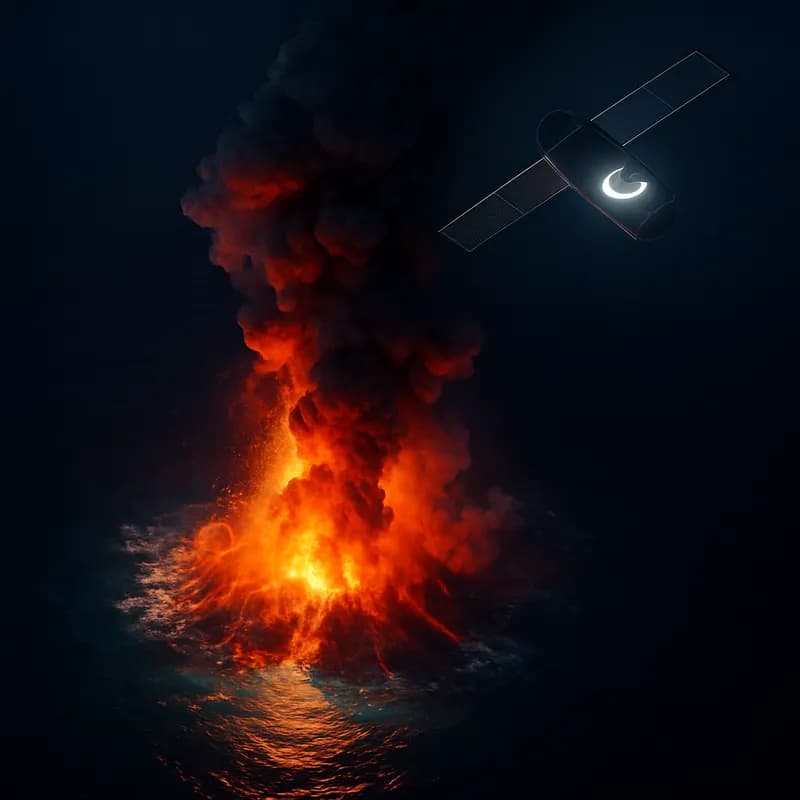
A rare geological event is unfolding in one of the most remote and poorly mapped regions of the ocean. NASA satellites have detected significant volcanic activity north of Papua New Guinea, where an underwater eruption is currently occurring. Observations have revealed steam plumes, ash clouds, and distinct thermal hotspots, indicating that magma is rising rapidly toward the ocean surface.
A Rare Glimpse into Land Formation
The eruption has already produced vast floating rafts of pumice, a characteristic sign of significant volcanic discharge. Scientists are paying close attention to these developments, as the intensity and location of the activity suggest the potential formation of a new island. Such events provide researchers with a unique opportunity to document the transition from underwater volcanic activity to the creation of terrestrial landmasses.
While the basin remains largely unmapped, satellite technology allows for real-time monitoring of these shifts in Earth's topography. If the eruption continues at its current pace, the world may soon witness the official birth of its newest island, offering invaluable data on the early stages of island evolution and colonizing ecosystems.