The Rise of Vehicle-to-Grid Integration
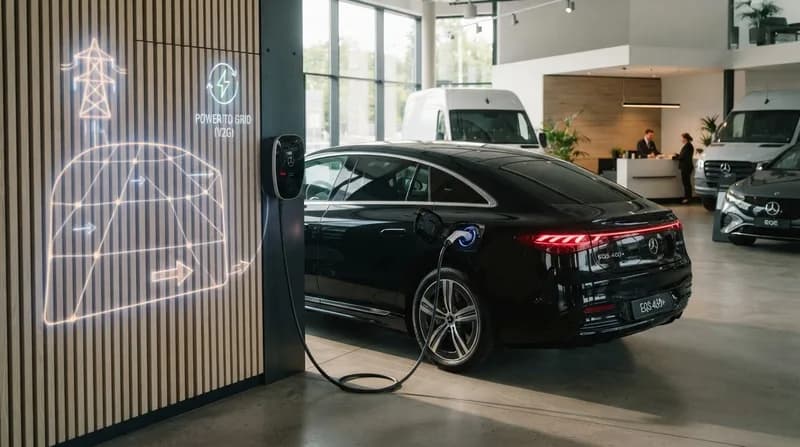
Mercedes-Benz has officially entered the competitive landscape of Vehicle-to-Grid (V2G) technology, unveiling a comprehensive package for private customers in Germany. By partnering with the technology provider The Mobility House, the automaker is transforming the electric car from a simple transportation device into a mobile battery storage unit. This initiative allows owners to feed electricity back into the public grid, effectively turning their parked vehicles into revenue-generating assets that support local energy infrastructure.
The centerpiece of this rollout is the new MB.CHARGE Home Pro Intelligent system. This package pairs a high-performance bidirectional DC wallbox with a specialized electricity tariff, the Mercedes-Benz Intelligent Pro Eco Tariff. Through a dedicated mobile app, users can monitor their energy flow, track grid contributions, and manage charging schedules to maximize their financial returns.
Hardware and Compatibility Specifications
The core of the system is the "ChargeLine Bidi," an 11-kW DC bidirectional wallbox. Engineered for versatility, this unit is designed to support both 400-volt and 800-volt battery architectures, ensuring it remains future-proof as new electric vehicle models enter the market. The device is built to be modular, supporting over-the-air (OTA) updates to keep pace with evolving energy regulations and communication standards, most notably ISO 15118-20 for vehicle-to-grid interoperability.
Currently, the V2G functionality is available for the electric GLC and the new C-Class. However, Mercedes-Benz has confirmed an aggressive expansion plan. Future firmware updates will enable the same capability for a wide range of upcoming and existing models, including the VLE, GLA, EQS, CLA, CLA Shooting Brake, and GLB. Depending on the model, this functionality will be enabled via seamless over-the-air updates following each vehicle's market launch.
Why it Matters: Financial and Grid Impact
The economic incentive for adopting this technology is substantial. Mercedes-Benz estimates that owners who keep their vehicle connected to the charger for an average of twelve hours daily could earn over €500 in bonuses annually. To encourage early adoption, the company is offering the first 500 customers an introductory price of €1,990 for the wallbox—a significant discount from the regular €2,990 retail price—plus a €250 charging credit.
Beyond personal gain, the integration is a critical step for grid stability. The system operates under the guidelines of Germany's MiSpeL regulation, which promotes the market integration of decentralized storage. By balancing the load through bidirectional charging, Mercedes-Benz is helping to mitigate energy spikes and maximize the utilization of renewable energy sources, positioning the electric vehicle as a cornerstone of the modern smart home and national energy grid.
Key Considerations for Potential Users
- Infrastructure Requirements: A smart meter is a mandatory requirement for installation.
- Amortization: Utilizing the introductory pricing and regular charging habits, the hardware investment can be recouped in approximately four years.
- Interoperability: The system uses open, standardized communication protocols, ensuring compatibility with a broad ecosystem of energy management systems.
- Global Rollout: While debuting in Germany, Mercedes-Benz has signaled intentions to expand the offering to other selected global markets in the near future.