The Shift Toward Autonomous Public Transit
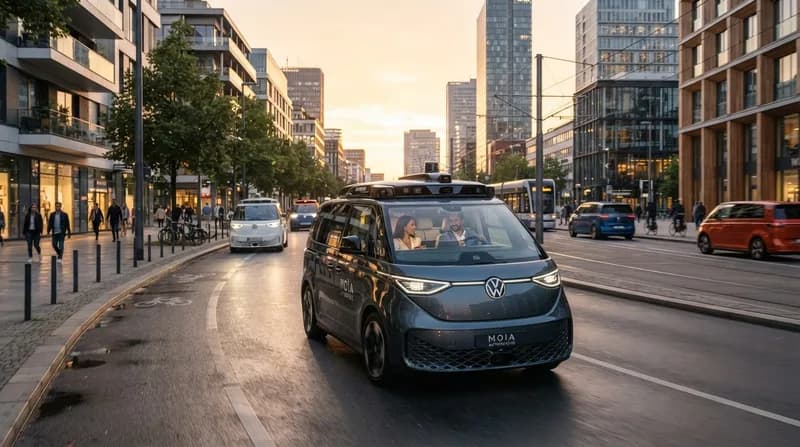
The landscape of urban mobility is set for a massive transformation as May Mobility announces a bold commitment to deploy over 10,000 autonomous Volkswagen ID. Buzz vehicles across global markets. This ambitious project aims to integrate the iconic, retro-styled electric van with cutting-edge autonomous driving software, creating a scalable robotaxi fleet that could fundamentally change how people navigate cities.
The partnership leverages the strengths of multiple industry players: Volkswagen will provide the hardware platform, modifying the ID. Buzz for specialized autonomous utility. May Mobility contributes its proprietary Autonomous Driving Kit (ADK), while ECARX and Charlton Intelligence.ai provide technical infrastructure and deployment support. By pooling these resources, the companies aim to slash the total cost per vehicle by more than 50%, a critical factor in making autonomous ride-hailing economically viable at scale.
Technology Behind the Wheel
At the core of the ID. Buzz robotaxi is May Mobility’s sophisticated software, which prioritizes safety and responsiveness through localized computation. Unlike systems that rely on constant cloud connectivity, May Mobility’s ADK processes all sensory data directly on the vehicle’s onboard hardware. This approach ensures that the vehicle maintains full operational capability even in areas with poor network coverage, eliminating the risks associated with latency.
The software utilizes a advanced predictive world model, enabling the vehicle to simulate surrounding traffic conditions up to ten seconds into the future. By continuously evaluating various driving maneuvers in real-time, the system can react to dynamic urban environments with human-like foresight. This technical architecture is built on the foundation of over 600,000 successful autonomous trips completed by the company across the United States and Japan, representing more than 1.1 million miles of real-world testing.
Why It Matters
- Strategic Scale: The goal of 10,000 units by 2031 signals a shift from boutique pilot programs to mass-market commercial deployment.
- Asset-Light Strategy: By focusing on technology supply rather than fleet ownership, May Mobility avoids the high capital overhead of traditional transport services.
- Hardware Synergy: Utilizing the VW ID. Buzz offers a spacious, passenger-centric vehicle platform that is arguably better suited for ride-hailing than standard sedans.
Project Outlook and Timeline
The development cycle for this rollout is already in full swing. Public road testing for the integrated ID. Buzz units is slated for early 2027 within the United States. Following these initial evaluations, the partnership expects to begin series deliveries to external fleet operators by 2028. By serving as an technology provider rather than a direct operator, May Mobility is positioning its software to become a standard engine for various global ride-sharing platforms, marking a significant milestone in the evolution of driverless transit.