The Shift to a Wayland-Native Future
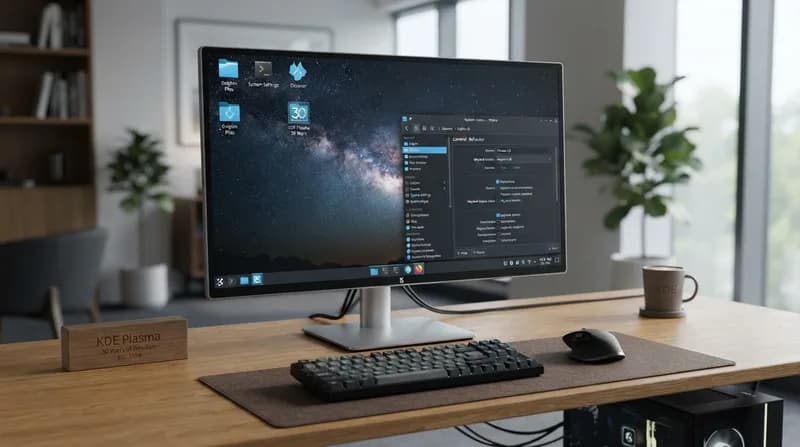
Celebrating three decades of open-source innovation, the KDE project has reached a major milestone with the launch of Plasma 6.8. This release represents a definitive break from the X11 display server era, transitioning the desktop environment to a Wayland-only foundation. While X11 applications remain fully functional through XWayland, the core infrastructure is now architected entirely around modern display protocols. This shift marks the culmination of a long-term strategy, bolstered by metrics indicating that over 95 percent of Plasma 6.6 users had already migrated to Wayland by mid-2026.
The move to Wayland centralizes window management and display server duties within KWin, allowing for tighter integration and more consistent performance across the desktop. While legacy features like window "shading" have been retired as they are incompatible with the Wayland model, the project has offset these removals with significant refinements to the user experience, accessibility, and hardware interaction.
Enhanced Features and System Integration
Plasma 6.8 introduces a suite of quality-of-life improvements that extend far beyond the underlying display server changes. The Spectacle screenshot utility now captures system audio and microphone input, making screen recording more versatile than ever. Browser integration has also been expanded, now natively supporting the Flatpak version of Microsoft Edge, alongside improved dark-theme consistency for GTK2 applications.
System monitoring and resource management have received substantial updates. The System Monitor now offers deeper insights into VRAM usage, allowing users to track graphics memory alongside traditional system RAM. Furthermore, users can pin specific tasks to individual CPU cores, providing greater control over performance-heavy workloads. Multi-monitor setups are also more manageable, with the system now color-coding displays based on their make and model, simplifying the configuration process for users with complex workstation layouts.
Visual Fidelity and Remote Accessibility
Visual enthusiasts will appreciate the improved High Dynamic Range (HDR) support, which now aligns with standard ICC color profiles and incorporates Hybrid Log Gamma support. For those running Nvidia hardware, Plasma 6.8 brings triple-buffered output to the table, resulting in significantly smoother animations and transitions. Global animation settings have also been standardized, ensuring that features like desktop "peek" and window "aperture" behave consistently across the entire environment.
As remote work becomes increasingly standard, the project has overhauled its remote access capabilities. The built-in Remote Desktop server, powered by KRdp, now features a more adaptive protocol that maintains performance over varying network conditions. It now supports bi-directional clipboard sharing and an exclusive mode that locks the host's screen while presenting a virtual display sized specifically to the client's window. For power users needing individual application streaming over SSH, the Waypipe utility provides a robust alternative for remote Wayland integration.
Why It Matters
- Longevity: KDE has remained a central pillar of the Linux desktop for 30 years, adapting through various licensing and architectural shifts.
- Standardization: By forcing the move to Wayland, KDE is aligning with the broader Linux ecosystem’s goal of modernizing the display stack.
- Mainstream Adoption: The upcoming Ubuntu 27.04 "Tenacious T-Rex" release is expected to adopt Plasma 6.8, signaling that Wayland is now the de facto standard for professional Linux desktop environments.