Tech & GadgetsTechnical Deep Dive

Microsoft Extends Defender Protection to Linux Workstations

Published
EElectricBuzz Editorial Team
Microsoft Extends Defender Protection to Linux Workstations
3 min read439 wordsElectricBuzz Editorial Team

The Gist

“Microsoft is bringing its enterprise-grade Defender for Endpoint suite to Linux desktops, aiming to standardize security across diverse corporate computing environments.”

Bridging the Security Gap

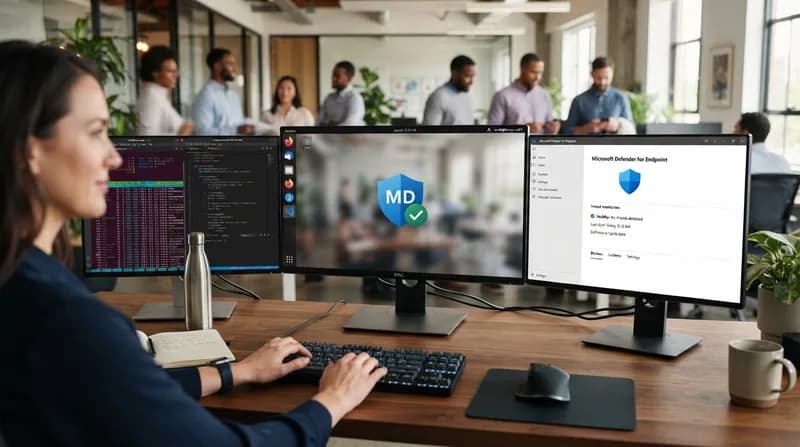
In a significant expansion of its security ecosystem, Microsoft has officially launched the public preview of Microsoft Defender for Linux Workstations. This development represents a shift in corporate infrastructure management, as the tech giant seeks to bring its robust Defender for Endpoint capabilities—previously reserved for Windows and Linux servers—directly to the professional Linux desktop environment. The move is designed to provide security teams with a unified management dashboard, allowing them to monitor, detect, and respond to threats across heterogeneous fleets of devices.

For many organizations, the integration means that Linux desktops will no longer be an island in a sea of Windows-managed hardware. By utilizing the same management framework that security professionals already trust, the company is aiming to reduce the administrative burden of securing mixed-OS enterprise environments. The suite provides extensive functionality, including anti-virus scanning, vulnerability management, and the ability to isolate devices remotely if a security breach is suspected.

Technical Requirements and Compatibility

The solution is not a standalone consumer product but rather an extension of the existing Defender for Endpoint service. To access these features, organizations must hold an active subscription for either Microsoft Defender for Endpoint Plan 2 or the comprehensive Microsoft 365 E5 or E7 packages. The deployment architecture remains consistent with Microsoft's existing Linux server offerings, ensuring that IT administrators do not have to contend with a new, complex agent deployment process.

  • Supported Distributions: RHEL, Ubuntu LTS, CentOS, SUSE Linux Enterprise Server, and Oracle Linux.
  • Security Capabilities: Integrated anti-virus, real-time threat detection, and comprehensive vulnerability management.
  • Control Features: Centralized inventory reporting and remote device isolation capabilities.
  • Deployment: Leverages established server-side agent technology to maintain consistency across the enterprise.

Why It Matters

The push toward Linux desktop protection is a direct response to the evolving nature of the professional landscape. With developers and technical professionals increasingly choosing Linux-based systems for their daily workflows, these machines have become more prominent targets for cyberattacks. Microsoft notes that as Linux adoption continues to migrate from the isolated datacenter to the open office, the necessity for a consistent, enterprise-wide security posture has grown significantly.

While the move may invite debate regarding the role of Microsoft software within the open-source community, the practical reality is a drive toward standardized compliance. By treating the Linux desktop as a first-class citizen in the endpoint security ecosystem, Microsoft is betting that organizations will prioritize centralized security visibility over historical OS preferences. As the lines between development environments and corporate assets continue to blur, this tool serves as a bridge, ensuring that administrators can maintain rigorous security standards regardless of the underlying operating system their staff chooses to utilize.


SPONSORED
The 5 Best Over-Ear ANC Headphones of 2026, Tested & Ranked
Editor's Pick Guide
92/100
Tech & Gadgets•12 min read

The 5 Best Over-Ear ANC Headphones of 2026, Tested & Ranked

We locked five over-ear ANC picks for 2026 — Sony WH-1000XM6, Bose QuietComfort Ultra 2, Soundcore Space One, Sennheiser Momentum 5, and Apple AirPods Max 2 — then stress-tested them on lab metrics, long-term owner truth, and live street prices.

Related Stories

Semantically matched articles, ranked by topic overlap and freshness.

Amazon’s New Bee Wearables Aim to Become Your Personal AI Memory
Tech & Gadgets

Amazon’s New Bee Wearables Aim to Become Your Personal AI Memory

Amazon is launching two new hardware devices under its Bee brand designed to passively record conversations and provide intelligent, personalized assistance.

The AI Infrastructure Paradox: Why Permitting Outpaces Hardware Gains
Tech & Gadgets

The AI Infrastructure Paradox: Why Permitting Outpaces Hardware Gains

As AI demand triggers a massive surge in data center construction, NTT Global Data Centers warns that administrative bottlenecks, not hardware availability, are the true barrier to progress.

Zelenskyy Alleges Intentional Throttling of Starlink Military Connectivity
Tech & Gadgets

Zelenskyy Alleges Intentional Throttling of Starlink Military Connectivity

Ukrainian leadership suggests Starlink performance issues in conflict zones are calculated constraints rather than random technical failures.

Brave Leverages Confidential Computing to Bring E2EE to AI Chats
Tech & Gadgets

Brave Leverages Confidential Computing to Bring E2EE to AI Chats

Brave is combatting the 'trust me' nature of modern AI by integrating trusted execution environments and end-to-end encryption into its Leo assistant.

Asia's AI Supply Chain Faces Market Reality Check
Tech & Gadgets

Asia's AI Supply Chain Faces Market Reality Check

A cooling US tech sector is beginning to ripple across Asia, signaling potential headwinds for the massive AI-driven market rally.

Ubuntu 26.10 'Stonking Stingray' Takes the Plunge with Early Kernel 7.3
Tech & Gadgets

Ubuntu 26.10 'Stonking Stingray' Takes the Plunge with Early Kernel 7.3

Canonical's latest interim Ubuntu release brings a pre-release kernel, experimental speech-to-text integration, and a suite of updated desktop flavors.

CiteProof Launches Deterministic Checker to Stop AI-Generated Legal Hallucinations
Tech & Gadgets

CiteProof Launches Deterministic Checker to Stop AI-Generated Legal Hallucinations

A new platform promises to bring accuracy back to the courtroom by using deterministic searches—not more AI—to verify the integrity of machine-generated legal filings.

The New Frontline: Cybercriminals Pivot from Data Theft to Physical Sabotage
Tech & Gadgets

The New Frontline: Cybercriminals Pivot from Data Theft to Physical Sabotage

Modern ransomware is moving beyond simple data encryption, with attackers increasingly targeting Building Automation Systems (BAS) to hold physical infrastructure and operations for ransom.