The Ripple Effect of US Tech Volatility
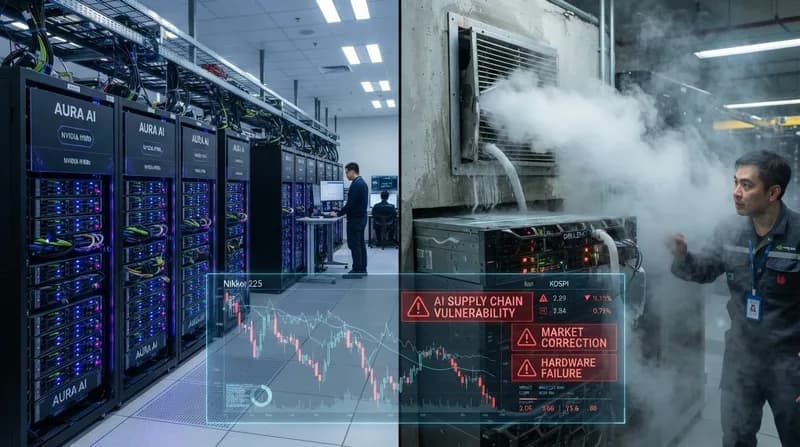
The explosive rally that defined Asia’s tech-heavy markets is encountering a significant obstacle. As US technology stocks undergo a notable correction, the sentiment is quickly shifting across the Pacific, casting a long shadow over the 'picks-and-shovels' providers—the semiconductor manufacturers, component suppliers, and equipment makers—that have formed the backbone of the global AI boom.
The primary concern stems from the interplay between capital expenditures and interest rates. For months, investors banked on a seamless cycle of infinite spending on AI infrastructure. However, the current selloff suggests that the cost of financing this rapid expansion is becoming increasingly prohibitive. If companies are forced to pull back on data center build-outs or hardware procurement due to tightening margins, the order books of Asian suppliers—previously seen as untouchable—could begin to shrink.
Why it Matters
- Capital Constraints: Higher-for-longer interest rates are pressuring the debt-heavy tech sector, making aggressive expansion harder to sustain.
- Supply Chain Dependency: Asia provides the essential physical hardware for AI, making its equity markets uniquely sensitive to fluctuations in US demand.
- Earnings Pressure: Investors are beginning to question whether current valuations can be supported if demand for high-end chips and cooling systems cools in the coming quarters.
The outlook for the region now hinges on whether the AI investment wave has enough momentum to withstand a period of cautious spending. While the long-term utility of artificial intelligence remains a cornerstone of the market narrative, the immediate future is characterized by a recalibration of growth expectations. Traders are no longer betting blindly on the AI thesis; instead, they are looking for evidence that the revenue cycle can decouple from the volatility currently gripping the US technology indices. As financing costs climb, the transition from speculative growth to proven profitability will likely define the next chapter for these key market players.