The Convergence of Intelligence and Exploration
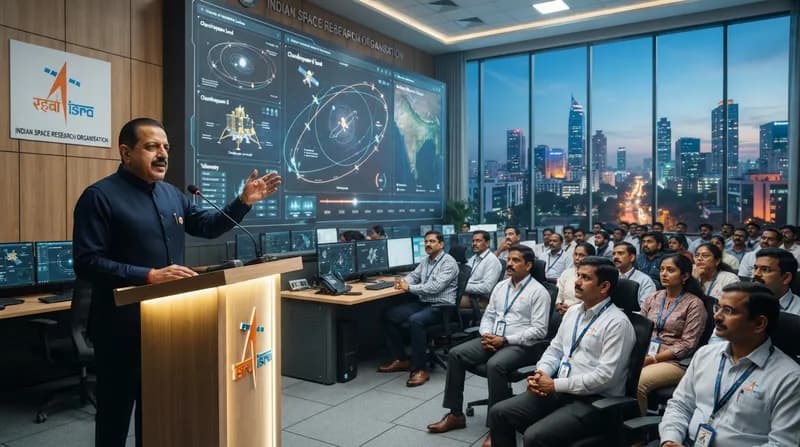
India’s space program is entering a transformative era, with government officials emphasizing that artificial intelligence will play a critical role in the next generation of celestial exploration. Jitendra Singh, India's Science and Technology Minister, recently highlighted that integrating advanced machine learning capabilities is no longer optional but essential for maintaining momentum in both space and nuclear research sectors.
The vision presented suggests a symbiotic relationship between human oversight and algorithmic precision. As mission complexity grows—ranging from lunar landings to deep space satellite monitoring—the sheer volume of data necessitates an automated approach to decision-making. By leveraging AI to process telemetric data and optimize trajectory planning, India aims to streamline the efficiency of its missions, ensuring that human intellect is directed toward higher-level strategic innovation rather than routine diagnostics.
Why It Matters
- Resource Optimization: AI allows mission control centers to analyze vast datasets in real-time, significantly reducing the probability of human error during critical launch or landing phases.
- Nuclear Integration: Beyond space exploration, the minister noted that AI would prove vital in managing nuclear programs, particularly in predictive maintenance and safety protocol enforcement.
- Strategic Sovereignty: By cultivating domestic AI expertise for high-stakes science, India is moving to reduce dependency on foreign software platforms, ensuring its aerospace infrastructure remains secure and self-reliant.
Looking Ahead
The roadmap for India’s scientific future is clear: bridge the gap between traditional engineering and predictive intelligence. As the country eyes more ambitious lunar projects and interplanetary probes, the deployment of robust AI models will likely act as a force multiplier. Minister Singh’s statement underscores a national commitment to keeping pace with global aerospace leaders by embracing the computational power of the AI era, effectively turning satellite networks into smarter, more autonomous assets capable of adapting to the harsh, unpredictable environments of space.