E-BUZZ ME Logo
ScienceTechnical Deep Dive

Inside the 1997 Mir Crisis: Michael Foale Reflects on the Collision and Recovery

Published
Inside the 1997 Mir Crisis: Michael Foale Reflects on the Collision and Recovery
1 min read172 words

The Gist

Astronaut Michael Foale recounts the harrowing moments of the 1997 Mir space station collision and the leadership that saved the mission.

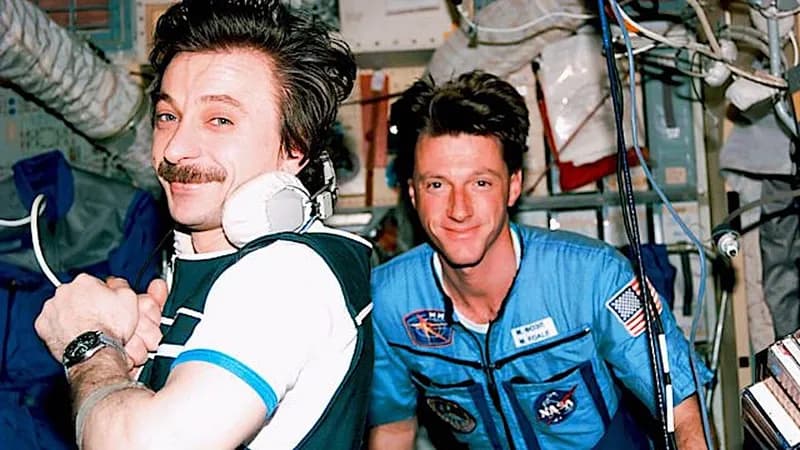
In a detailed retrospective, veteran astronaut Michael Foale has shared insights into the 1997 crisis aboard the Russian space station Mir. The incident, which remains one of the most serious accidents in the history of crewed spaceflight, involved a collision with a Progress resupply vehicle that caused a depressurization emergency.

A Test of Crew Resilience

Foale describes the immediate aftermath of the impact, highlighting the intense pressure the crew faced to stabilize the station. According to Foale, the mission commander took full responsibility for the collision, a gesture of leadership that defined the crew's dynamic during the recovery efforts. Despite the structural damage and the loss of power, the team worked tirelessly to restore life support and control systems.

Reflecting on the event, Foale expressed a firm belief that the collective actions of the crew were the deciding factor in preventing the total loss of the station. "I believe that we, as a crew, saved space station Mir that day," he noted, emphasizing the importance of training and coordination in extreme environments.
Related Stories

Semantically matched articles, ranked by topic overlap and freshness.

Viking 1 at 50: Reflecting on Humanity's First Mars Landing
Science64%

Viking 1 at 50: Reflecting on Humanity's First Mars Landing

Space experts and astrobiologists gather on the This Week In Space podcast to celebrate the 50th anniversary of the historic Viking 1 mission.

From Soviet Physics to Martian Neighbors: Physics World Reviews the Latest Science Books
Science61%

From Soviet Physics to Martian Neighbors: Physics World Reviews the Latest Science Books

Physics World editors provide a condensed look at a diverse new collection of science literature covering everything from historical Soviet institutes to dystopian futures.

Cosmic Speed Limits: How the Universe Outpaces Light
Science60%

Cosmic Speed Limits: How the Universe Outpaces Light

While nothing travels through space faster than light, the expansion of space itself allows distant galaxies to recede at speeds exceeding light-speed without violating Einstein's laws.

SpaceX Gears Up for Starship Flight 13 Following Engine Replacements
Tech & Gadgets60%

SpaceX Gears Up for Starship Flight 13 Following Engine Replacements

SpaceX is preparing for another Starship launch attempt after technical setbacks and weather delays forced a postponement.

Solar Analysis Reveals 55% More Silver in the Sun Than Previously Estimated
Science59%

Solar Analysis Reveals 55% More Silver in the Sun Than Previously Estimated

New atmospheric modeling suggests the Sun contains significantly higher levels of silver, aligning solar data with ancient meteorite compositions.

Fortescue CEO Takes the Wheel of 150-Ton Electric Haul Truck
Electric Vehicles58%

Fortescue CEO Takes the Wheel of 150-Ton Electric Haul Truck

Fortescue CEO Dino Otranto personally test-drives the company's latest battery-powered heavy machinery as part of a broader push to electrify mining operations.

Ken’ichi Nomoto and Stanford Woosley Awarded 2026 Shaw Prize in Astronomy
Science58%

Ken’ichi Nomoto and Stanford Woosley Awarded 2026 Shaw Prize in Astronomy

Astrophysicists Ken’ichi Nomoto and Stanford Woosley have been named joint winners of the 2026 Shaw Prize for their transformative research into stellar explosions.

Waymo Autonomous Taxis Outperform Human Drivers in Safety Study
Electric Vehicles58%

Waymo Autonomous Taxis Outperform Human Drivers in Safety Study

New data from the Insurance Institute for Highway Safety reveals that Waymo’s self-driving fleet crashes 68% less frequently than human-led vehicles.