1. The Lunar Occultation of Jupiter
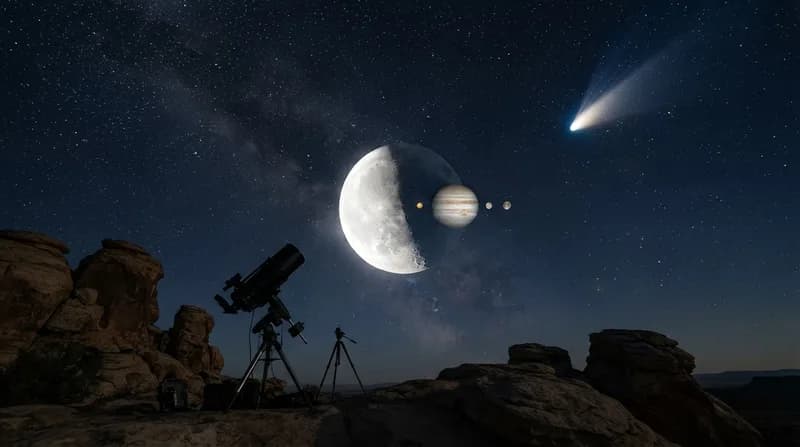
October kicked off with a rare and captivating astronomical event known as a lunar occultation. On the morning of October 6, observers across parts of North America witnessed the largest planet in our solar system, Jupiter, slip behind the Moon’s slender crescent. This celestial disappearing act effectively removed the gas giant from the night sky for roughly an hour before it re-emerged on the opposite side of the lunar limb.
While the event was visible to the naked eye, those equipped with binoculars or small telescopes were rewarded with an even more intimate view, as the Moon’s jagged edge masked Jupiter’s own moons in succession. This phenomenon serves as a vivid reminder of the precise, clockwork movement of our solar system’s most prominent bodies.
2. The Draconid Meteor Shower
Following the occultation, the celestial stage shifted to the Draconid meteor shower, which reached its peak on October 8 and 9. Unlike many other meteor displays that require a late-night vigil into the early morning hours, the Draconids provided a more viewer-friendly experience, with activity ramping up shortly after nightfall. This timing makes the shower particularly accessible for casual observers and families.
The Draconids originate from the constellation Draco—the dragon—and while they are generally categorized as a modest shower, this year offered ideal conditions. Because the Moon was approaching its new phase, the lack of significant lunar glare allowed even the fainter streaks of light to pierce the darkness, rewarding patient skywatchers who ventured away from the glow of city lights.
3. The Orionid Meteor Shower
Mark your calendars for October 21, the annual peak of the Orionid meteor shower. These shooting stars are perhaps the most famous in the autumn calendar because they are composed of ancient debris shed by Halley’s Comet. As Earth passes through the orbital path of this historic comet, the remnants collide with our atmosphere at high velocities, vaporizing in brilliant, fleeting flashes.
NASA advises that the best viewing will occur in the pre-dawn hours. While the Moon will be in a waxing gibbous phase during the early evening—potentially washing out some of the fainter meteors—conditions improve significantly after the Moon sets around 3 a.m. local time. By that hour, the constellation Orion, from which the meteors appear to radiate, will be climbing higher, offering a clearer window to catch these cosmic remnants.
4. The Hunter’s Moon
Closing out the month on October 25 and 26, the Hunter’s Moon will illuminate the night with its full brilliance. Traditionally associated with the autumn harvest, the name stems from historical practices where the bright moonlight allowed hunters to track game in the cleared fields after the harvest was gathered.
As we approach the end of October, the Moon’s transition into a waning gibbous phase ensures that it remains a dominant, glowing presence in the night sky. Whether you are out to catch the lingering effects of the month's meteor showers or simply enjoying the crisp, dark nights of late autumn, the Moon provides a haunting and beautiful backdrop for the final days of the month.