Securing the Battery Supply Chain
In a strategic move to bolster its electric vehicle battery manufacturing capabilities, Hyundai Motor Group is evaluating a 100 billion won (approximately 67.6 million euro) equity investment in a synthetic graphite project led by Posco Future M. The initiative, formalized through a letter of intent signed on November 3, 2026, aims to integrate Hyundai deeper into the upstream battery material ecosystem. By participating in the capital structure of this facility, Hyundai intends to lock in preferred purchasing rights for the synthetic graphite produced at the site, ensuring a stable supply of this essential anode material.
Synthetic graphite is a pivotal component in modern lithium-ion batteries, valued for its ability to enhance charging speeds and extend the operational longevity of battery cells. As global demand for high-performance electric vehicles continues to surge, manufacturers are increasingly moving to diversify their material sourcing to reduce reliance on existing, heavily centralized supply chains. This partnership between Hyundai and Posco is a calculated effort to insulate the automaker from potential market volatility while localizing production strategies.
The Thai Nguyen Facility
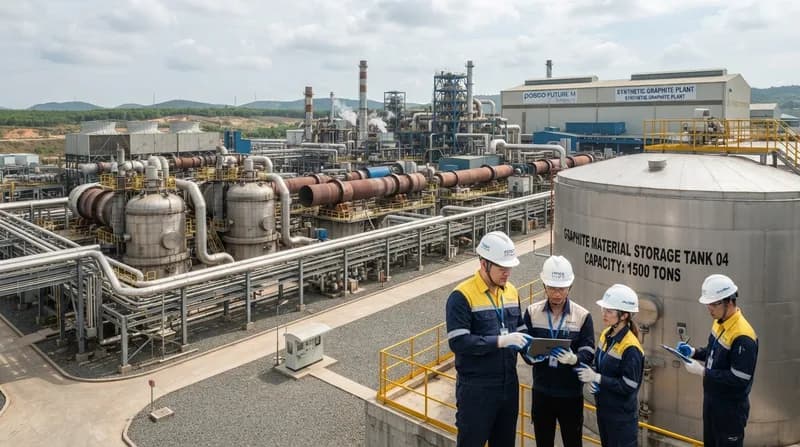
The centerpiece of this collaboration is a new synthetic graphite production hub currently under construction in the Thai Nguyen Province of Vietnam. Posco Future M has committed roughly 357 billion won to the development of this site, which is currently slated to begin series production by 2028. The facility is designed to scale production in distinct phases, with the initial phase already bolstered by confirmed orders from external customers.
Beyond capital investment, the partnership extends into technical collaboration. Hyundai and Posco intend to work closely on the quality evaluation and development of graphite materials specifically tailored to the rigorous requirements of future EV architectures. This synergy builds upon a long-standing alliance between the two conglomerates, which has already yielded advancements in high-silicon electrical steel for more efficient electric motors and various other battery material initiatives.
Why It Matters
- Supply Chain Resilience: The move represents a proactive effort to diversify raw material sourcing away from the dominant Chinese market.
- Technical Synergy: Joint development ensures that anode materials are optimized for the specific performance profiles of future Hyundai and Kia battery packs.
- Strategic Integration: By moving into equity-based partnerships for materials, Hyundai is shifting from a simple buyer of components to an active stakeholder in the battery value chain.
As the automotive industry pivots toward mass electrification, the competition for raw materials like graphite, lithium, and nickel has intensified. This collaboration underscores a broader trend of vertical integration among major automakers, who are now increasingly treating battery materials with the same strategic priority as traditional automotive parts like transmissions or chassis components.