ScienceTechnical Deep Dive

Hidden Depths: New Research Reveals Marine Heatwaves Last Months Longer Than Previously Thought

Published
EElectricBuzz Editorial Team
Hidden Depths: New Research Reveals Marine Heatwaves Last Months Longer Than Previously Thought
3 min read506 wordsElectricBuzz Editorial Team

The Gist

“A groundbreaking study indicates that marine heatwaves are often just the peak of much longer warming events, causing scientists to drastically underestimate the thermal stress on ocean ecosystems.”

The Myth of the Isolated Heatwave

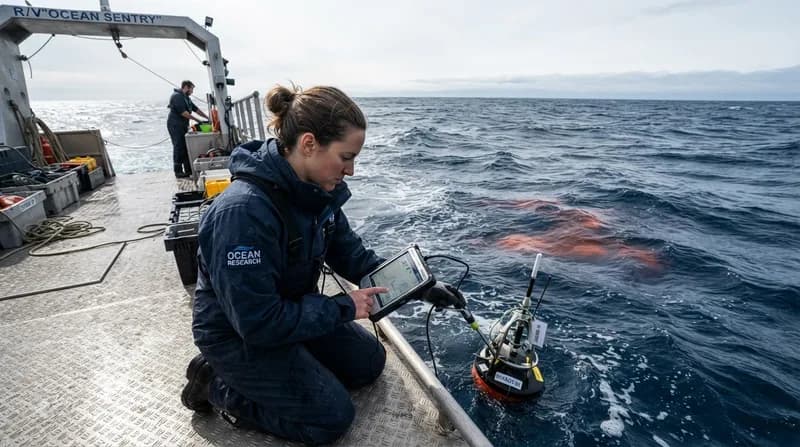
For years, the scientific community has analyzed marine heatwaves (MHWs) as isolated, high-intensity temperature spikes—brief events with distinct start and end points. However, a recent study from the Virginia Institute of Marine Science (VIMS) and the Batten School suggests this narrow focus has led to a significant underestimation of the actual heat stress endured by marine ecosystems. By treating these events as singular bursts, researchers have effectively ignored the broader, sustained warming periods that surround them.

Led by researcher Ricardo Utzig Nardi and Professor Piero Mazzini, the study proposes a new framework that accounts for cumulative heat exposure. By monitoring 20 U.S. estuaries over two decades, the team discovered that marine heatwaves are frequently embedded within prolonged periods of elevated water temperatures that can linger for weeks or even months. When these extended periods are factored into the data, the total heat exposure experienced by ocean life is, on average, more than 150% higher than traditional metrics suggest.

Defining New Categories of Thermal Stress

The research categorizes these extended warming episodes into two primary types based on their duration and intensity. This classification helps environmental scientists better understand the severity of the threats facing coastal resources and allows for more accurate laboratory simulations of ocean conditions.

1. Individual Warming Events

Approximately two-thirds of the recorded events fall into the category of "individual" heatwaves. These are characterized by an approximately 60-day window of elevated temperatures. While these are shorter in duration than their compound counterparts, they still represent a period of thermal stress that extends well beyond the duration of the peak heatwave itself. The findings suggest that even these smaller-scale events have been severely underestimated in terms of their cumulative biological impact.

2. Compound Warming Events

The remaining one-third of cases were classified as "compound" events. These are significantly more dangerous, often spanning roughly 90 days of abnormal warmth. The study revealed that these compound episodes generate more than three times the cumulative heat exposure produced by the marine heatwave peak alone. This finding is critical, as it highlights that the most devastating impacts on marine organisms are often the result of long-term metabolic strain rather than just the extreme peak of the temperature anomaly.

Why it Matters

The implications for marine conservation and ecosystem management are profound. Many existing laboratory experiments simulate thermal stress by exposing organisms to high temperatures for only a few days or weeks. This research indicates that such experiments likely fail to capture the reality of the "long-haul" stress marine species endure in nature. By overlooking the periods of elevated temperature before and after an MHW, scientists have potentially missed the primary drivers of ecosystem decline, including oxygen depletion and harmful algal blooms.

As these warming events grow more frequent due to climate change, this new framework offers a vital tool for resource managers. It shifts the focus from "event-based" monitoring to "exposure-based" monitoring, enabling more accurate assessments of which species are at risk and how coastal communities can better protect their delicate aquatic environments.


SPONSORED
The 5 Best Over-Ear ANC Headphones of 2026, Tested & Ranked
Editor's Pick Guide
92/100
Tech & Gadgets•12 min read

The 5 Best Over-Ear ANC Headphones of 2026, Tested & Ranked

We locked five over-ear ANC picks for 2026 — Sony WH-1000XM6, Bose QuietComfort Ultra 2, Soundcore Space One, Sennheiser Momentum 5, and Apple AirPods Max 2 — then stress-tested them on lab metrics, long-term owner truth, and live street prices.

Related Stories

Semantically matched articles, ranked by topic overlap and freshness.

The Science of the Swirl: Why Humans Unconsciously Turn Left
Science

The Science of the Swirl: Why Humans Unconsciously Turn Left

New research published in Nature Communications reveals a persistent, mysterious human locomotor bias that defies cultural conditioning and social interaction.

5,000 Days on Mars: Curiosity Celebrates Milestone With Stunning New Panorama
Science

5,000 Days on Mars: Curiosity Celebrates Milestone With Stunning New Panorama

NASA's veteran rover hits a massive milestone, commemorating 5,000 Martian days by capturing an artistic, high-contrast perspective of its historic journey.

Beyond the Pill: The Rise of Long-Acting Therapeutics
Science

Beyond the Pill: The Rise of Long-Acting Therapeutics

A shift toward extended-release medicine is promising to simplify chronic care, reduce healthcare waste, and improve patient adherence for conditions ranging from HIV to long-term ailments.

Autonomous AI Triage Transforms Dermatology Efficiency in Landmark Study
Science

Autonomous AI Triage Transforms Dermatology Efficiency in Landmark Study

A major real-world clinical study reveals that autonomous AI can safely manage benign skin lesion cases, freeing up thousands of hours for specialist care.

Additive Manufacturing Could Revolutionize the Global Rubber Glove Industry
Science

Additive Manufacturing Could Revolutionize the Global Rubber Glove Industry

Cranfield University’s innovative 3D-printing technique for rubber gloves promises to slash waste, localize production, and introduce personalized surgical gear.

Cosmic Time Machine: Astronomers Detect Potential Magnetar Birth in Deep Space
Science

Cosmic Time Machine: Astronomers Detect Potential Magnetar Birth in Deep Space

A groundbreaking ten-minute X-ray flare has provided astronomers with a unique, high-energy window into the violent collision of two neutron stars.

Unlocking the Cell's Recycling Center: A New Frontier for Disease Treatment
Science

Unlocking the Cell's Recycling Center: A New Frontier for Disease Treatment

Researchers have identified a breakthrough molecular pathway that could finally make the elusive TFEB protein a viable target for treating cancer and neurodegenerative diseases.

Bridging the Gap: New AI Framework Transforms Cancer Survivorship Care
Science

Bridging the Gap: New AI Framework Transforms Cancer Survivorship Care

Researchers at the University of Miami have unveiled a robust, medically-integrated AI platform designed to provide cancer survivors with personalized, evidence-based support between clinical appointments.