Unraveling the Mystery of Pedestrian Flow
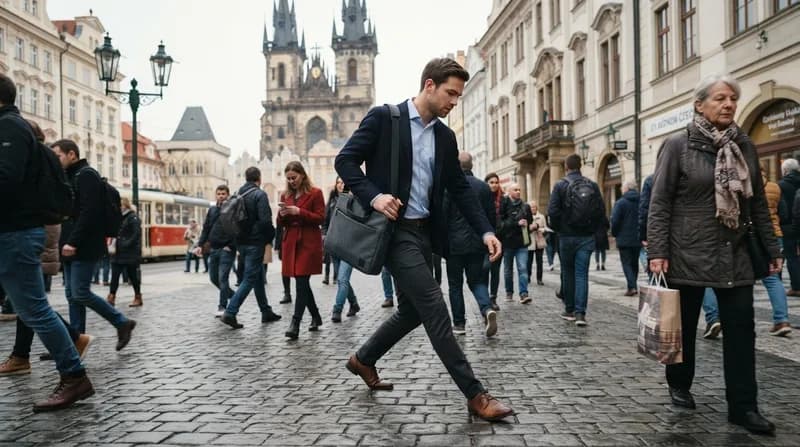
For decades, researchers studying human movement have operated under the assumption that collective behaviors in crowds, such as the swirling patterns seen in bustling train stations or airport terminals, are 'emergent phenomena.' This term describes how simple local interactions—people dodging one another to avoid collisions—gradually scale up to form large, cohesive patterns. However, a groundbreaking five-year study has upended this long-standing theory by demonstrating that the pattern actually exists before the crowd ever forms.
The investigation began during the 2020 pandemic when researchers observed that groups moving within enclosed spaces almost universally adopted a counterclockwise rotation. Initially, scientists suspected this was an adaptive social strategy, a way for pedestrians to navigate space efficiently while maintaining distance. Yet, after years of rigorous testing across various environments, the origin of this 'leftward tilt' remains one of science’s most intriguing unanswered questions.
The Failure of External Hypotheses
To identify the source of this movement bias, the research team systematically dismantled several prevailing theories. First, they looked at the interaction with physical boundaries. They hypothesized that right-handed individuals might naturally favor left-hand turns, creating a collective swirl as they hit the walls of a room. To test this, they conducted trials with groups composed exclusively of right-turners and left-handed individuals. Despite these variations, the counterclockwise rotation persisted. The effect even held firm in expansive, open-air playgrounds spanning 32,000 square feet, proving that physical walls were not the catalyst for the behavior.
The team then investigated cultural and social conditioning. They explored whether the direction of traffic—driving on the right side of the road in Spain versus the left in Japan—influenced how people navigated crowds. They theorized that if pedestrians habitually stepped to the right to avoid collisions, it would naturally produce a left-side bias in walking paths. However, when they compared data from Spain and Japan, the counterclockwise movement was present in both, regardless of local traffic laws or social norms. Even preschool children, who have yet to fully internalize these societal habits, exhibited the strongest counterclockwise bias of any demographic tested.
The Individual Driver: A Biological Riddle
The study's most significant finding was derived from observing individuals walking in total isolation. When people were placed in an empty arena with no other humans to interact with and no social pressure to conform, the vast majority still defaulted to a counterclockwise path. This confirms that the collective swirl seen in cities is simply the sum of individual locomotor biases, rather than a result of peer-to-peer interactions.
Current data suggests the answer lies somewhere within our biological architecture. Researchers examined links to handedness, eye dominance, and biological sex, but found no correlation. The current leading hypothesis points to subtle, perhaps even primitive, asymmetries in the inner ear that govern our perception of 'straight.' This phenomenon appears to be deeply ingrained, echoing similar behaviors seen in other species, such as schooling fish or the swirling migrations of army ants, suggesting that this leftward pull may be a fundamental, ancient aspect of life itself.
Why It Matters
- Urban Planning: Understanding this inherent bias allows architects to better design high-traffic public spaces like transit hubs and museums, optimizing foot traffic flow to prevent congestion.
- Human Modeling: Software engineers and AI researchers creating crowd-simulation software can now integrate this individual locomotor bias to create more realistic, 'human-like' movement patterns in digital environments.
- Evolutionary Insight: The discovery that this bias persists across cultures and age groups suggests that it is not a learned habit, but a deep-seated trait that could have deep evolutionary roots linked to inner-ear stability and spatial navigation.