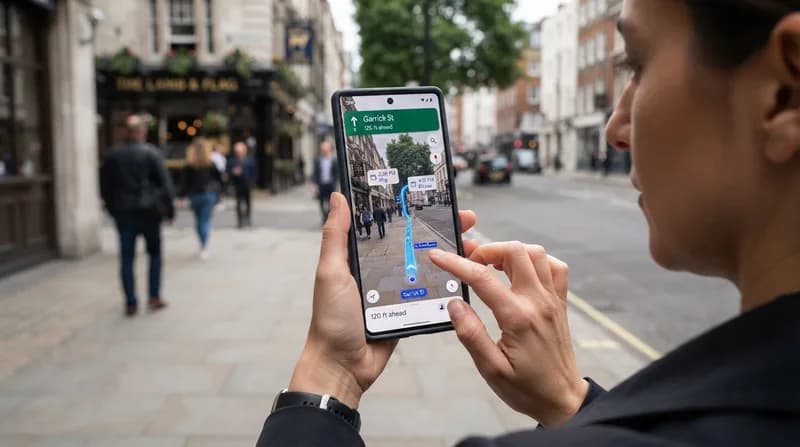
The Evolution of Navigation: Maps as a Personal Concierge
Google has officially taken a major step toward making Google Maps a truly autonomous assistant. By integrating sophisticated generative AI capabilities into its widely used navigation platform, Google is shifting the paradigm from a reactive mapping tool to a proactive travel and scheduling concierge. The new updates to the 'Ask Maps' feature allow users to generate comprehensive, day-by-day itineraries, manage complex trip planning, and even delegate administrative tasks like booking local appointments.
This shift represents a strategic pivot for the tech giant, moving away from simple question-and-answer interactions toward an 'agentic' model. In this context, the AI doesn't just provide a list of static links; it acts on the user's behalf to organize logistics, providing numbered pins, insider tips, and real-time adjustments. Whether you are mapping out a three-day coastal road trip or scheduling a last-minute home repair, the updated interface is designed to reduce the friction of planning.
Key Features and Functionality
- AI-Generated Itineraries: Users can request specific trip structures, such as a full day of shopping or a multi-day itinerary involving outdoor activities and dining, complete with logical routing and visual map pins.
- Seamless Synchronization: Once an itinerary is finalized, it can be shared easily with travel companions or exported directly to Google Docs for more granular editing on a desktop.
- Agentic Appointment Scheduling: Ask Maps can now interface with local business data to find availability for various services, such as beauty treatments, pet care, or automotive maintenance, and perform the legwork of finding open slots.
- Context-Aware Real-Time Updates: Navigational routes remain dynamic. Users can request mid-trip modifications—such as adding a scenic detour or a lunch stop—and the platform updates the route and arrival times accordingly.
- Intelligent List Management: The tool can scan a user's saved 'Lists' on Maps to provide actionable insights, such as filtering saved restaurants to find those with immediate availability for a specific group size.
Why It Matters
The push for AI agents capable of performing real-world tasks is the current focal point of the tech industry. While competitors have rolled out standalone AI agents for reservation-making, Google's advantage lies in its existing utility. By folding these capabilities into Google Maps—an application already deeply embedded in the daily routines of millions—Google is effectively lowering the barrier to entry for AI-assisted living.
Furthermore, the geographic expansion of these features to 30 countries across Europe, including the U.K., Germany, and Spain, indicates that Google is aggressively scaling its agentic strategy. By offering more than just static map data, Google is positioning Maps as an essential digital utility that manages the intersection of time, location, and commerce.
Outlook and Implications
As these agentic features roll out to Android and iOS, the reliance on manual search for planning trips or securing local services will likely diminish. The ability to ask, 'Which saved spots have availability for five people in the next 30 minutes?' fundamentally changes how users interact with local business ecosystems. Moving forward, the expectation for digital platforms will be to not just show where a business is, but to understand its capacity and status in real-time, effectively creating a direct, AI-mediated bridge between the user's intent and the physical world.