The Nuclear Power Play
As the race for AI dominance intensifies, the primary bottleneck for hyperscalers has shifted from chip supply to sheer electrical output. Google has officially announced a massive 20-year power purchase agreement with Constellation Energy, the largest nuclear power provider in the United States. This strategic partnership is designed to secure 3,590 megawatts of future energy supply, with a significant focus on breathing new life into existing atomic infrastructure.
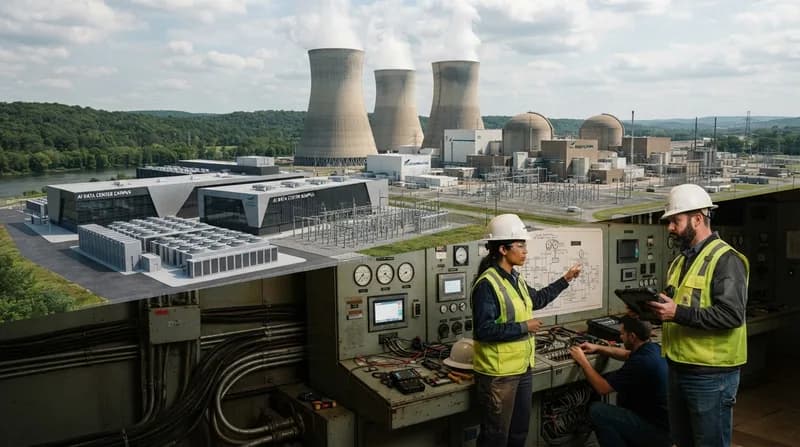
Instead of pursuing the lengthy and complex process of building entirely new plants from the ground up, the collaboration focuses on a process known as "uprating." This involves making strategic, targeted capital investments in 11 active nuclear plants across New Jersey, Pennsylvania, and Illinois. By modernizing legacy components like steam generators, turbines, and outdated digital control systems, Constellation aims to unlock an additional 890 megawatts of carbon-free capacity with much shorter lead times than greenfield construction.
Why It Matters
The energy demands of modern datacenters—driven by massive GPU clusters and model training—have created an unprecedented strain on the electrical grid. For tech giants, the risk is clear: without reliable, high-capacity energy sources, their trillion-dollar investments in AI hardware remain dormant. The uprating strategy provides a tactical advantage, bypassing the common regulatory hurdles and grid interconnection bottlenecks that frequently plague new energy projects.
- Investment Scale: Constellation Energy is committing $4.3 billion toward these plant upgrades.
- Project Timeline: The first of the uprated nuclear reactors is expected to reach operational status by 2028.
- Energy Diversity: Beyond the 890MW from uprates, the 20-year deal secures an additional 2,700 megawatts from other energy sources.
The Industry Scramble for Atoms
Google is far from the only tech leader looking toward nuclear fission to solve its power crisis. The industry is currently witnessing a trend of hyperscalers aggressively courting nuclear providers to guarantee long-term stability for their compute-heavy operations. Microsoft recently made headlines by partnering with Constellation to restart the Three Mile Island reactor unit, aiming for a 2025 relaunch. Meanwhile, Meta is actively exploring partnerships to prevent the closure of existing plants, highlighting that for the largest players in tech, nuclear power has transitioned from a sustainability goal to an existential requirement for scaling AI capability.
As these companies continue to spend hundreds of billions of dollars on compute capacity, the reliance on nuclear power will likely become a standard pillar of tech infrastructure strategy. By upgrading what already exists, these giants are finding a pragmatic path to satisfy their relentless demand for electricity while navigating the limitations of the current power grid.