The State of the Global EV Arms Race
As the electric vehicle landscape shifts rapidly, Ford CEO Jim Farley has sounded a major alarm regarding the competitive future of Western automotive brands. During the recent Automotive News Congress in Detroit, Farley suggested that the window of opportunity for European manufacturers to blunt the impact of Chinese electric vehicles has effectively closed. According to the executive, the rapid market penetration achieved by Chinese firms in Europe—which now accounts for roughly 12% of the market—has reached a point where conventional competition is becoming an uphill battle for legacy automakers.
Farley’s comments underscore a growing anxiety in Western automotive boardrooms. He noted that the aggressive combination of high-tech features, impressive range capabilities, and aggressive pricing strategies has allowed Chinese manufacturers to capture an increasingly large slice of the global automotive pie. With a reported 70% rise in global market share for Chinese EVs, the momentum is undeniably shifting. Farley posits that the European experience serves as a cautionary tale for the United States, suggesting that a more measured and restrictive approach is necessary to avoid a similar market displacement stateside.
The Dual Strategy: Partnership Versus Protection
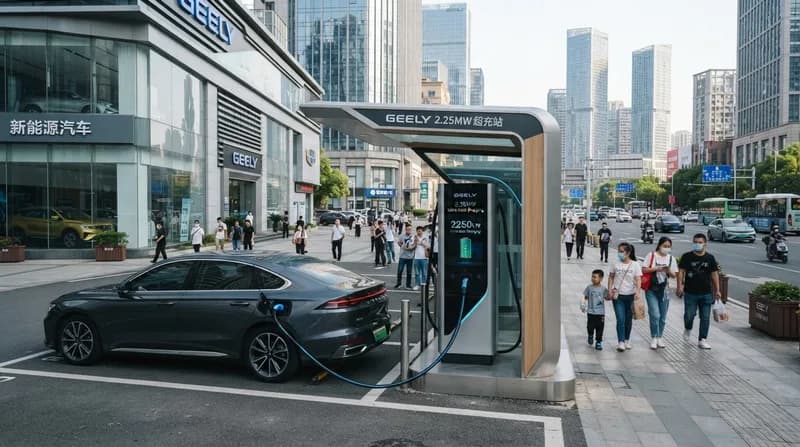
The position taken by Ford is complex, balancing domestic protectionism with international pragmatism. While Farley advocates for caution regarding Chinese imports—citing concerns over national security and data privacy, including the potential for vehicle-based surveillance—the automaker continues to engage in strategic collaborations. Ford has explored partnerships with Chinese giants like Geely for manufacturing in Spain and has faced intense scrutiny for its ongoing project involving battery technology from CATL.
Farley justifies this duality by categorizing it as a necessity for capital efficiency. He argues that in markets where Ford does not hold critical intellectual property, partnering with Chinese firms is a logical way to remain competitive without reinventing the wheel. This "partner while you compete" stance is designed to allow Ford to leverage Chinese manufacturing expertise abroad while simultaneously attempting to out-innovate them in the North American market. However, this strategy faces significant political headwinds, particularly as U.S. legislators weigh potential bans on vehicles containing significant Chinese ownership stakes.
Why it Matters
- Market Realignment: The surge in Chinese EV market share, now reaching 25% in regions like Mexico, threatens to rewrite the global automotive power hierarchy.
- Policy Friction: The divide between U.S. political rhetoric—which fluctuates between total bans and allowing Chinese EVs built locally—and the reality of global supply chains creates significant uncertainty for manufacturers.
- Technological Parity: Chinese automakers are no longer just competing on price; they are delivering vehicles with range and software suites that challenge the technological prestige of Western legacy brands.
As the industry moves forward, the question remains whether U.S. automakers can strike a balance that allows for healthy competition without being steamrolled by international rivals who have already mastered the economies of scale required for the electric transition. For Ford, the challenge is clear: modernize operations fast enough to compete, or risk finding themselves in the same "too late" scenario that Farley attributes to their European counterparts.