The Era of Megawatt Charging
The global race to slash electric vehicle charging times has reached a new threshold. While many Western automotive manufacturers continue to benchmark their peak charging speeds in the 400-to-600 kilowatt range, Geely Auto Group has shattered the ceiling with the unveiling of a 2.2-megawatt charging station. Capable of supporting dual-vehicle simultaneous charging at extreme speeds, this infrastructure milestone aims to make refueling an EV as efficient as filling a gas tank. Specifically, in recent demonstrations, a Lynk & Co 10 vehicle achieved a 10% to 97% charge in just 8 minutes and 40 seconds.
However, physics poses a significant hurdle: charging at such high power levels typically accelerates the irreversible degradation of lithium-ion batteries. Geely leadership, including CEO Jerry Gan, has emphasized that speed cannot come at the expense of longevity. To back this claim, the company has bolstered its consumer confidence by extending its battery warranty to eight years or 200,000 kilometers, signaling that their proprietary technology can survive the rigors of high-current power intake.
The Anatomy of the Ultra Short Blade Battery
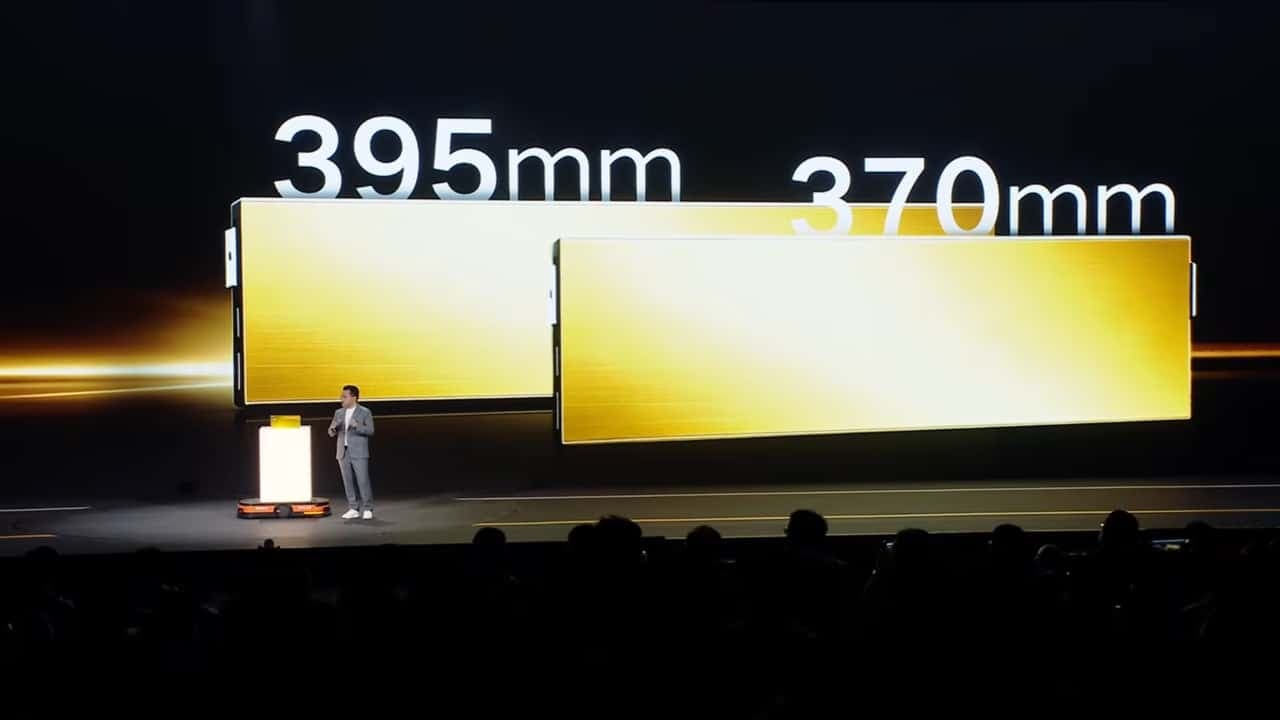
To facilitate these gains, Geely introduced its new Ultra Short Blade Battery, which abandons conventional long-cell architectures in favor of two compact sizes: 395 mm and 370 mm. By shortening the physical length of the cell compared to industry-standard designs, engineers have successfully reduced the internal migration path of ions. This reduction in travel distance inherently lowers internal resistance, which is the primary driver of excess heat generation during high-wattage charging cycles.
Beyond physical geometry, the battery utilizes advanced material science at the cellular level. The cathode now incorporates high-entropy elements to widen the ion transport pathways, a design shift Geely likens to expanding a single-lane road into a high-capacity multi-lane highway. Simultaneously, the graphite anode has been structurally modified to incorporate "flyover"-like pathways, ensuring that lithium ions are integrated efficiently without accumulating on the surface, which is the common precursor to catastrophic dendrite growth and short circuits.
Advanced Thermal and AI Management
Managing the massive heat flux of megawatt-level energy transfer requires more than passive cooling. Geely has implemented an integrated five-point liquid cooling system that harmonizes temperature regulation across the charging port, the power module, the station itself, and the battery pack. This closed-loop system is governed by "Xingrui PowerMind," an AI-driven management platform that anticipates thermal spikes up to 30 seconds before they occur, adjusting charging current in real time to ensure the battery remains below the critical 65-degree Celsius threshold.
To further mitigate degradation, the company introduced "lithium pulse restoration" technology. By injecting a micro-amplitude pulse current into the anode at specific frequencies, the system actively prevents lithium plating—a condition where metallic lithium builds up on the anode. According to engineers, this acts as a restorative "massage" for the battery, ensuring that the ions remain mobile and settled within the graphite structure rather than causing permanent cellular damage.
Why It Matters
- Speed Benchmarks: Moving from 30-minute charging sessions to sub-10-minute sessions removes the primary convenience friction for mass-market EV adoption.
- Safety Standards: The adherence to the 65C maximum temperature threshold aligns with new Chinese safety regulations, addressing concerns regarding thermal runaway.
- Longevity Confidence: The extended 200,000 km warranty serves as a critical stress test, attempting to prove that high-speed charging doesn't mandate frequent battery replacements.