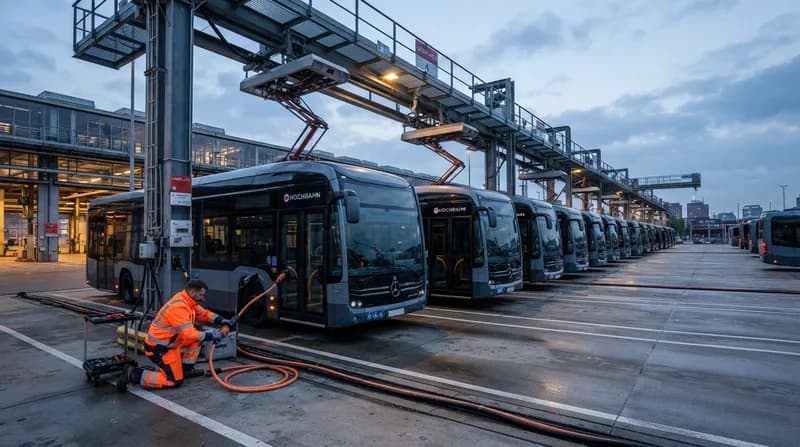
Strategic Expansion of E-Bus Infrastructure
Daimler Buses is intensifying its commitment to electric mobility by extending its public charging network to Hamburg. The company has finalized a lease agreement with ZOB Hamburg GmbH to establish a new charging hub at the city’s Central Bus Terminal, marking the third major location in a nationwide rollout that includes Cologne and Munich. This initiative, spearheaded by the company’s dedicated subsidiary, Daimler Buses Solutions GmbH, aims to remove one of the most significant barriers to widespread electric intercity and coach travel: the lack of reliable, high-power, public charging facilities.
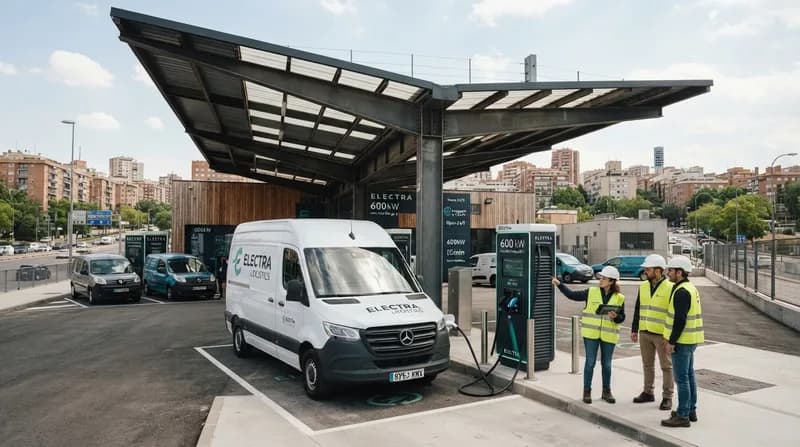
The Hamburg site is set to feature four ultra-fast charging stations, each capable of delivering up to 600 kW of power. This capacity is specifically designed to facilitate rapid top-ups during scheduled driver or passenger rest periods. By situating these chargers at high-traffic central hubs, the strategy leverages existing logistical patterns, allowing bus operators to integrate charging stops seamlessly into their current routes without requiring radical deviations or extended downtime.
Why it Matters
- Brand-Agnostic Accessibility: Unlike private depot charging, these stations are open to electric buses from any manufacturer, fostering a collaborative charging ecosystem.
- Seamless Integration: By utilizing existing Central Bus Terminals, the project capitalizes on established infrastructure, including passenger amenities like restrooms and food services.
- Turnkey Convenience: Daimler Buses Solutions manages the financial, technical, and operational aspects, offering property owners a hassle-free transition to supporting electric vehicle fleets.
- Strategic Support for New Tech: The network provides critical infrastructure for the deployment of the Mercedes-Benz eIntouro, the company’s latest electric intercity bus model.
Project Scope and Future Outlook
The Hamburg project follows a proven model developed in collaboration with regional energy agencies, such as the partnership in Cologne. Construction at the Hamburg ZOB will involve comprehensive civil engineering, including the installation of high-voltage cabling and transformers. While the site is currently permitted for four charging units, the design allows for a potential future expansion to eight units, ensuring the hub can scale alongside the growing demand for sustainable bus travel.
This push for infrastructure coincides with Daimler Buses’ broader fleet strategy. While battery-electric intercity models are arriving on the market now, the company has indicated that its portfolio will further diversify with fully electric coaches by the end of the decade, eventually supplemented by hydrogen fuel cell variants. By taking on the role of a charge point operator, Daimler is not just selling vehicles; it is actively constructing the underlying energy network required to make long-distance, emission-free transport commercially viable and economically attractive for operators across Europe.