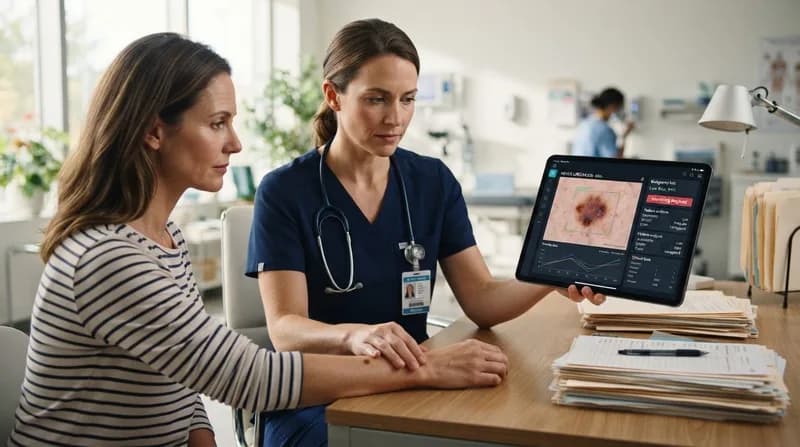
Revolutionizing Clinical Workflow with Autonomous AI
In a significant breakthrough for digital health, a real-world study involving over 8,300 patients has demonstrated that autonomous artificial intelligence (AI) can dramatically alleviate the pressure on dermatology departments. Presented at the European Academy of Dermatology and Venereology (EADV) Congress 2026, the findings highlight a shift in how medical facilities manage urgent suspected skin cancer pathways. By utilizing a CE-marked Class III AI medical device to process patient referrals, hospitals can now autonomously identify and discharge benign cases, ensuring that limited specialist resources are reserved for those at the highest risk.
The deployment of this technology addressed a growing crisis in the U.K. healthcare system, where urgent skin cancer referrals have tripled since 2009, yet the vast majority—roughly 94%—do not result in an urgent cancer diagnosis. Compounded by a significant shortage of dermatologists, this mismatch between demand and capacity has created a bottleneck that the study aimed to dismantle through AI-driven triage.
Quantifying the Capacity Gain
The study spanned 16 months and integrated the AI system into two major hospital sites. During this period, the technology autonomously managed 8,391 patients. The AI utilized clinical and dermoscopic smartphone images to classify skin lesions, successfully discharging a substantial portion of patients—between 25% and 31%—without the need for human clinician intervention. This process proved to be highly efficient, reducing the proportion of patients requiring routine follow-up visits from 27% to 12%.
The most striking impact of the deployment was the gain in clinical capacity. Researchers estimated that the AI pathway saved approximately 2,851 hours of clinician time. When translated into standard consultation windows, this equates to the ability to facilitate more than 8,500 additional face-to-face appointments. By shifting the focus of human specialists away from low-risk, benign cases, the autonomous AI acts as a force multiplier for the healthcare system.
Safety, Accuracy, and the Human Element
Central to the study was the rigorous monitoring of diagnostic performance. The AI demonstrated a sensitivity exceeding 98% for detecting invasive melanoma, squamous cell carcinoma, and basal cell carcinoma, with a specificity rate of 72.1%. Although there were six instances of false negatives identified through post-market surveillance, researchers noted that these were effectively managed without adverse patient outcomes, underscoring the importance of continuous post-deployment monitoring.
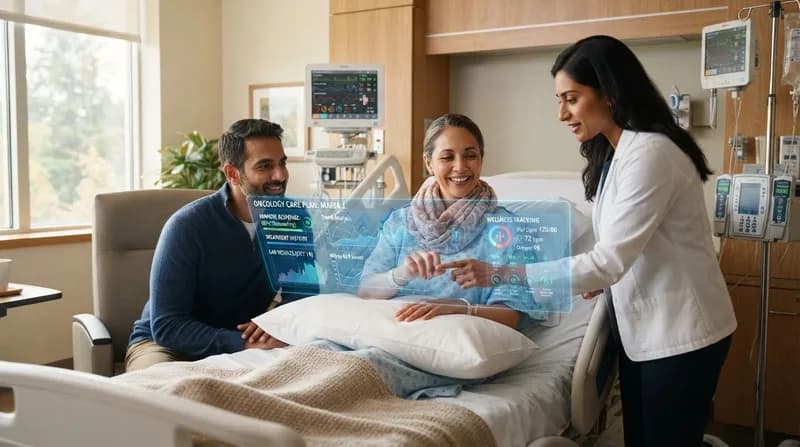
Dr. Lucy Thomas, lead author of the study, emphasized that the goal of this technology is not to replace medical professionals, but to reorient their expertise where it is most needed. By removing the administrative and diagnostic burden of benign lesion review, the system allows dermatologists to provide more timely care to patients suffering from severe inflammatory skin diseases and actual malignancies. This collaborative model between human intellect and autonomous diagnostic tools suggests a sustainable path forward for dermatology services globally, provided the findings are validated in broader, more diverse clinical settings.
Why it Matters
- Resource Allocation: By automating the triage of non-urgent skin lesions, the system allows for faster diagnosis and treatment for patients with active cancer or severe conditions.
- Reducing Wait Times: With 25% of clinical time saved, hospitals can reduce waiting lists for patients requiring critical, face-to-face dermatological intervention.
- Safety Protocols: The study highlights that successful AI integration requires ongoing oversight, constant monitoring, and clear communication with patients regarding the decision-making process.