Tech & GadgetsTechnical Deep Dive

Elon Musk Lashes Out at Market Barriers Facing Starlink in India

Published
EElectricBuzz Editorial Team
Elon Musk Lashes Out at Market Barriers Facing Starlink in India
3 min read428 wordsElectricBuzz Editorial Team

The Gist

“Elon Musk has accused unnamed Indian business interests of blocking Starlink's entry into the market, reigniting debates over spectrum allocation and corporate influence.”

The Battle for Indian Skies

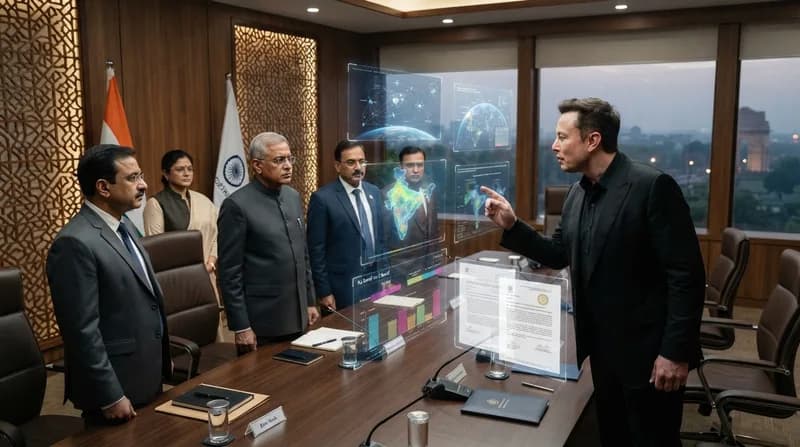
Elon Musk, the CEO of SpaceX, has publicly challenged the corporate landscape in India, alleging that unnamed 'oligarchs' are actively conspiring to prevent Starlink from securing the necessary regulatory approvals to operate within the nation. The criticism highlights a deepening tension between global satellite internet providers and established domestic telecommunications giants, who have long held a dominant grip on India’s digital infrastructure.

For years, Starlink has sought to bridge the digital divide in India by providing high-speed satellite connectivity to rural and remote regions. However, the path to market entry has been fraught with bureaucratic hurdles and fierce opposition from local competitors. Musk’s recent comments suggest a belief that these regulatory bottlenecks are not merely administrative but are instead orchestrated by influential industry players looking to protect their market share from disruptive satellite-based competition.

Why It Matters: The Spectrum Debate

At the heart of the dispute is the mechanism for allocating satellite spectrum. While international standards and several global markets favor administrative assignment for satellite broadband to speed up deployment, some domestic Indian operators have pushed for an auction-based model. Critics argue that an auction process would significantly raise the cost of entry, effectively favoring wealthy, entrenched incumbents while stifling innovation from new entrants like SpaceX.

  • Connectivity Access: The standoff impacts millions of underserved Indians living in remote areas where traditional fiber-optic or cellular infrastructure is economically non-viable.
  • Regulatory Precedent: The final decision on spectrum allocation will set a major precedent for how India treats future space-based communications, potentially signaling whether the country is open to disruptive global tech or prefers to shield its local telecommunications industry.
  • Market Dynamics: This friction underscores a broader global theme where legacy telecommunication conglomerates increasingly view satellite constellation operators as existential threats to their core business models.

Strategic Implications

The implications of this public spat reach far beyond a simple regulatory disagreement. By framing the opposition as 'oligarchs,' Musk is tapping into a broader narrative regarding the concentration of corporate power in India. This adds a layer of political sensitivity to the discourse, potentially drawing in policymakers who are keen to present India as an open, competitive landscape for global technology investment.

Moving forward, the resolution of this conflict will likely hinge on the Indian government's ability to balance the interests of domestic firms with its stated goals of promoting digital inclusivity. As the competition for the final frontier of connectivity heats up, SpaceX’s struggle in India serves as a high-profile case study for how global hardware companies navigate localized protectionism in the era of orbital internet.


SPONSORED
The 5 Best Over-Ear ANC Headphones of 2026, Tested & Ranked
Editor's Pick Guide
92/100
Tech & Gadgets•12 min read

The 5 Best Over-Ear ANC Headphones of 2026, Tested & Ranked

We locked five over-ear ANC picks for 2026 — Sony WH-1000XM6, Bose QuietComfort Ultra 2, Soundcore Space One, Sennheiser Momentum 5, and Apple AirPods Max 2 — then stress-tested them on lab metrics, long-term owner truth, and live street prices.

Related Stories

Semantically matched articles, ranked by topic overlap and freshness.

The Rise of Open-Source Alternatives to OpenAI's Persistent AI Agents
Tech & Gadgets

The Rise of Open-Source Alternatives to OpenAI's Persistent AI Agents

As OpenAI faces technical hurdles with its 'dots' agent platform, a surge of open-source competitors is emerging to offer developers more control and flexibility.

Microsoft Unveils Hybrid AI Intelligence: Bringing Agentic Power to the Desktop
Tech & Gadgets

Microsoft Unveils Hybrid AI Intelligence: Bringing Agentic Power to the Desktop

Microsoft is evolving its Windows ecosystem with a new 'hybrid intelligence' framework, allowing local AI agents to process sensitive data directly on your PC.

Argonne National Laboratory Unveils Breakthrough 'Conversational' X-Ray Microscope
Tech & Gadgets

Argonne National Laboratory Unveils Breakthrough 'Conversational' X-Ray Microscope

Scientists have integrated agentic AI into a powerful X-ray nanoprobe, allowing researchers to command complex imaging tasks using simple natural language.

Samsung Semiconductor Profits Skyrocket Amid AI Memory Boom
Tech & Gadgets

Samsung Semiconductor Profits Skyrocket Amid AI Memory Boom

Samsung Electronics has seen its quarterly profits climb nearly nine-fold, fueled by an insatiable global demand for high-performance memory chips.

The Network Fabric of the Future: Scaling AI Beyond a Single Datacenter
Tech & Gadgets

The Network Fabric of the Future: Scaling AI Beyond a Single Datacenter

As power constraints push AI training to span multiple facilities, Cisco is redefining network architecture to treat remote data centers as a single, synchronous supercomputer.

VMware Exodus: Nine in Ten Customers Seek Alternatives Amid Subscription Shakeup
Tech & Gadgets

VMware Exodus: Nine in Ten Customers Seek Alternatives Amid Subscription Shakeup

A recent industry survey reveals that 90% of VMware customers are actively exploring alternatives to the company’s virtualization platform following dramatic changes to licensing models.

Dutch Tax Authority Rejects Microsoft 365 in Favor of Sovereign Infrastructure
Tech & Gadgets

Dutch Tax Authority Rejects Microsoft 365 in Favor of Sovereign Infrastructure

In a major strategic pivot, the Netherlands Tax and Customs Administration is abandoning its planned transition to Microsoft 365, opting instead for a self-hosted, sovereign IT infrastructure.

The Great Open Source Schism: COSMIC Rejects AI Code While GNOME Considers Bug Report Amnesty
Tech & Gadgets

The Great Open Source Schism: COSMIC Rejects AI Code While GNOME Considers Bug Report Amnesty

As System76 enforces a strict human-only rule for the COSMIC desktop, the GNOME project is wrestling with whether to welcome AI-generated vulnerability reports to bolster security.