A New Frontier in Cosmic Transients
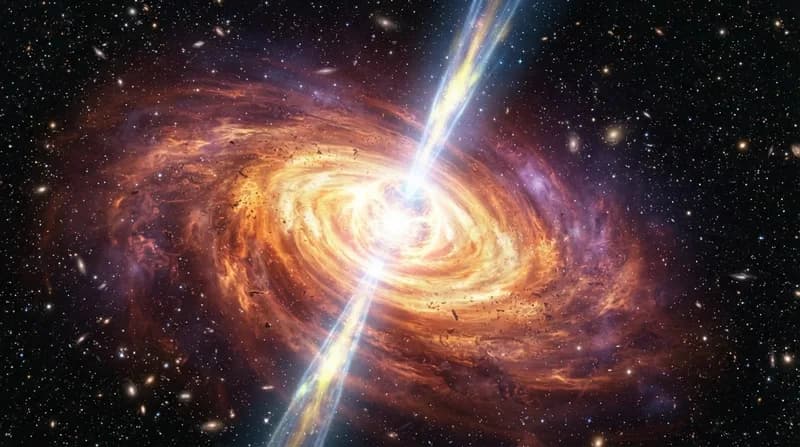
For years, the field of high-energy astrophysics has been dominated by the study of short gamma-ray bursts—fleeting, intense flashes of energy that vanish in less than two seconds, marking the cataclysmic mergers of neutron stars. However, a recent discovery is fundamentally altering our understanding of these events. Astronomers have identified an extraordinary X-ray event, designated EP250704a/GRB 250704B, which persisted for nearly ten minutes. This record-breaking duration suggests that researchers have finally caught a rare glimpse into the creation of a magnetar, a highly magnetized and rapidly spinning neutron star.
This discovery was made possible by the Einstein Probe, a satellite launched in early 2024 designed to survey the high-energy sky. Unlike previous observations that were far too short to provide meaningful data on the aftermath of a stellar collision, this event remained luminous long enough for ground-based telescopes to scramble for follow-up observations. By analyzing the lingering light, researchers were able to confirm that the energy signature originated from a massive galactic event that occurred over six billion years ago, long before the birth of our own solar system.
The Anatomy of a Magnetar Birth
The significance of this event lies in the "afterglow" behavior of the merged object. While a standard neutron star merger might result in a direct collapse into a black hole or a brief, intense flash, the ten-minute X-ray emission indicates the survival of a remnant that continues to dump energy into its surroundings. This is the hallmark of a magnetar. As the magnetar spins down, its immense magnetic fields release trapped energy, amplifying the explosion's luminosity and extending the duration of the emission far beyond the initial gamma-ray burst.
Using the European Southern Observatory’s Very Large Telescope (VLT), the research team was able to break down the light from the event to measure its redshift. This confirmed the source's distance and provided the context needed to differentiate it from other common high-energy events, such as the supernova collapse of a massive star. Crucially, the absence of a supernova signal, combined with the extreme length of the X-ray flash, solidified the theory that the event was a binary neutron star merger resulting in a magnetar rather than a star’s death throes.
Why it Matters
- New Detection Methods: This discovery provides a new template for identifying neutron star mergers, allowing astronomers to look for long-duration X-ray signals rather than relying solely on sub-second gamma-ray bursts.
- Magnetar Formation: It offers direct evidence for how often these extreme, highly magnetized stars are formed through binary collisions.
- Multi-Messenger Astronomy: The team is now looking toward future gravitational wave observatories to pair these electromagnetic flashes with spatial ripples, potentially confirming the link between stellar mergers and magnetar production.
The team’s rapid response—coordinated from a laptop while a lead researcher was commuting via train—demonstrates the efficacy of modern transient astronomy. By capturing such a fleeting moment in the life of the universe, scientists are moving closer to mapping the most extreme remnants in existence. The next phase of research will focus on identifying similar events to determine if this ten-minute phenomenon is a common signature of the most violent collisions in the galaxy.